



A Jewish fellow from Brooklyn, N.Y., was visiting France, and his hosts took him on a tour of the Rothschild estate. He saw the mansion, and then the family mausoleum. Brass doors. Carved wood. Marble engraved with the names of the barons, born on this date, died on this date. Flawless craftsmanship.
And the man from Brooklyn stood there in awe and exclaimed, “Wow! That’s what I call living!”
Oy!
So what does it really mean to live? And, maybe more to the point, what does it mean to be dead?
This week in Genesis 23, we read Chayei Sarah, “the life of Sarah.” But look at what the portion actually describes. It opens with her death and how Abraham purchases the Cave of Machpelah in Hebron for her burial.
The famous question is: Why then call it “the life of Sarah”? The Talmud’s classical answer: Just as her descendants are alive, so is she alive. Even after the body is gone, a person is still called living if their children carry on their tradition and walk in their footsteps.
Here, then, lies the long-sought secret of eternal life. People travel to expensive clinics in Switzerland searching for a formula for immortality. You want to live forever? Make sure your children keep the faith. If they are living Jews, you live on.
And if they are Jewishly lifeless, then sadly, no marble mausoleum will help. They may be walking around, they may be successful, they may be wonderful people, but a chain that ends with them is a chain that has been cut.
At the end of life, what do we leave behind?
The Talmud has a fascinating law about waters used for certain types of spiritual purification. A flowing river is called mayim chayim, “living waters.” But if that river dries up even once in seven years, it loses the title. It can no longer be used. Why? Because living does not mean flowing today. Living means flowing forever.
If seven years from now our Jewish life has run dry, then we must acknowledge that today it isn’t exactly all that alive either. Only if we pass on our Yiddishkeit to the next generation can we say that our generation is truly alive.
I understand that this touches a raw nerve. Over the years, so many parents have sat in my study and said: “Rabbi, our kids are not keeping the faith. We come to shul. I’m a founding member of the congregation. Where did we go wrong?”
And I know it hurts. You are not alone, and the question is not only about blame.
But let me also be honest. Tradition is lovely, but a smattering of it just isn’t enough. We cannot pat ourselves on the back for where we are. The crucial question is where our children are. We will be judged not by who our grandparents were but by who our grandchildren will be.
A woman once told me about her grandmother, who never missed lighting Shabbat candles. Her granddaughter—grown and busy, and far from observant—was visiting for the weekend. As sunset approached, her grandmother quietly handed her the matches and said nothing. The granddaughter lit the candles for the first time since childhood.
Today, she lights them every Friday night in her home for her own children. Her grandmother is no longer here. Yet every Friday at sunset, she is very much alive.
At the end of life, what do we leave behind? Our wealth? Our properties? Our shares and the deals we closed? None of it. We are remembered, and we continue, through our children and grandchildren.
Sarah died, but Isaac and Rebecca walked in her footsteps, and their son Jacob fathered the 12 tribes of Israel. And we, the Children of Israel, are still here. That is immortality.
And the evidence of our own experience is telling. The most recent Pew surveys of American Jewry show that the one segment that is growing is Orthodoxy, while the movements that tried to modernize and adjust tradition to contemporary tastes have been shrinking. Young people seek authenticity. In the long run, that’s the only thing that works.
In South Africa, we saw it ourselves. For many years, we had the “Traditional South African Jew” who came to synagogue on Friday night, made Kiddush at home, put challah on the table. And then, on Shabbat morning, he or she went to the office, the golf course or the hairdresser.
It was warm, it was sincere, and it created a beautiful community. But it wasn’t always enough to transmit to the next generation. It didn’t necessarily give their kids something solid to hold on to.
And so today, in South Africa, the next generation is largely going one of two ways. Some have become more committed than their parents ever were. Others are falling off the edges and drifting away entirely. The comfortable in-between did not have enough of the real thing—the genuine article—to capture young imaginations.
Some of you may remember the television announcement from America in the 1960s, in a time of unrest. At 11 o’clock every night, bold black letters would flash across the TV screen: “It’s 11 o’clock. Do you know where your children are?”
For the Jewish people today, it is the 11th hour. But note: It is 11, not midnight. There is still time.
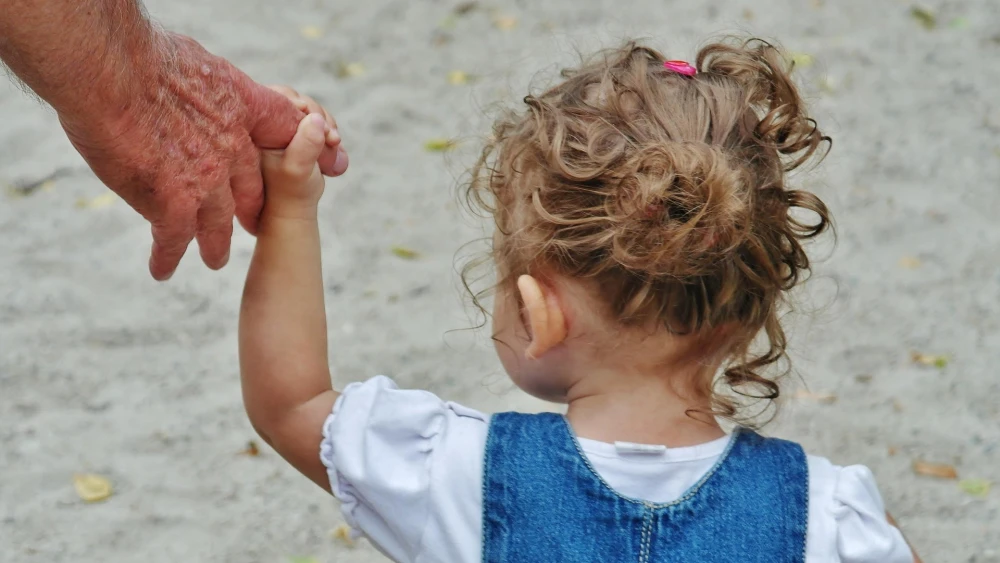
So, here is my challenge. This week, do something with your children or grandchildren. Experience a Shabbat together. Learn some Torah together. Pick up the phone and call that grandchild you have not spoken to in a while. Give them something to hold on to.
Because the man from Brooklyn had it wrong. Living isn’t found in the mausoleum. Living is found in the nursery, in the classroom, at the Shabbat table. That is where Sarah lives, and that is how we will continue to live.