


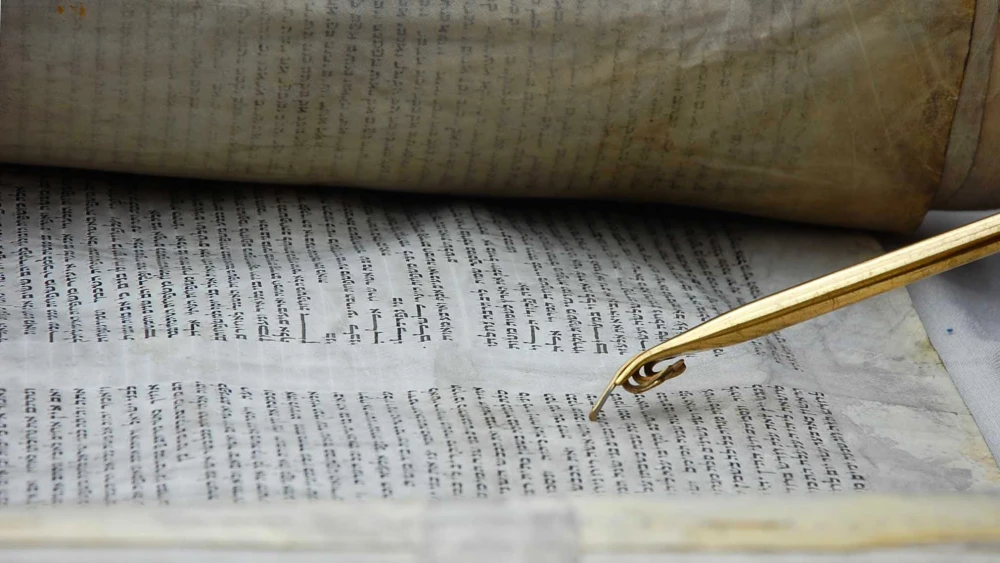

There are verses in the Torah that define a particular commandment, and there are verses that define a way of life.
The verse “Do what is right and good in the eyes of the Lord” (Deuteronomy 6:18), which we read this Shabbat in the Torah portion Va’etchanan, belongs to the latter. It is not concerned merely with what is permitted and what is forbidden, but with a far deeper question: What kind of people should we be, and what kind of society do we aspire to build?
Nachmanides (the Ramban) regarded this verse as one of the Torah’s foundational principles. He explains that it is impossible for the Torah to spell out every possible human situation.
Therefore, after giving us hundreds of commandments, it adds one overarching principle: “One should do what is right and good in every matter.” In other words, even where there is no explicit commandment, we must ask ourselves: Is this right? Is this good?
This is not merely a question of halachah, Jewish law; it is a question of conscience.
Beyond the letter of the law
It is relatively easy to know what is legally permissible. It is much harder to know what is truly right.
A person may comply with every legal requirement and yet behave selfishly, insensitively, or dishonestly. That is why the sages emphasized the importance of acting lifnim mishurat hadin—going beyond the strict letter of the law by showing consideration, seeking compromise, pursuing peace and placing the well-being of others above one’s own interests, even when not legally obligated to do so.
One of the tragedies of modern society is our tendency to ask only, “Is it legal?”
The Torah asks a far more important question: “Is it the right thing to do?”
Israel’s test in 2026
It is difficult to imagine a time when this verse has been more relevant than in Israel in 2026.
We are living after years of war, pain, deep divisions and wounds that have yet to heal. In just a few months, Israel is expected to enter what is likely to be a particularly contentious election campaign. Already, public discourse is increasingly marked by hostility, incitement, and, at times, even threats of violence.
It is precisely at moments like these that the meaning of “Do what is right and good” is put to the test.
Democracy is not merely the rule of the majority. It also depends upon a culture of mutual respect. We may disagree passionately and even struggle over fundamentally different visions for our country’s future, but we must never lose sight of the fact that those who think differently are still our brothers and sisters, fellow citizens of the same state, sharing the same destiny.
Disagreement is not democracy’s enemy. Hatred is.
The responsibility of every one of us
It is easy to place the blame on politicians, the media or social networks. Yet this verse is addressed not to governments, but to individuals.
It speaks to each of us.
Do we respond respectfully even when we are angry?
Do we verify facts before sharing information?
Do we refuse to participate in the public humiliation of another human being?
Are we willing to truly listen to those who think differently?
Do we teach our children to respect the dignity of every person, even those with whom we profoundly disagree?
Doing what is right and good begins at home—around the Shabbat table, in the workplace, on the road, in the queue at the health clinic and online. A society is not transformed solely through legislation; it is transformed through millions of small acts of honesty, kindness and responsibility.
A society of mutual responsibility
The war also revealed the most inspiring face of Israeli society: countless volunteers, families who opened their homes to evacuees, young people who helped farmers, medical professionals, members of the security forces and ordinary citizens who stepped forward to help complete strangers.
They embodied the living meaning of “do what is right and good.”
This verse teaches that morality is not merely about refraining from doing harm. It also calls for the active pursuit of good. It asks us not only, “Whom have I avoided hurting?” but “Whom can I help?” Sometimes, all it takes is visiting an elderly neighbor, making a phone call to someone who is lonely, volunteering, making a donation or offering a kind word to someone in distress.
A strong society is measured not only by the strength of its military or its economy, but also by the willingness of its citizens to care for one another.
The challenge of leadership
This verse also places a responsibility upon our leaders. Power does not exempt one from morality; it imposes an even greater obligation. True leadership is measured not only by the ability to win elections, but by the ability to unite, to calm passions, to lead by personal example and to place the nation’s welfare above short-term political gain.
At a time when public trust has eroded, our country needs leaders who understand that words have the power to build a society—but also to destroy one.
A timeless call
More than 3,000 years ago, these simple words were written. They are brief, yet they set an extraordinarily high standard: “Do what is right and good.”
It is not enough to be right; we must also be upright. It is not enough to win an argument; we must preserve our humanity. It is not enough to love the State of Israel; we must also love the people who live in it.
If we succeed in bringing these timeless words into our public discourse, our schools, our parliament, our media and our homes, we will not only strengthen the social fabric of Israel, but we will also fulfill the Torah’s profound vision of a society that does not settle for mere legal compliance, but strives to embody integrity, compassion, responsibility and mutual care.
This is not merely an ancient commandment. It is the moral imperative for the State of Israel in 2026.
Originally published on the author’s Substack page.



