
Life is slowly returning to normal in Israel as coronavirus restrictions are lifted, but for many of the country’s Arab citizens this means returning to a reality of rampant crime in the streets, criminal vendettas that often involve the harm of innocent bystanders, and a culture of so-called “honor killings.”
Daily life in the country’s Arab towns and villages also involves crumbling infrastructure and a failing educational system, as was evidenced throughout the coronavirus crisis, during which “distance learning” proved virtually meaningless for Arab students. Arab online commenters by and large correctly identified the prime culprit: The culture of clan and family-based politics within Arab municipalities, whereby personal and family interests are prioritized over the interests of the public.
The Arab public’s leaders are also returning to business as usual; or in other words, to devoting most of their attention to the Israeli-Palestinian conflict. Joint Arab List chairman MK Ayman Odeh has already asserted that another intifada is inevitable as the only form of struggle against the Israeli presence in Judea and Samaria. But Israel’s Arab citizens don’t want another intifada, and also don’t want to denounce the state. Instead, they want the state to enlist its resources to help them—just as the Arab public, spearheaded by its health professionals, enlisted on behalf of the country to fight the coronavirus.
In Jalal Bana’s harrowing description of the distress (“Let the Shin Bet defeat crime”), he called on the Shin Bet security agency to tackle the crime and illegal weapons in the Arab sector. The Shin Bet, Bana explained, has capabilities the police do not, and despite the Arab public’s inherent mistrust of the shadowy agency it is imperative that it now begin operating in Arab towns and villages—where it is probably working anyway.
Bana’s diagnosis is correct, of course, but the solution he suggests is, in my opinion, doubtful. The problem of illegal firearms is indeed acute, but using the Shin Bet, in and of itself, is enough to mark the Arab public as a group against which it is permissible to apply “extraordinary” tools, the likes of which the State of Israel only uses against defined enemies and enemy collaborators. The only fundamental solution to these painful, deep-rooted problems is to approach them from a different angle.
Anyone who has studied Arab society in Israel is familiar with the phrase “the upright generation,” in reference to the younger generation that sought to shed the pathos of submissiveness and idleness of the older generation that led Arab Israeli society in the 1950s and ’60s after the War of Independence in 1948, during which a military administration still governed the Arab communities.
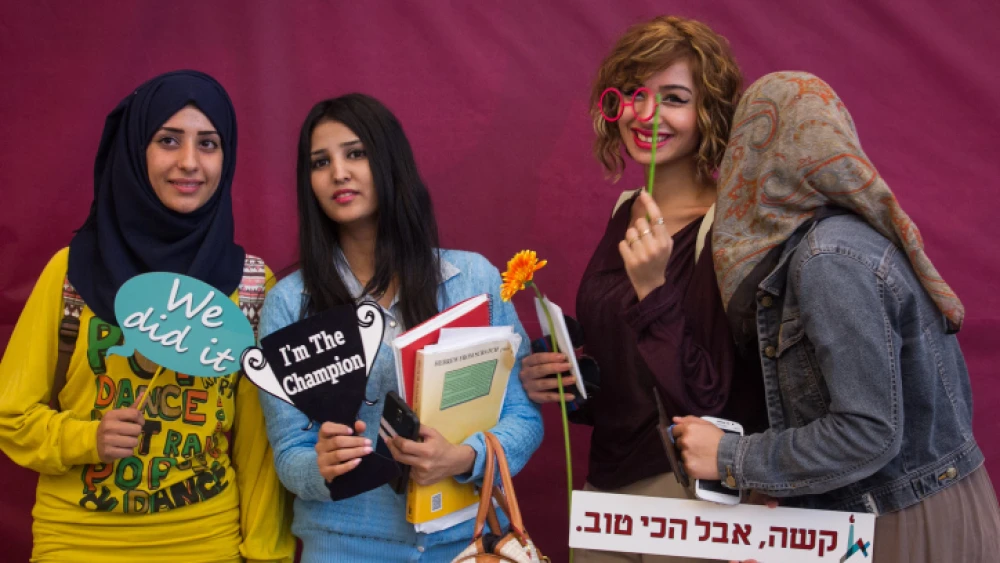
The upright generation sought to challenge the previous generations but also the state, which it blamed at the time for the situation in Arab society. It chose the wrong target for its contempt, and its path ultimately proved a dead end. Today, however, five decades later, the Arabs in Israel need a new upright generation, one that will rally to fix matters at home. One needn’t look hard to see them. Just look around any hospital or university in the country and you’ll see the restless Arab youth striving to advance and be part of society and the state.
A revolution at home is what the Arab Israelis need, a revolution spearheaded by the youngsters who are presently daring, in growing numbers, to volunteer for national service and even, believe it or not, military service. The key to change is in their hands.
Eyal Zisser is a lecturer in the Middle East History Department at Tel Aviv University.
This article first appeared in Israel Hayom.