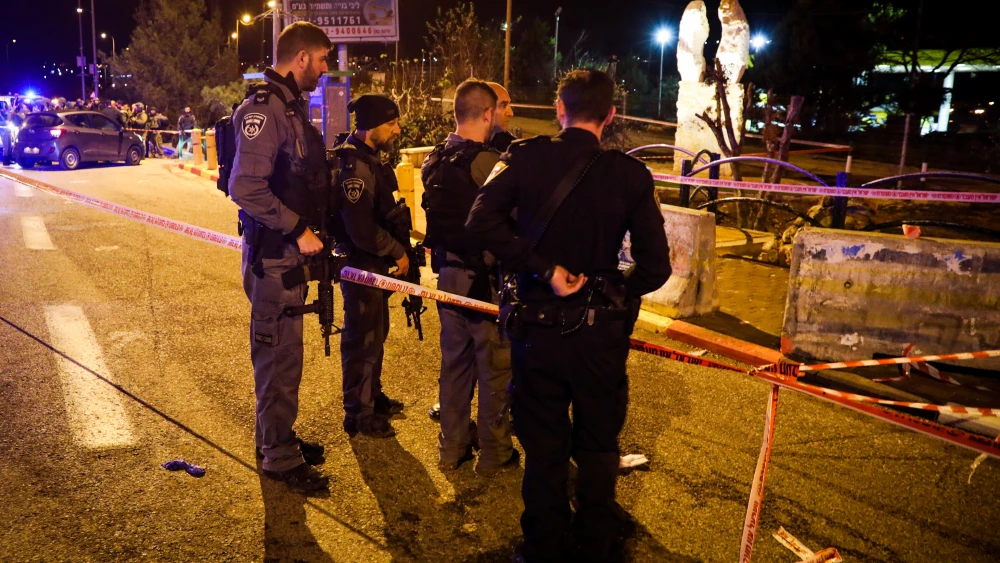

Palestinian terrorism again reared its ugly head in Judea and Samaria this week, reminding all of us that the war on terror is ongoing, bloody and filled with both successes and failures.
Like previous waves of terrorism, this, too, shall eventually pass, but we cannot treat it as a fated decree that cannot be changed and must be accepted. We can and should combat terrorism; even if this war cannot actually be won, we much minimize its effects.
One of the first steps should be eradicating the celebrity status terrorists achieve in Palestinian society and worse, the respect they are shown by Palestinian Authority officials, who pretend to be on Israel’s side in the war on terror.
The Palestinian leadership repeatedly embraces these terrorists, offering prisoners and their families generous financial assistance, thus communicating to the Palestinian public that these individuals are heroes when it should be denouncing their actions.
This overt support stems from the rivalry between the Palestinian Authority and Hamas.
The legitimacy of P.A. leader Mahmoud Abbas’s rule has been considerably eroded. Given Hamas’s various political achievements, the P.A. is becoming less and less relevant, while Gaza’s rulers are gaining support across the West Bank, leaving Ramallah’s officials only one course of action to retain whatever relevance they have left: supporting terrorism.
Still, one must admit that beyond cold political considerations, P.A. officials embrace terrorists because they see attacks against Israeli soldiers and civilians as a legitimate instrument in the “war against the occupation.”
In this reality, there is little wonder why terrorism keeps rearing its head. The road to combat this phenomenon runs through Ramallah and must include efforts to curtail Palestinian incitement as the first step to eliminate the support the Palestinian public and its leaders show for terrorists.
Eyal Zisser is a lecturer in the Middle East History Department at Tel Aviv University.