
Mainstream media publish analyses accusing the United States and Israel of launching an illegal war against Iran without fairly stating the opposing view that these Western powers are, in fact, legally (and morally) justified in bringing Iran down.
Today’s international laws meant to regulate the conduct of war don’t easily permit dispositive judgments of guilt or innocence. They’re ambiguous.
If these media were seeking truth, rather than political “resistance” against U.S. President Donald Trump or Israeli Prime Minister Benjamin Netanyahu, they would admit that the U.S.-Israel alliance can legitimately be found both guilty and innocent of violating international law on their conduct of the Iran war.
Furthermore, these same media fail to identify how hopelessly outdated and manifestly unenforceable are restrictions under international law governing war in modern times.
While the recent retaliation against Iran’s years of aggressive actions is proscribed by “international law” as defined by the United Nations, so have the majority of military actions over the world body’s last 75 years been considered illegal. Indeed, only three “wars” during that timeframe qualify as legal under international law.
The majority of these wars, including the current one, were launched in response to egregious offenses not covered under current international law. The United States and Israel, for example, have called Iran’s nuclear weapons and ballistic-missile programs an “imminent, existential threat,” requiring immediate preemptive strikes.
An even stronger justification for the current war is Iran’s use of proxy terror groups, such as Hamas, Hezbollah and the Houthis, to attack Washington and Jerusalem on Iran’s behalf. The proxies’ hostile strikes on both countries clearly constitute an ongoing “armed attack” and justify a military response. But such a response to indirect attacks by proxies is not currently a consideration of international laws on war, and thus the United States and Israel’s retaliation isn’t considered “legal” by some analysts.
Perhaps most important when judging the validity of laws against wars is the reality that laws without enforcement mechanisms are effectively not laws at all, just empty words.
While many Western nations still cling to the illusion of an international order binding the world’s political fabric, the failure of international laws to govern war and punish violators illustrates the facade of that belief. Short of an overhaul of these laws, the world is stuck with justice in contentious world affairs being meted out by winners of lawless wars.
Mainstream media provide a one-sided view of international law. For instance, Guardian columnist Kenneth Roth blasted Israel and America for attacking Iran without approval from the U.N. Security Council or the existence of an imminent threat. A column in New Yorker magazine presented a similar argument. What many mainstream media don’t mention, however, is that international law, specifically Article 51 of the U.N. Charter, gives countries the right to self-defense. Since Iran’s nuclear program does present an imminent threat, the two countries are justified in launching their attack.
International law is ambiguous, obsolete and unenforceable. Legacy media don’t consider that it’s impossible to objectively judge guilt or innocence in the context of violating international law, especially by biased commentators. Indeed, while critics can argue that the Washington and Jerusalem undermined Iran’s territorial integrity and political independence without justification or approval by the UNSC, supporters can also argue that the two allies were justified because of the imminent threat posed by Iran’s nuclear and ballistic-missile programs. And that their attack on Iran was an act of self-defense.
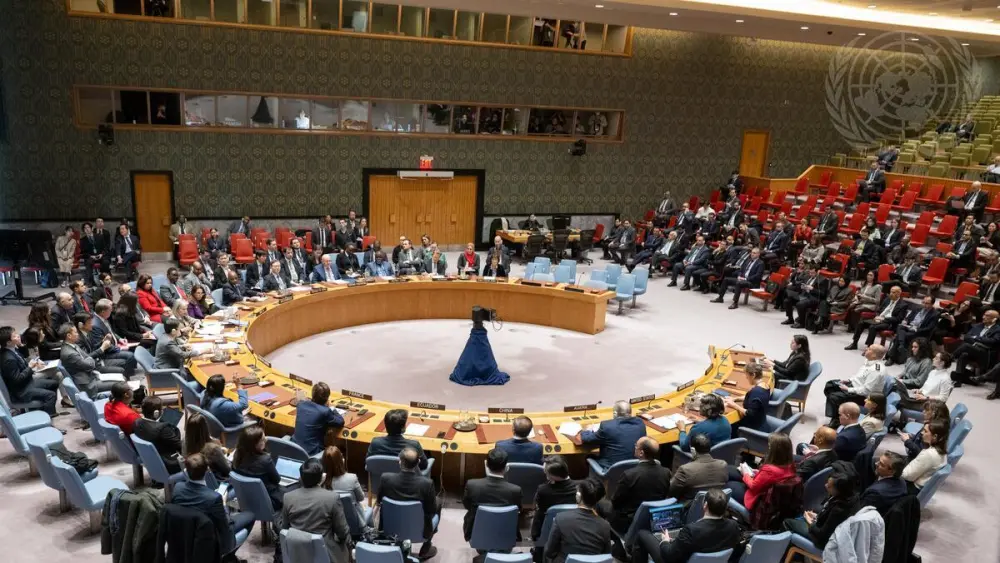
Mainstream media also fail to consider how outdated and unenforceable international law is. After all, much of it was made before the age of intercontinental ballistic missiles and cyberwarfare. Furthermore, international law is usually unenforceable, with no single international body having the necessary tools to enforce it. Remember, any UNSC resolution almost always will be vetoed by China, Russia, the United States, the United Kingdom or France if any have a dog in the fight.
Most wars over the last 75 years violated international law, including wars in the Middle East, such as the 1956 Suez Canal Crisis, when the United Kingdom, France and Israel invaded Egypt without U.N. approval, and the 2003 Iraq War, when the United States invaded Iraq without U.N. approval, under the false pretext of preventing the use of weapons of mass destruction. In fact, in the last 75 years, only three major wars fully complied with international law: The Korean War (1950-53), when the UNSC authorized military force in response to North Korea’s invasion of South Korea; the Gulf War (1991), when the UNSC authorized force to expel Iraq from Kuwait, and in Libya (2011), when the UNSC authorized a no-fly zone to protect civilians. In recent years, however, legacy media hold “international law” as sacrosanct if it offers a way to condemn Israel and the United States for violating it.
What is an “imminent” threat? Some, like Roth, suggest U.S.-Israeli attacks on Tehran were unjustified because there was no imminent threat. Likewise, a column in Conversation argued, “preventive war has no legal basis under international law,” as if to say, unless Iranian nuclear missiles are in the air, heading for the United States or Israel, neither country is justified in retaliating. In such a case, neither Israel nor America could afford to abide by international law; doing so would be suicidal. Tragically, international law doesn’t provide clear guidelines on what is an imminent threat worthy of a pre-emptive strike.
International law doesn’t consider indirect attacks by proxies. Iranian terrorist proxy militias—Hamas, Hezbollah, the Houthis—have attacked the United States and Israel for decades, murdering hundreds of innocent Israelis and Americans. The two countries have responded in self-defense to many of these attacks, but since international law doesn’t take proxies into consideration, these defensive actions can technically be called illegal, especially by anti-Western media.
International law restricting war rings hollow because it is unenforceable. Furthermore, it doesn’t address the realities that characterize modern conflicts. But this doesn’t stop mainstream media or other haters from condemning Israel or the United States for taking sensible, urgent actions to defend themselves. By criticizing Washington and Jerusalem for violating international laws without addressing the thorny issues that plague these laws, mainstream media are negligent, demonstrating flagrant, irresponsible bias.
Originally published by Facts and Logic About the Middle East (FLAME).