
We pray every weekday, “On the righteous, on the devout, on the elders of Your people the family of Israel, on the remnant of their scholars, on the righteous converts and on ourselves: May your compassion be aroused HaShem, our G-d, and give goodly reward to all who sincerely believe in Your Name. Put our lot with them forever, and we will not feel ashamed, for we trust in You. Blessed are You, HaShem, mainstay and assurance of the righteous.”
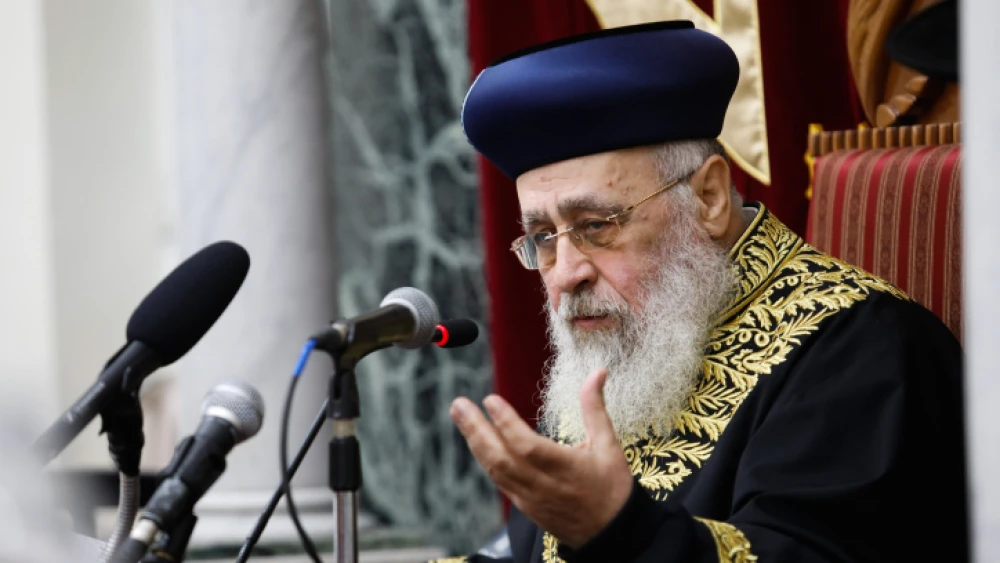
The Chief Rabbis of Israel, Rabbi David Lau and Rabbi Yitzhak Yosef, have been unfairly attacked this past year. There has been a rebellious movement to try to undo the Chief Rabbinate, which has stood the test of time for 75 years since the establishment of the State of Israel and even before, introduced by Israel’s first Chief Rabbi Abraham Isaac Hacohen Kook of blessed memory.
This campaign against the Rabbinate isn’t new. In an article published on Oct. 12, 2020 in The Jerusalem Post entitled, “Is this the end of the Chief Rabbinate in Israel?” the writer starts out by saying, “While I celebrate the appointment of Rav Avraham Isaac Kook as the first Chief Ashkenazi Rabbi—he certainly deserved the honor—this office was granted by the British Mandate and its concept of a ‘Chief Rabbi’ in England.”
The writer then says rebelliously that chief rabbis “have no place in Judaism at all, certainly in the 21st century.” He adds, “The Chief Rabbinate, on a host of issues, lacks the imagination and guts of Hillel.” He further declares, “To the Chief Rabbis, what have you done about the crisis of the agunah—the chained woman, whose husband refuses to grant a divorce?” He goes on, “To the chief Rabbis—what are you doing about these 250,000 Israelis from the former Soviet Union in limbo, caught between the Law of Return and the lack of a religious identity based upon matrilineal descent?”
These are the types of attacks aimed inappropriately at the Chief Rabbinate. They are uncalled for and baseless. They are, I believe, a product of the hyper-polarized world we live in. Heaven help us to overcome such vindictiveness.
The Chief Rabbinate is a centralized rabbinic authority for Israel and the Diaspora. It has performed well under trying circumstances. It has maintained an appropriate and respectful position and the moral high ground on kashrut, marriage, divorce and conversion the world over and maintained the status quo at the Western Wall. It functions at the highest level in a very complex and troubling world.
I remember visiting both Chief Rabbis Lau and Yosef in the summer of 2014 after the abduction and murder of Israeli teenagers Naftali Frenkel, Gilad Shaer and Eyal Yifrah. Both chief rabbis were intimately involved in every aspect of the crisis, especially in helping the families at a critical time. I will forever remember their concern and empathy. They should be blessed, not harassed.
As to the Jerusalem Post writer’s criticism of the Chief Rabbinate in regards to agunot and the 250,000 Israelis from the Soviet Union, it is completely unfounded. Both problems are incredibly difficult to resolve. No magic wand is going to solve them.
There is no question that more work is needed on these issues, but attacking the Chief Rabbinate will do nothing to bring resolution. If anything, strengthening the Rabbinate would be a better solution. My intent is to do just that. I reaffirm the Chief Rabbinate in 5783 as the guiding light and centralized power for religious authority in Israel and around the globe. “Blessed are You HaShem, mainstay and assurance of the righteous.”
Dr. Joseph Frager is a lifelong activist and physician. He is chairman of Israel advocacy for the Rabbinical Alliance of America, chairman of the executive committee of American Friends of Ateret Cohanim and executive vice president of the Israel Heritage Foundation.