
The fifth season of the Israeli thriller “Fauda” is now streaming on Netflix, 10 years after the hit television series first introduced the gritty realism and high drama of Israeli counterespionage to the world of undercover cop procedurals. It has been an improbable hit since its launch.
Each season landed in the top 10 in the 43 countries in which Netflix aired the show, doing especially well across Europe and Asia. Season five has already nabbed the top spot in both Israel and Lebanon. In non-English-speaking Netflix territories, the new season is charting at number four, its highest position ever.
This means that in many of the countries that believe Israel has no right to exist and routinely root for terrorists to slaughter Jews, a television show that depicts Israeli covert operatives outsmarting and dispatching Arab terrorists has an inexplicably loyal audience.
Counterterrorism dramas are fan favorites worldwide. But that generally holds for James Bond and MI6, or the CIA aided by SEAL Team Six. Historically, cultural entertainment that showcases the derring-do of the Mossad, Shin Bet and the Israel Defense Forces … not so much.
The world likes its Jews as victims, so long as they do not become objects of special pleading or self-pity. Leveraging the suffering of Jews is, apparently, intolerable. Dead Jews must end up devoid of sympathy. That’s the kind of plot conceit an audience can get behind.
In no way can Jews be depicted as heroes. There is no room in prime time for that.
Battle-hardened Jewish warriors or Israeli secret agents have rarely captured the public’s imagination. “Exodus” (1960), “Masada” (1981), “Munich” (2005), “Victory at Entebbe” (1976), “Raid on Entebbe” (1977), “The House on Garibaldi Street” (1979), “The Debt” (2010), “Operation Finale” (2018), “Uprising” (2001) and “The Red Sea Diving Resort” (2019) were all inspired, heart-stopping tales. Some were successful, but none compared to the likes of the Bond film “Skyfall.”
In this sense, the success of “Fauda” is unusual. None of the cast members are stereotypically Hollywood Handsome. It features Jews straight out of central casting: balding, gruffly unshaven, plodding but surprisingly spry with Krav Maga.
There are no girls cast as vixens, villains or femme fatales. No field operative ever appears in a tuxedo playing high-stakes poker or taking a spin at the roulette wheel at a casino. The characters have sex, but real sex—not tongue-in-cheek orgasms around the world.
Yet while each cyber-skilled, GPS-savvy Israeli operative was licensed to kill, they received the same lukewarm support among Hollywood elites as any number of snubbed Taylor Sheridan shows at the Emmys.
Fauda, which means “chaos” in Arabic, is never short on taking its special undercover unit on nail-biting escapades. The series coincides with the last two wars Israel has waged inside Gaza, though many of the covert operations have taken place in Judea and Samaria, Lebanon, Belgium and France.
In many of the countries that believe the Jewish state has no right to exist, a TV show that depicts Israeli covert operatives outsmarting Arab terrorists has an inexplicably loyal audience.
The essential narrative arc of the show is the subterranean depths of its undercover work. Because they are Israelis, the operatives are composed largely of Mizrahi Jews, and some Bedouins—meaning they look just like Arabs and not like the Jews of Poland, to the great disgust of Israel-bashers everywhere. These Jewish James Bonds speak Arabic and know their way around a mosque better than most Muslims. This makes their counterterror raids, hostage rescues and urban warfare in dense civilian environments all the more death-defying and believable.
And they are not necessarily always the good guys. “Fauda” could just as easily be Arabic for “flawed.” They grapple with moral dilemmas and often find a way to spare the Arabs they target. Their enemies are referred to as “terrorists,” not Muslims. They are very much unlike the Islamists who threaten Israel with terror and have no ambivalence at all about murdering Jews.
The unit may disguise themselves as Arabs, but they do not mask their intentions or the inner conflict that has rendered them deeply damaged by all the death they have witnessed and participated in.
Season five is the first to have launched after the Hamas-led terrorist attacks and massacre of 1,200 men, women and children—and the kidnapping of 251 others into Gaza—in southern Israel on Oct. 7, 2023. One of its cast members, an actual reservist in the IDF, was seriously wounded in the counterstrike against the terrorists in Gaza.
It is set two years after the attack and takes full advantage of the backstory of Hamas’s bloody joyride and Israel’s traumatized demand for vengeance. The members of the unit take the losses of that day personally.
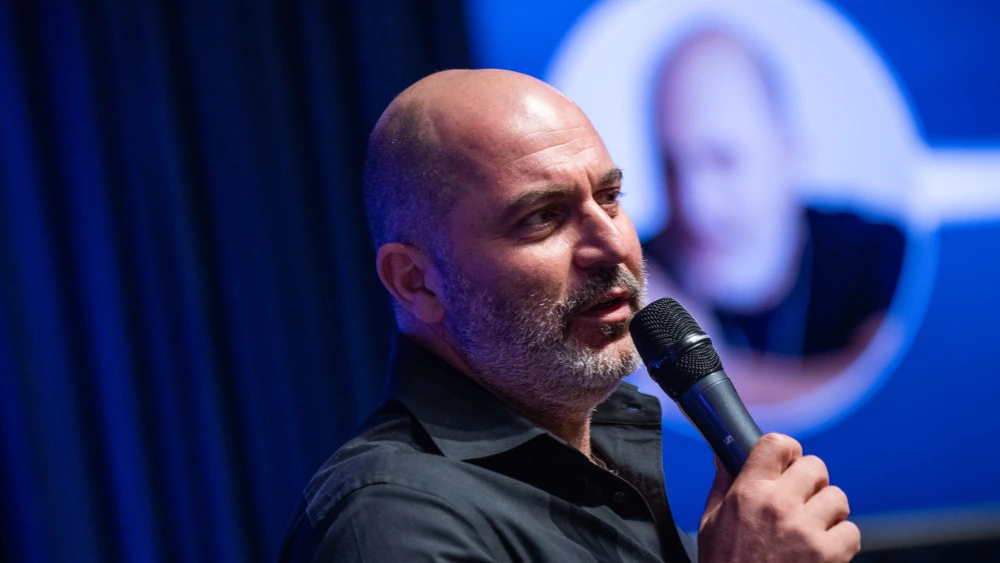
The unit’s former commander, Eli, loses his entire family on Oct. 7—both children slaughtered, his wife raped by a Hamas officer and then murdered. Doron, the show’s central protagonist, portrayed by Lior Raz, also a co-creator and co-writer, saw the events on Oct. 7 play out firsthand.
We see him in flashback trying to rescue teenagers but arriving too late, haunted by the image of dead bodies piled high inside blast-resistant shelters, girls with blood dripping from their pelvises, ringing the crime scene.
Doron is relying on psychotherapy to return to a life among the living. Eli discovers the man who murdered his family is alive and well in Marseilles. Another Hamas plot, an Oct. 7 encore, is being planned and must be thwarted. Both men return to active and moral duty.
The fact that “Fauda” continues to be so popular around the world while global public opinion still seems to be rooting for terrorists tells you everything you need to know about the twisted reality, moral inversions and upside-down perversions that Israel faces in waging its wars against traffickers in terror.
News gets misreported. Casualties count for one side only, and the numbers never add up. International law gets rewritten on the fly. Blatant lies—“genocide,” “mass starvation,” “apartheid”—are too beguiling to rebut.
The world simply won’t allow Israel to humanize the reasons why it has always been forced to defend itself, even when a hit TV show reveals the truth so graphically. It can’t seem to move its audience to translate what they see on their screens into what they feel in their hearts.
Originally published by Jewish Journal.