
The failure of the recent U.S. negotiations with Iran should surprise no one—certainly not anyone who has watched this Iranian regime for decades, seeing the West repeat the same mistakes over and over again. While more talks are expected, the problem isn’t ultimately with the context of dialogue or its terms. It goes right back to the ideology of the Islamic Republic itself.
Iran is an absolutist, theocratic regime. It cannot compromise, does not moderate and will not abandon its core beliefs, however warped they may be.
“Death to America!” “Death to Israel!” These are not mere slogans for effect. They are official government doctrine, rooted in religion. They are what God supposedly wants his Iranian servants to do.
This is not just a simple misunderstanding of Iran, but a willful misreading of the ruling regime. There is a refusal by Western governments to take the mullahs at their word. Politicians, officials and pundits cannot escape the illusion that Iran’s leaders are the same as us—same values, same goals, the same desire for stability and peace.
They are not.
Given their ideology, the idea that the Iranian regime negotiates in good faith is not optimistic. It is delusional. This also extends to Iran’s proxies, including Hezbollah, Hamas and the Houthis, who all share this same core fundamentalist absolutist ideology.
That’s not to say that negotiations never have a place, but they have to be approached with a firm understanding that Iran will use those negotiations as a tactic to rebuild its power and increase its influence. Iran’s rulers will never view any negotiated outcome as a “win-win”, only as a way to continue their war by other means.
Professor Mohammad Marandi, who accompanied the Iranian delegation to the recent talks in Pakistan, acknowledged as much when he told Arab media that “we are also being very busy preparing ourselves for the next round of war.”
Yet the naivety of Western governments persists, speaking in the language of “de-escalation” and “diplomatic resolution.”
Nowhere is this moral collapse and unwillingness to recognize the Iranian regime for what it is more evident than in the so-called hallowed halls of the United Nations. Just this past week, Western democratic governments, including Australia, Britain, Canada, France, Germany and others supported Iran’s nomination to a U.N. Committee that will shape policy on women’s rights, human rights, disarmament and terrorism prevention.
While the United Nations has long proven itself to be a cesspool bringing together and empowering some of the worst regimes and dictators on Earth, this does not change the fact that it was liberal democratic countries themselves who voiced no objection to this absurd nomination. The sole exception was the United States, which correctly labeled Iran “unfit” for the role.
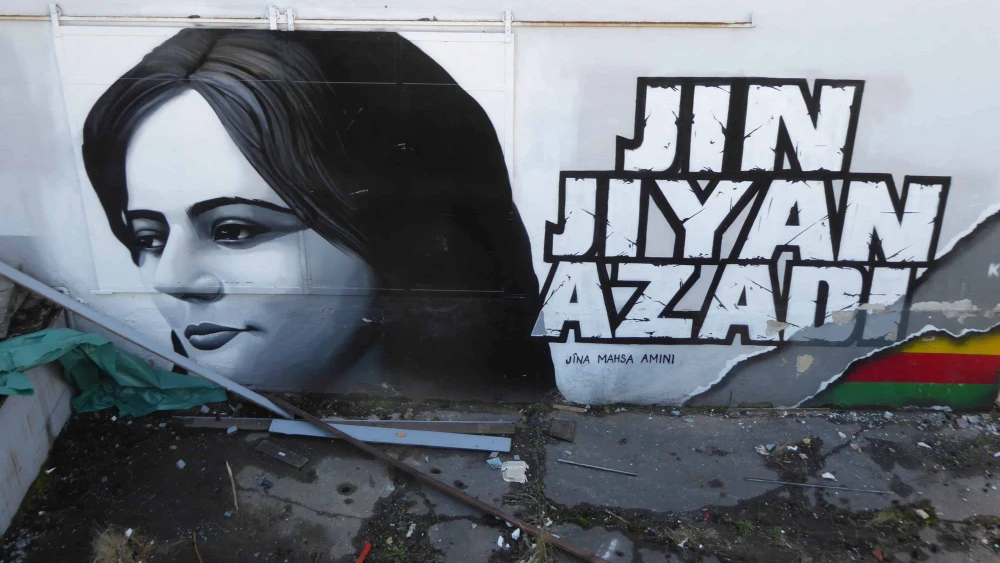
Where was the United Kingdom, which said in December 2022 at a U.N. vote supporting the removal of Iran’s membership on the Commission on the Status of Women, that we “cannot sit by and allow the violence that led to the arrest and death of Mahsa Amini to continue with impunity?”
Just months earlier that year, Amini, a 22-year-old Iranian woman, was murdered in police custody after being arrested for not wearing her hijab properly. It sparked a wave of mass protests, bravely led by women and girls.
And where was the Australian government, which said in February that “we support the United States acting … to prevent Iran continuing to threaten international peace and security.” This is the same Australian government that showed strength and moral seriousness when it expelled the Iranian ambassador to Australia last year after Iran was directly implicated in terrorist activities against the Australian Jewish community.
Yet these fleeting moments of strength and seriousness have proven to be just that—fleeting moments. They now support the nomination of Iran to a position that will shape policy on women’s rights, human rights and terrorism prevention.
The same Iran that, in January, unleashed a brutal crackdown that left tens of thousands of protesters dead in the streets, and burned or buried in mass graves.
The reality is that it is the decades of unwillingness to confront Iran with seriousness, despite the violent rhetoric of its words and its actions, which has led to the situation the world finds itself in now.
That refusal to do what needs to be done to end Iran’s rogue behavior—its support for terrorist proxies, its pursuit of nuclear weapons, its expanding arsenal of ballistic missiles now capable of reaching 4,000 kilometers, its open plans to destroy a neighboring state, Israel—has not reduced the threat. It has amplified it.
The mistaken belief that concessions will temper extremism, that engagement will transform ideology and that restraint will be reciprocated has proven to be nothing more than a mirage that vanishes the closer one gets.
Those lessons should have been learned long ago. The fact that they have not isn’t simply a failure of policy. It is a profound failure of basic judgment—and morality.