Newsletter
Newsletter Support JNS

A vision becoming reality

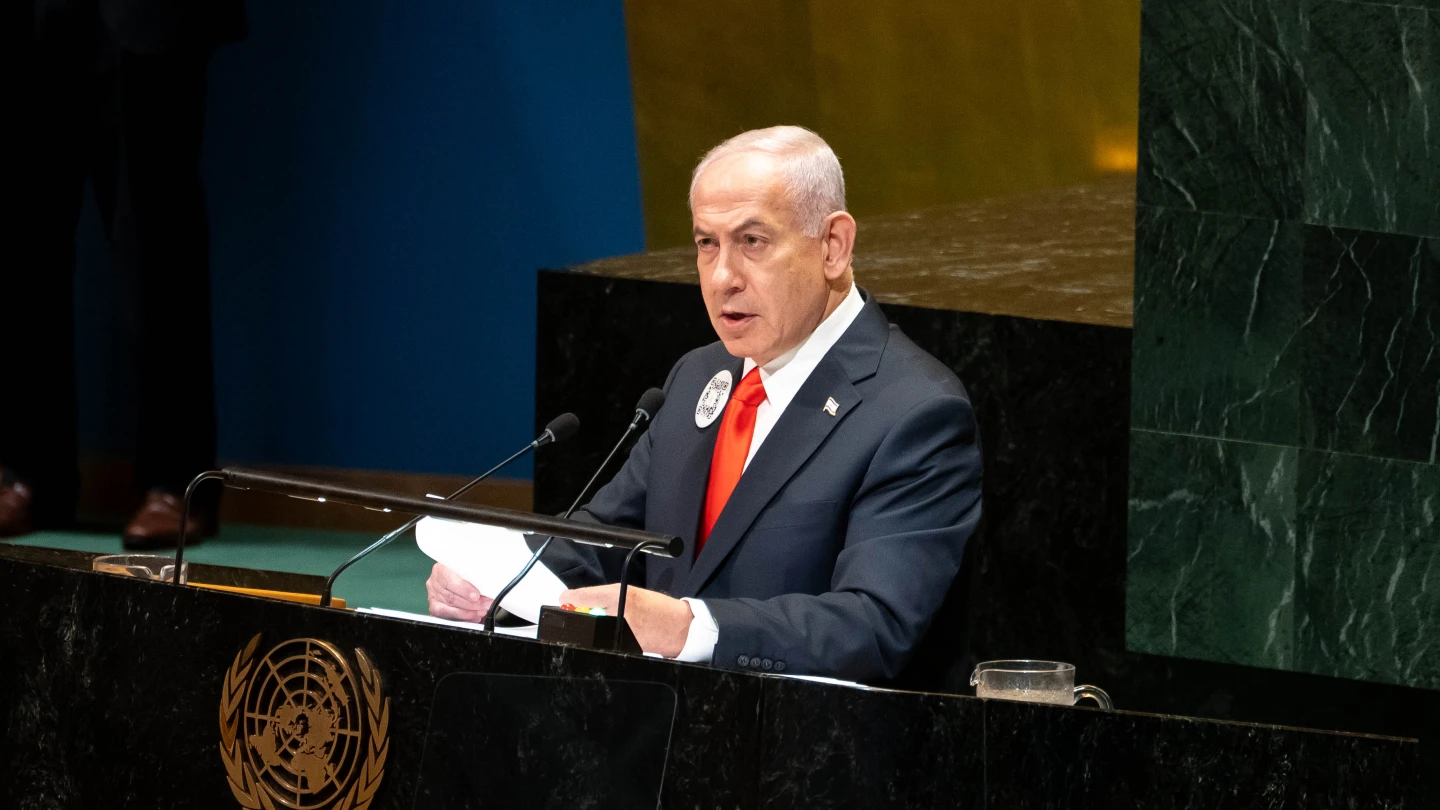
The magnitude of Prime Minister Benjamin Netanyahu’s achievement in singing peace treaties with moderate Sunni states cannot be overestimated.

Israeli Prime Minister Benjamin Netanyahu, U.S. President Donald Trump, Bahrain Foreign Minister Abdullatif bin Rashid Al-Zayani and UAE Foreign Minister Abdullah bin Zayed Al Nahyani sign the Abraham Accords on the South Lawn of the White House in Wasington, D.C., Sept. 15, 2020. Credit: Tia Dufour/White House.
Ze’ev Jabotinsky, a senior software architect, served as a pilot in the Israeli Air Force.

“As long as the Arabs have even a glimmer of hope of getting rid of us, they will not sell this hope for anything in the world. This is precisely why they should be perceived as a living nation—a people that agree to concessions on fateful questions only when they have no hope left. Only when there are no cracks in the Iron Wall will the extremist groups lose power to the moderate ones.”

That is the gist of an essay written by my grandfather, Ze’ev Jabotinsky, some 97 years ago. He was the first Zionist leader to understand that we are facing a steadfast Arab refusal to acknowledge the Jewish revival in the land of Israel.

One cannot overestimate the magnitude of the achievement marked by Prime Minister Benjamin Netanyahu in singing peace treaties with moderate Sunni states.

He masterfully wove together ties with the moderate Arab states and knew how to recognize—and utilize—the developments in the Middle East in favor of Israel’s interests, striking peace in a region all too familiar with wars.

Other than the diplomatic boon, the peace treaties with the United Arab Emirates and Bahrain are also expected to bolster Israel’s economic resilience and will surely see its technological industries flourish even further.

The prime minister’s actions—praised even by the opposition leader—have proven that the notion presented some 97 years ago still stands, and it stands in stark contracts to dogmas seeking to appease the Palestinians, such as “land for peace.”

Ze’ev Jabotinsky is the grandson and namesake of the founder of the Revisionist Zionist Movement, on the tenets of which Israel’s Likud Party was founded.

This article first appeared in Israel Hayom.

The Islamic Republic forced Washington to “retreat both on the battlefield and at the negotiating table,” said Mohammad Bagher Ghalibaf.
AIPAC spokeswoman Deryn Sousa told JNS that Adrian Boafo “has made clear his vision to carry forward the strong pro-Israel legacy of Congressman Steny Hoyer, one of Congress’s most steadfast champions of the U.S.-Israel relationship.”
The Associated Press called the race early for the Jewish Democrat, whom the mayor has backed.
Marc Bloch, who was also a veteran and resistance fighter whom the Nazis tortured and killed in 1944, is now interred alongside Voltaire, Alexandre Dumas, Émile Zola and other national French heroes.
The report is “an embarrassment to the United Nations and a disservice to genuine human rights accountability,” Dina Rovner, of U.N. Watch, told JNS.
The Iran-backed terror group’s dominance in Lebanon is a “mutual problem” for Jerusalem and Beirut, the Israeli foreign minister said.
Benny Gantz, JNS editor-in-chief Jonathan S. Tobin, Gilad Erdan, Mosab Hassan Yousef, Nissim Black and leading voices in security, diplomacy, media, law and Jewish communal affairs headline the summit’s third day in Jerusalem.