


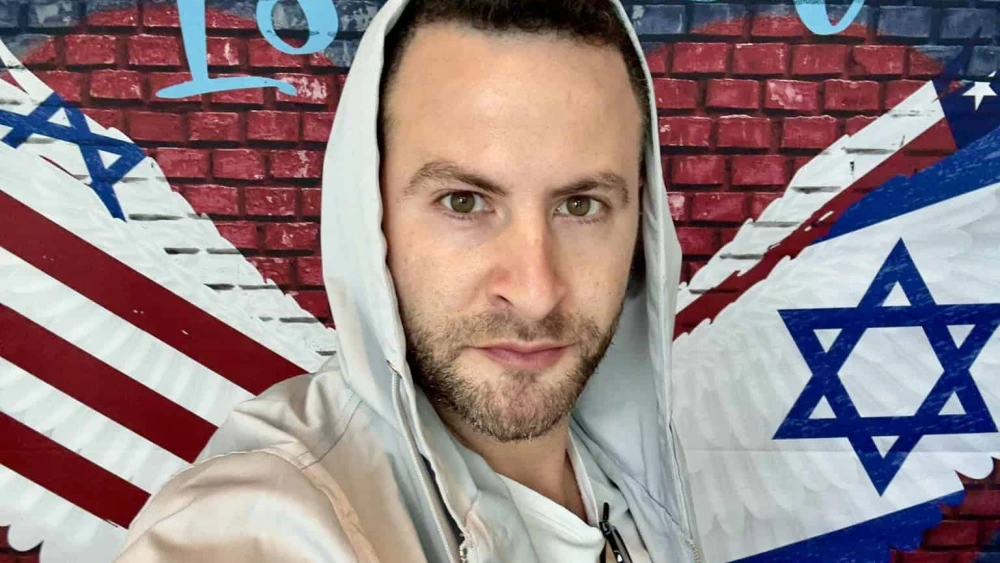
One of America’s leading free-speech groups has withdrawn its support for an Israeli comedian after previously describing the threatened cancellation of his shows as “a profound violation of free expression.”
PEN America issued a brief retraction on Tuesday, saying that “on further consideration,” it would no longer support Guy Hochman after venues in New York City and Los Angeles canceled his scheduled performances amid complaints from anti-Israel protest groups about his past comments regarding Gaza.
“On Jan. 29, 2026, PEN America issued a statement on the abrupt cancellation of performances in New York and Los Angeles by an Israeli comedian, who has been accused by advocacy organizations of incitement to genocide in Gaza,” PEN wrote.
“PEN America has decided to withdraw this statement,” it said. “We remain committed to open and respectful dialogue about the divisions that arise in the course of defending free expression.”
Just days earlier, the foundation had rejected calls for Hochman to recant his alleged views as a condition to perform.
“It is a profound violation of free expression to demand artists, writers or comedians agree to ideological litmus tests as a condition to appear on a stage,” wrote Jonathan Friedman, PEN’s managing director for U.S. free expression programs.
“In this case, Hochman has a history of dehumanizing social-media posts about Palestinians that celebrate casualties and call for even more destruction in Gaza,” he said. “But shutting down cultural events is not the solution. Regardless of the accusations against him, Hochman has a right to perform without facing threats or litmus tests.”
Anti-Israel groups, including the Hind Rajab Foundation, have compiled social media posts from Hochman, a popular Israeli comedian, as part of legal efforts to bar him from performing in the United States and Canada.
Those posts include statements from Hochman, who, as a reservist in the Israel Defense Forces, frequently performed in uniform alongside Israeli troops, that “not a single mosque will remain in Gaza” and calling for “no humanitarian aid, no mercy” in the enclave.
Under U.S. law, the standard for illegal incitement following the 1969 Supreme Court case Brandenburg v. Ohio is speech directed to produce “imminent lawless action.” It is not clear how any of Hochman’s posts, many of which are years old and written in Hebrew, would fail to be protected speech under the First Amendment.
JNS sought comment from PEN about its decision to retract its support for Hochman.
The group’s reversal on Hochman is not the first time that the conflict in Gaza has caused internal dissent among the free expression advocates.
In 2024, it canceled its annual literary awards and world literature festival after critics accused its CEO, Suzanne Nossel, of “longstanding commitments to Zionism, Islamophobia and imperial wars in the Middle East,” prompting some writers to withdraw.
Nossel resigned later that year, and in September, the group accused Israel of war crimes.



