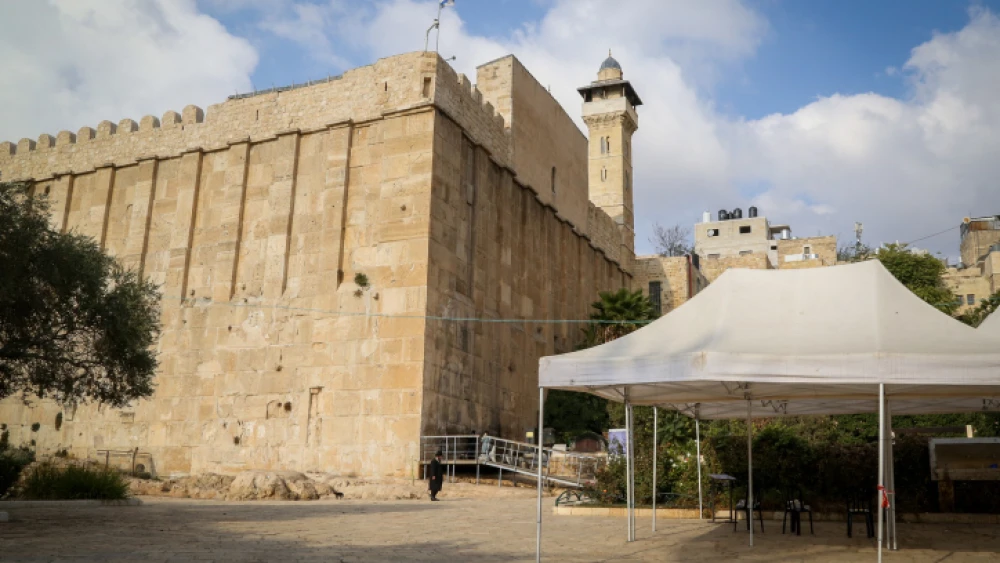
Israeli security forces thwarted a stabbing attack at the Tomb of the Patriarchs in the Judea city of Hebron, the Israel Police said on Sunday.
The suspect, a 37-year-old Palestinian woman who came to the holy site with her two children, aroused suspicion from security guards when she refused to open her bag during a routine inspection, police said.
“During the search of the bag, a police officer noticed a knife hidden inside a T-shirt,” according to the statement. “The suspect (37) was arrested along with one of her sons; the other son was detained.”
Following her arrest, the suspect confessed that she is married to a Hamas terrorist serving time in an Israeli prison and that she had intended to stab officers protecting Judaism’s second-holiest site.
לוחמי מג"ב איו"ש עצרו במערת המכפלה בחברון חשודה שתכננה לבצע פיגוע דקירה נגד איש כוחות הביטחון
— משטרת ישראל (@IL_police) July 14, 2024
הכוחות ביצעו בידוק על החשודה, שהגיעה לעמדת הכניסה יחד עם שני ילדיה. כשהתבקשה לפתוח את התיק שלה, סירבה לשתף פעולה וניסתה להפריע למהלכו התקין של הבידוק.
במהלך החיפוש בתיק, הבחינה… pic.twitter.com/BskoloyzPX
Judea and Samaria saw a dramatic rise in Palestinian terrorist attacks in 2023 compared to the previous year, with shootings reaching their highest level since the Second Intifada of 2000-05, according to IDF data.
Between Oct. 7 and Jan. 15 alone, the Hatzalah Judea and Samaria rescue group recorded more than 2,600 terrorist attacks against Israelis in the region, including 760 cases of rock-throwing, 551 fire bombings, 12 attempted or successful stabbings and nine car rammings.
Also on Sunday, four people were wounded, including two seriously, in a terrorist car-ramming attack at the Nir Tzvi Junction near the central Israeli city of Lod. One of the victims was listed in critical condition.