Newsletter
Newsletter Support JNS

Two die amid record-breaking heat wave in Israel

Electricity demands broke records as temperatures soared more than 120 degrees in some areas.

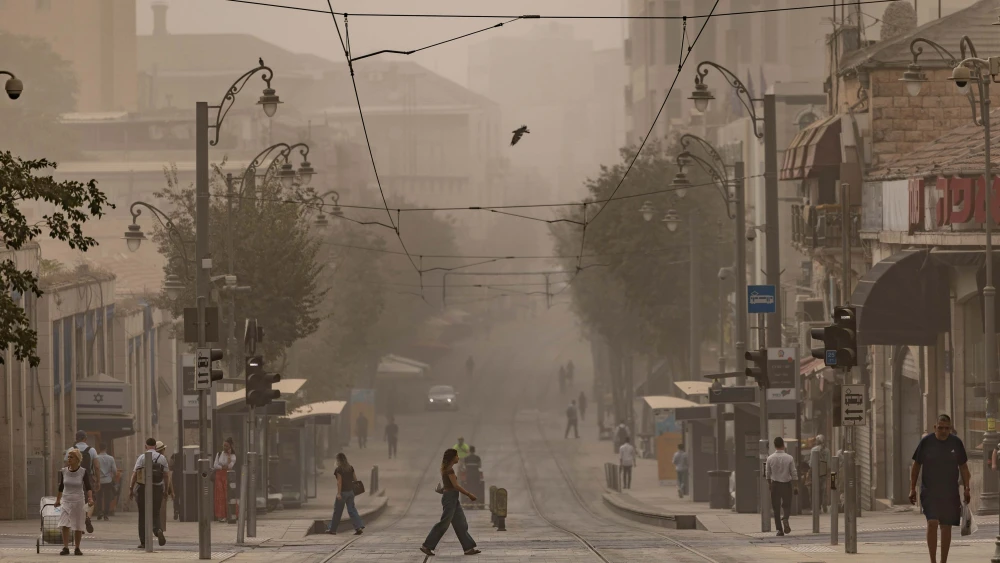
Heatwave, Jaffa Road in Jerusalem
Jaffa Road in Jerusalem, Aug. 11, 2025. Electricity demand hit all-time highs this week amid a severe heatwave that saw temperatures reach as high as 120 degrees. Photo by Chaim Goldberg/Flash90.

Two people have died amid a record-breaking heat wave that roasted Israel this week, reaching highs of some 120 degrees Fahrenheit (49 Celsius), according to Hebrew media reports.

A 70-year-old man died in Eilat after collapsing from heatstroke. The second fatality was recorded in the central Israeli city of Rishon Letzion, where a man in his 60s also succumbed to the heat.

The hottest parts of the country were inland in the Dead Sea area, the city of Eilat and the Jordan Valley. While temperatures repeatedly topped 100 degrees Fahrenheit (38 Celsius) in Jerusalem this week, with little nighttime relief and record-high lows, Tel Aviv and other coastal cities hovered around 90 degrees (32 Celsius) but saw humidity levels over 70%.

Electricity demand broke records on Wednesday for the fourth consecutive day. Israelis used more than 17,000 megawatts on Wednesday, after surpassing 16,000 MW on Tuesday, according to Israel’s Independent System Operator company.

Temperatures were expected to drop on Friday and return to normal by Saturday.

See more from JNS Staff
At least one of the gunmen, a member of Hamas’s Nukhba Force commandos, was killed.
The terrorist group held the media event outside the emergency room at Al-Aqsa Martyrs Hospital in Deir al-Balah.
The Israeli defense minister met with Maj. Gen. Omer Tischler to review the ongoing force buildup.
New centers in Chernivtsi and Bila Tserkva will serve about 200,000 children, providing classrooms, libraries and support during treatment in medical centers.
Visitors described dozens surrounding, spitting at and threatening them for 90 minutes after they left a synagogue following Shabbat services.
“The laying of tefillin in the State of the Jews is not a subject for controversy; it is part of our Jewish identity,” Minister Yoav Kisch said.