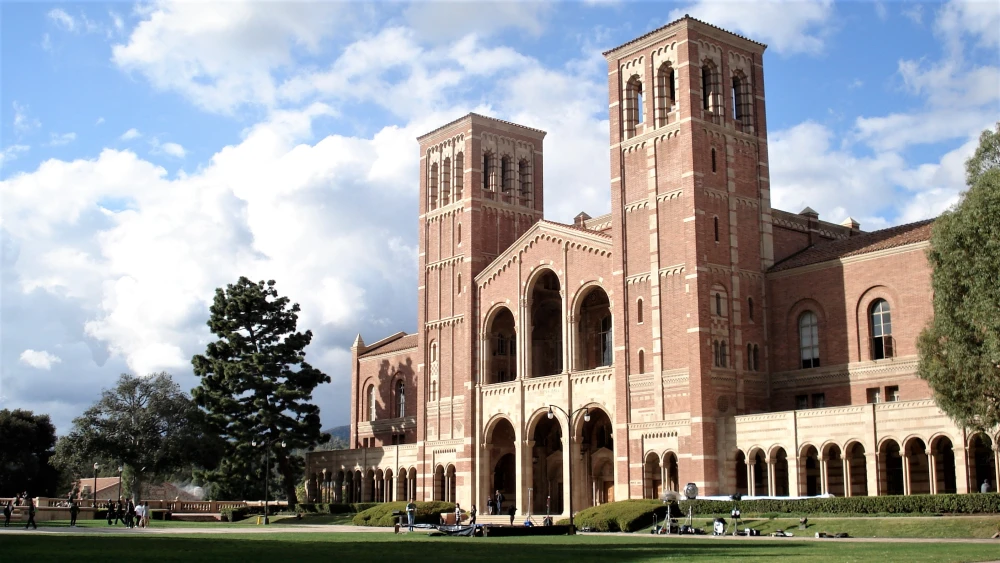
UCLA will host its first American Jewish Music Festival on March 1 under the banner “Music Crossing Boundaries.”
The all-day event is funded by the Lowell Milken Fund for American Jewish Music at the UCLA Herb Alpert School of Music, with some additional support. It is co-sponsored by the UCLA Alan D. Leve Center for Jewish Studies.
“From classical to klezmer, tango to Middle Eastern, bluegrass to Broadway—hear how Jewish music and culture has interacted with and been influenced by other cultures and music,” said a description of the event.
The festival will feature concerts, workshops and more, including “JAM (Jewish American Music) Talks,” where artists will open up about their musical influences, and share if and how their music reflects their Jewish identity.
Festival programmer Lorry Black, who also is the associate director of UCLA’s Lowell Milken American Jewish Music Center, told the Jewish Journal that the festival will show Los Angeles “what there is globally in terms of Jewish music and Jewish music innovation.”
He added, “There’s this idea of any genre being a monolith, but anyone who’s dug into Jewish music realizes that’s just a term of convenience. There’s just so much out there, and there are so many ways to look at it.”
Black said the festival is titled “Music Crossing Boundaries” because it offers the opportunity to look at the “different hybridites that exist in Jewish music, and how the intersection of Jewish culture and identity with different types of American culture and identity can create something beautiful.”
He told the publication that he hopes the audience will leave thinking “Jewish music is incredibly diverse, alive and a mirror of the American Jewish experience.”