The daring Israeli rescue of Ethiopian Jews 40 years ago proved the resilience of the Jewish people and commitment to their protection worldwide—demonstrated throughout history—found a powerful expression in “Operation Moses.”
Recently commemorated, this clandestine mission airlifted thousands of Jews who at great risk made their way from Ethiopia to Sudan to be airlifted to the Jewish state. The rescue served as a testament to Israel’s unwavering devotion to safeguarding Jews anywhere and a powerful reminder that Zionism—the millennia-long ambition of Jews to return to their ancestral homeland—is embedded in our Jewish identity.
Daring exodus of Ethiopian Jews to Israel
“Operation Moses” was a bold mission initiated in 1984 to evacuate Ethiopian Jews, known as Beta Israel, through Sudan and on to Israel. Ethiopia was experiencing famine and civil unrest at the time. The community, primarily living in an isolated region, maintained distinct religious traditions despite being cut off from other Jewish communities for more than 2,000 years, living their lives according to biblical Judaism.
An educator at the University of Wisconsin, Michal Avera Samuel was only 8 years old when her family left Ethiopia: “Up until the age of 9, I lived in a world where the Holy Temple in Jerusalem actually existed. Like my parents and teachers, I believed that the Second Temple stood in its place in Jerusalem and was literally made of pure gold. The ideal of Jerusalem was the force that provided us with the stamina to persevere during the arduous trek through the desert. It was the dream that kept us going.”
Thousands of Ethiopian Jews undertook arduous journeys to refugee camps in Sudan. The journey was fraught with immense hardship. In late 1984, 21-year-old Fantanesh Ayaleou Zamir tragically lost three babies during her barefoot trek to Sudan—the first step towards Jerusalem. Becky Sereche made the journey as an 8-year-old: “It was when Jews of Ethiopian descent somewhere there in Africa decided it was enough waiting to get to Jerusalem and got up and started walking.”
The clandestine mission to airlift 8,000 Ethiopian Jews was a dramatic and successful effort to rescue a large population of Jews still living in Africa. Subsequent operations, including “Operation Solomon,” facilitated the whirlwind transport of more than 14,000 individuals within a 36-hour period in 1991.
Zionism is a core aspect of Jewish identity
The longing for a return to Zion (Jerusalem) is a core aspect of Jewish identity, evident in the Ethiopian Jewish community’s centuries-long desire to reach their ancestral homeland. The traditional phrase, “Next Year in Jerusalem,” is recited annually at Passover seders and during Yom Kippur services. This connection is especially relevant today, as Zionism is under attack.
Sigd is a unique Ethiopian Jewish holiday celebrated 50 days after Yom Kippur. It is a day of renewal marked by prayers and ceremonies that reflect the community’s historical longing for their ancestral homeland. Ethiopian Israeli activist and educator Brhan Worku: “Sigd is a holiday where an entire Jewish community in Ethiopia would climb a mountain to connect with their faith and pray to return to Jerusalem. Today, the tradition is celebrated in Jerusalem, where thousands of Ethiopian Jews gather to give thanks.”
The impact of this community’s journey is evident. The children of “Operation Moses” immigrants have given birth to 7,645 children in Israel, with names like Israel, Abraham, Moshe and Mazal reflecting their deep connection to Jewish tradition. There are about 170,000 Ethiopian Jews living in Israel today—75% under the age of 45.
Ethiopian Jews reflect Israeli diversity
Israel has absorbed waves of Jewish immigrants (aliyah) from around the world, including from Europe after the Holocaust, those expelled or forced to emigrate from Muslim countries—from Morocco to Iraq—after the State of Israel’s independence in 1948 and Jewish aliyah following the collapse of the Soviet Union. Each wave of immigrants contributed to the ongoing development and diversity of the Jewish state.

The arrival of Ethiopian Jews contributed to the nation’s population of emigres from most parts of the world. Their integration into Israeli society reflects the pluralistic nature of the country, where various cultural and religious traditions coexist. Ethiopian Israelis today are engaged in all sectors of society, including medicine, education and sports, contributing to the rich tapestry of Israeli society.
Pnina Tamano-Shata became Israel’s first Ethiopian-born woman to become an Israeli government minister, served in the Israeli Defense Forces and received an Israeli award for leadership.
Tamano-Shata, whose family was rescued during “Operation Moses,” described continuing efforts to bring the remaining Jews home from Ethiopia: “I have made it my mission to make sure that none are left behind because it is a commitment to our brethren.”
Israel’s real-life ‘Wonder Woman’: ‘I was a messenger from God’
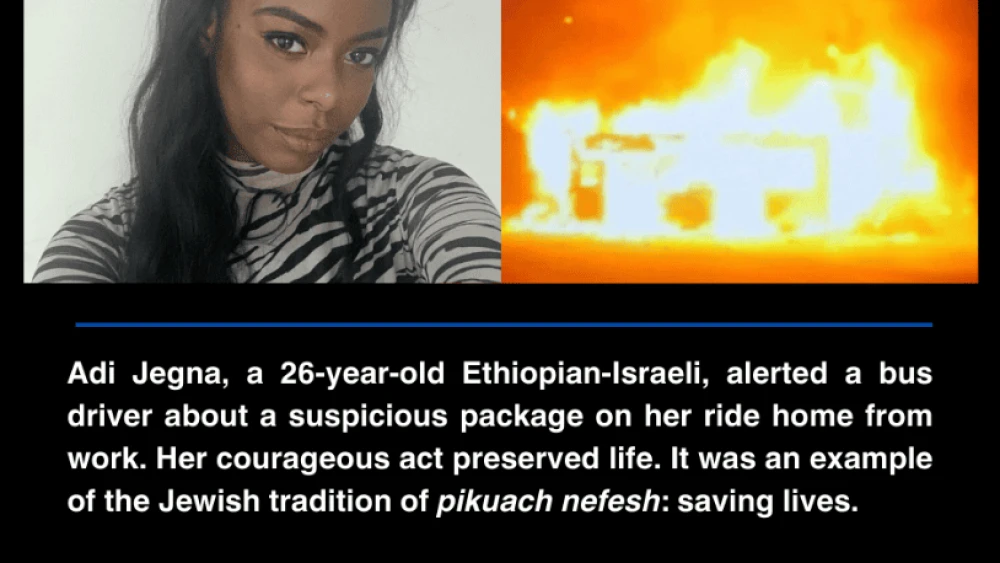
An Ethiopian-Israeli commuter recently prevented a potentially devastating bus bombing. Adi Jegna, 26, displayed extraordinary courage after she noticed a suspicious bag on her bus during her trip home from work.
She looked inside and noticed yellowish liquid and Arabic lettering. She alerted the driver who immediately rerouted the bus and evacuated the passengers moments before a powerful explosion destroyed the bus. Adi does not consider herself a hero. When she learned about the explosion: “I felt that I was the messenger from God to save many people.”
Remaining hostages and ceasefire update
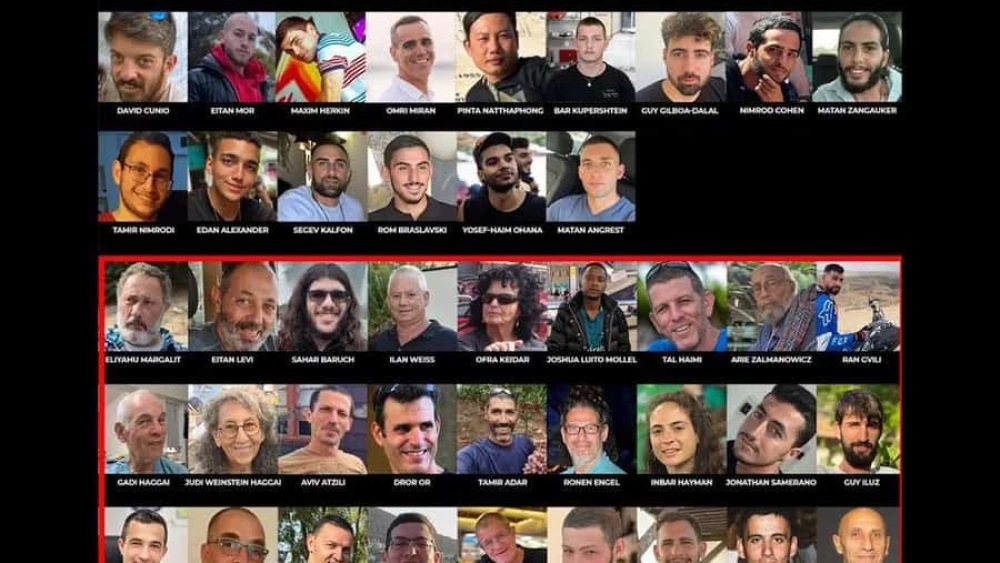
Avera Mengistu, an Ethiopian Israeli held hostage in Gaza for 10 years, highlights the universal nature of the Hamas hostage crisis. He suffered from mental-health challenges before being taken captive and his prolonged tragedy highlights the devastating impact felt by the hostage families, regardless of their cultural, religious or national background.
As Phase 1 of the ceasefire between Israel and Hamas has technically come to an end, negotiations continue for the release of the 59 remaining hostages; as many as 24 are believed to be alive. There are five Americans among them. Israeli-American Edan Alexander is the only one still living.
International mediators also were trying to reach an agreement on Phase 2 of the ceasefire, in which Hamas is expected to release the remaining living hostages and relinquish control of Gaza in exchange for more imprisoned Palestinian terrorists and a full Israeli withdrawal. Given the stated refusal of Hamas terrorists to abandon their control and weapons, Israel and America are promoting a plan to temporarily extend the ceasefire agreed upon in Phase 1, in exchange for the return of all remaining hostages. Hamas rejected this proposal. Egypt was working on an alternative plan.
Anticipating the potential breakdown of talks, Israel is preparing for the war’s resumption and also suspended aid deliveries for additional leverage. The situation remains fluid with updates emerging daily—and the lives of Israel’s remaining hostages hanging by a thread.
Points to consider:
- Zionism is not a political ideology; it is essential to Jewish identity.
The longing for a return to Zion (Jerusalem) is a core aspect of Jewish identity, evident in the Ethiopian Jewish community’s millennia-long desire to reach their ancestral homeland. This enduring connection proves that Zionism is a fundamental expression of Jewish identity and not merely a modern political movement. This sentiment is echoed in the traditional phrase, “Next Year in Jerusalem,” that is recited at Passover seders and during Yom Kippur services every year.
- Israel is a diverse and inclusive society.
Israel is home to a vibrant mix of Jews, Muslims, Christians, Druze and numerous other communities. Israel’s Declaration of Independence calls for the “complete equality of social and political rights to all its inhabitants irrespective of religion, race or sex, and guarantees freedom of religion, conscience, language, education and culture.” Every Israeli has the opportunity to contribute to the nation regardless of their background: From voting and holding public office to serving in the military and sitting on the Supreme Court. Israeli minorities have captained its national soccer team and led hospitals. Israel’s inclusivity is a living reality.
- ‘Operation Moses’ demonstrates Israel’s commitment to Jews.
Israel’s commitment to protecting Jewish lives is a principle demonstrated through numerous rescue operations. The daring “Operation Moses” airlift of Ethiopian Jews is not an isolated incident. Israel has consistently acted to rescue Jewish communities facing danger, from “Operation Magic Carpet” in Yemen and “Operation Mural” in Morocco to the dramatic airlift of Jews from Iraq in “Operation Ezra” and the former Soviet Union in “Operation Exodus.” These efforts emphasize Israel’s role as a refuge for Jews. The successful integration of these diverse communities into Israeli society showcases Israel’s dedication to building a nation where everyone can thrive.
- Ethiopian Jews enrich Israeli society.
The Ethiopian Jewish community has become a vibrant part of Israeli society. Their presence enriches the nation’s cultural tapestry and strengthens its social fabric. The stories of individuals—some who walked thousands of miles on their bare feet—are an inspiration to Israelis for their courage and resilience to reach their homeland. Their contributions not only demonstrate the community’s strength but also underscore Israel’s commitment to fostering a society where diversity is valued and every individual has the opportunity to succeed.
- Israel is a homeland reclaimed, not a white European settler colony.
Anti-Israel activists dishonestly repeat many terms used in other conflicts to create false narratives and deliberately distort history. Israel is the ancestral homeland of the Jewish people, who have maintained a continuous presence for millennia. Forced into exile, many Jews have returned home from Africa, Asia, Europe and America. The libelous labeling of Israel as a “colonial project” ignores their enduring connection to the Land of Israel. It is a cynical attempt to delegitimize Israel’s existence by falsely equating Zionism with racism. The “apartheid” accusation grossly misrepresents Israel’s diverse and integrated society, where all citizens have equal rights.