


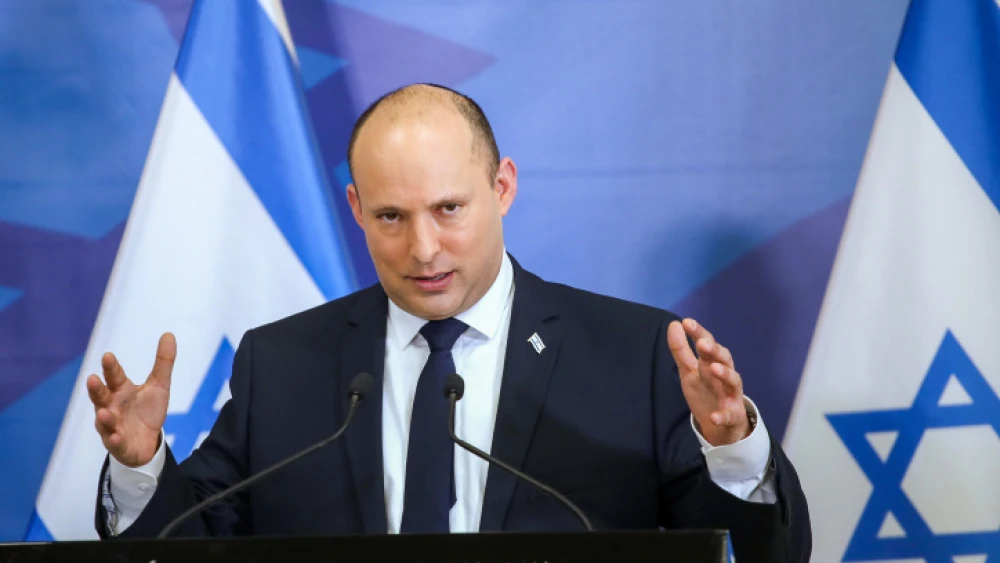
Israeli Prime Minister Naftali Bennett spoke with Russian President Vladimir Putin for the second time in recent days.
According to the Kremlin, Putin discussed with the Israeli leader Moscow’s assessment of the third round of talks between Russian and Ukrainian officials that took place on Monday. Those talks ended without any significant breakthrough as efforts to establish a humanitarian corridor from Ukrainian cities under attack by Russian forces have faltered.
Bennett made a quick visit to Moscow on March 5 to meet with Putin in person as part of an effort to mediate the conflict between Russia and Ukraine.
Unlike most other Western countries, Israel has maintained open lines of communication with Putin while also supporting Ukraine during the Russian military onslaught.
Ukrainian President Volodymyr Zelenskyy also said that he spoke with Bennett on Tuesday and thanked him for his diplomatic efforts.
In a tweet, Zelenskyy said the two “discussed ways to end the war and violence.”
According to a report in Axios, Israeli officials with direct knowledge of Bennett’s discussions with the leader say that there has been a softening of positions on both sides in the last 24 hours with discussions around demilitarizing the Donabas region of Ukraine and the Ukrainians cooling discussions on joining NATO. The officials said that Bennett isn’t presenting Putin and Zelenskyy with any plan or framework, but only passing messages between the two leaders.
The United States has praised Israel’s efforts to try to bring an end to the conflict. On Monday, U.S. Secretary of State Antony Blinken told his Israeli counterpart Yair Lapid that he “appreciated” the efforts, but that Russia has so far chosen not to pursue the path of diplomacy.
The latest efforts by Israel to mediate the conflict came as U.S. President Joe Biden announced that America would ban all Russian oil imports, a striking move against Moscow in retaliation for its invasion of Ukraine that will also likely bring extra costs to U.S. residents at the gas pump.
“We will not be part of subsidizing Putin’s war,” declared Biden, calling the new action a “powerful blow” against Russia’s ability to fund the ongoing offensive.
The president said that Americans would see rising prices but made it a point to say that “defending freedom is going to cost.”



