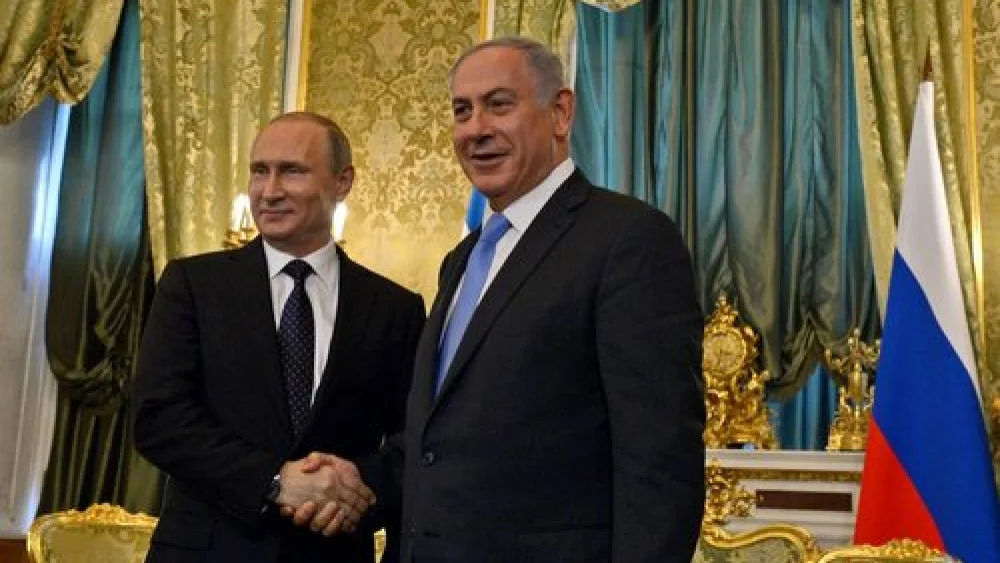
Israeli Prime Minister Benjamin Netanyahu spoke on the phone with Russian President Vladimir Putin on Wednesday morning to discuss regional security issues, the Prime Minister’s Office reported.
The conversation between the two leaders focused on Iranian aggression and the situation in Syria, as well as the COVID-19 pandemic, according to the statement.
Netanyahu also wished Putin a happy birthday; the Russian president turned 68 on Wednesday.
The two leaders have met in person and spoken on the phone several times during the past few years, mainly to coordinate moves in Syria. On Jan. 23, just before the coronavirus crisis went global, the Russian president was in Israel to attend an unveiling ceremony for a monument commemorating the defenders and survivors of the German siege of Leningrad during World War II.
His visit took place amid rising tensions between Jerusalem and Moscow over Israeli airstrikes in Syria, as well as the months-long incarceration of Israeli tourist Naama Issachar on drug-related charges.
Six days after attending the ceremony, Putin pardoned Issachar, who was released from prison on Jan. 30.