


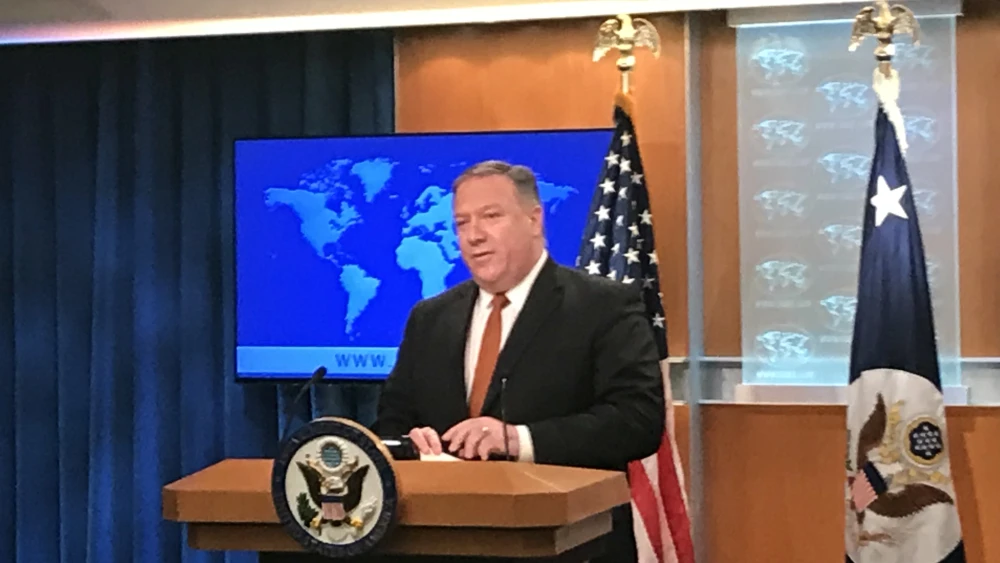
In a press briefing on Wednesday, U.S. Secretary of State Mike Pompeo blamed Iran for attacks on U.S. interests in Iraq, reported Reuters.
After identifying Iran as the “origin” of threats against Americans in Iraq, Pompeo explained: “Our intelligence in this regard is solid. We can see the hand of the Ayatollah and his henchmen supporting these attacks on the United States.”
Last month, attackers fired mortars at the Green Zone in Baghdad, which houses, among other institutions, the U.S. embassy, and Katyusha rockets at the airport in the southern city of Basra, where the U.S. consulate is located. The White House, at the time, said that it would hold Iran accountable for attacks by its proxies on American interests.
As a result of the Iranian threat, the United States announced on Friday that it was closing the Basra consulate.
During the briefing, Pompeo also said that the United States was withdrawing from the 1955 Treaty of Amity between the two nations, after the International Court of Justice ruled on Wednesday that the re-imposition of sanctions on Iran was a violation of the treaty.
“We’re disappointed that the court failed to recognize that it has no jurisdiction to issue any order relating to these sanctions measures with the United States, which is doing its work on Iran to protect its own essential security interests,” said Pompeo.
In explaining why he was withdrawing from the nuclear deal back in May, U.S. President Donald Trump said that the United States “will not allow a regime that chants ‘Death to America’ to gain access to the most deadly weapons on Earth” and will no longer give into “nuclear blackmail.”
The secretary of state also said that America would do what it can to ensure that Iranians get needed humanitarian aid while the regime squandered its resources.
In response to a reporter’s question, Pompeo described the recent Russian transfer of S-300 anti-aircraft missile systems into Syria as presenting a “greater risk to all of those in the affected areas and to stability in the Middle East.”
The secretary added “we consider this a very serious escalation.”



