


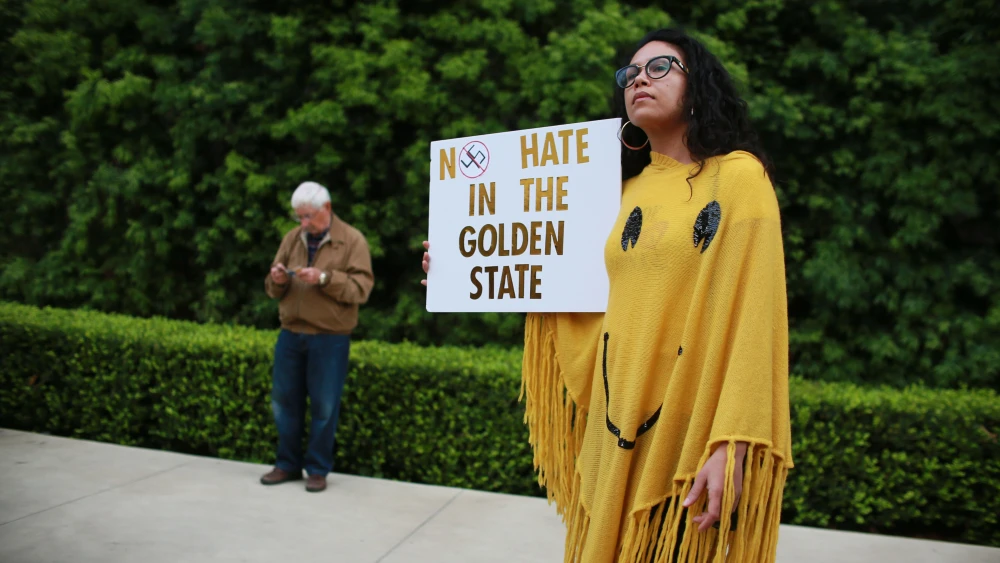


When a state promises to fight hate, voters expect it to protect every victim. California is breaking that promise, and taxpayers are paying for it.
This month, the legislature votes on Gov. Gavin Newsom’s final state budget, with three anti-hate programs at stake.
The Commission on the State of Hate is the state’s research and advisory body. The legislature granted it a four-year extension in 2025 after it was set to sunset. The new budget gives the Commission $900,000 in 2026 and $1.8 million annually after that.
Second is CA vs Hate, the statewide reporting hotline launched in 2023 with a $10 million budget. It received a $2.383 million extension, but line-item funding expires in June 2026. It is expected to continue within the Civil Rights Department’s $68.7 million budget.
The third anti-hate program, aptly named, Stop the Hate, is the California Department of Social Services program that has routed more than $150 million to community organizations since 2021. The Asian American and Pacific Islander Legislative Caucus is lobbying to keep it alive and add another $100 million.
Before lawmakers sign another check, they need to answer a simple question: Why is California spending hundreds of millions of taxpayer dollars on anti-hate programs that have built a political hierarchy of victimhood inside the state’s anti-hate apparatus?
Data not in dispute
We are civil-rights attorneys who have worked for years in the communities California’s anti-hate machinery is supposed to protect. The state’s own numbers confirm what we see on the ground: California runs these programs through an “oppressor vs. oppressed” lens, and it fails victims who do not fit the script.
Anti-Jewish hate crimes jumped 52.9% in 2023, the largest single-year increase in any category tracked by the California Department of Justice, and climbed again in 2024 to 310 reported events. CA vs Hate’s own first-year data show 37% of validated religious-bias reports were anti-Jewish and 23% were anti-Hindu. Those two communities were hit harder than any other religious group in the state. By the commission’s own accounting, anti-Jewish bias drove about 73% of all religious hate-crime events in 2023.
The data is not in dispute. The state generated the research. Yet the Commission on the State of Hate minimized anti-Jewish and anti-Hindu hatred in both of its last two annual reports.
In the 2023-24 report, anti-LGBTQ+ hate, anti-black hate, missing and murdered Indigenous people, AAPI hate, anti-Latino hate, anti-disability hate and school-based prejudice programs each get dedicated treatment. Anti-Jewish and anti-Hindu hate do not.
Antisemitism, the fastest-rising category of hate in the state of California, was folded into a chapter titled “Hate in the wake of October 7” and bundled with “Muslim, Palestinian, Israeli or Arab” victims under the war in Gaza. In Sacramento’s telling, antisemitism is not a civil-rights crisis. It is a foreign-policy problem.
Anti-Hindu bias got a sentence fragment, even though three Hindu temples were vandalized in 2023 and early 2024, two more were hit in late 2024 and 2025, and calls to the CA vs Hate hotline surged.
The state’s own numbers confirm that it runs certain programs through an “oppressor vs. oppressed” lens, and it fails those who don’t fit the script.
The commission’s newest annual report, released in February 2026, repeats the pattern. It records the anti-Jewish surge, including the more than 50% jump in anti-Jewish hate crime events and the 1,344 antisemitic incidents recorded in California in 2024. Yet antisemitism is still tucked inside a general discussion of religious hate framed by the post-Oct. 7 political environment, while anti-Hindu hate speech again gets a passing line about temple vandalism. The report even concedes that the California Department of Justice does not track anti-Hindu hate-crime statistics.
This pattern did not start by accident. In 2023, the legislature passed SB 403, a first-in-the-nation bill adding “caste” as a protected class. Hindu American groups warned that it singled out their community and violated equal protection and due process rights. Newsom vetoed it, but the fight cemented a framing in California progressive politics: Hindu Americans were no longer victims in the civil-rights story. They were villains. That framing grew out of the Civil Rights Department’s lawsuit against Cisco Systems, where the department explicitly and implicitly linked caste to Hinduism and trafficked in racist claims about Indian Americans.
Now that framing lives inside the state’s anti-hate infrastructure. The CA vs. Hate resource page, operated by the Civil Rights Department, sends Hindu Californians to Sadhana, a New York group with no mainstream standing among Hindus. No California-based Hindu organization is listed. The state maintains formal partnerships with Sikh, Jewish and Muslim groups across California. It has none with Hindu American organizations, even though CA vs Hate’s own report says Hindus account for nearly a quarter of validated religious-bias reports.
Not an oversight, an ideology
The Jewish ledger is no better. CA vs Hate’s contracted partners include CAIR-CA and Bend the Arc: Jewish Action. Both campaigned against the antisemitism framework Newsom signed last year under AB 715, California’s K-12 antisemitism statute. CAIR-CA has continued to reject the anti- Jew hatred legislation law and is lobbying to dismantle it.
On June 9, the federal government put Sacramento on notice. The U.S. Department of Health and Human Services informed Newsom that it is investigating CAIR’s business practices and ethics, citing more than $27 million in federal HHS funds the California Department of Social Services sub-granted to CAIR-CA. The investigation could end in suspension and debarment from federal programs.
CAIR’s long association with Hamas, including a federal judge’s finding of “ample evidence” of that association in the Holy Land Foundation terrorism-financing case, should disqualify it from its place as a “contracted partner” with the California Civil Rights Department. But, the opposite has happened; the commission’s 2024-25 report features CAIR’s own intake numbers as evidence of hate incidents and hate crimes, using their reports as validated statistical incidents.
CAIR is an advocacy group lobbying in Sacramento and a PAC endorsing political candidates throughout the state. Even so, California directly funds CAIR through the CDSS Stop the Hate program. Taxpayers are funding an organization to do “anti-hate work” while that organization campaigns against the state’s own anti-hate laws.
This pattern is not an oversight. It is ideology. At February’s Commission meeting, vice chair Andrea Beth Damsky, a Jewish and LGBTQ+ leader and the commission’s most consistent internal voice on antisemitism, announced her intent to resign. She cited the body’s refusal to hold a single hearing on antisemitism. “Hate is hate,” she said. When the person fighting from inside decides that she has to walk out, that is a verdict on the institution.
California should fight all forms of hate. The point is not to rank victims by worthiness. Public dollars and attention should follow the data. Instead, California’s anti-hate apparatus is clinging to dogma, even when its own research says otherwise.
That is the test for legislators now. Will they make these three taxpayer-funded programs fight hate equally or continue an ideological project dressed up in civil-rights language?
The legislature should require the California Civil Rights Department and the California Department of Social Services to publish criteria for selecting anti-hate partners. Grants should come with written limits on what contracted groups can do with state “anti-hate” money. Partners should be required to align with California’s antisemitism law, not work against it.
The Commission on the State of Hate must allocate its hearings, research and budget in proportion to the hate California actually documents. If it will not, lawmakers should let it sunset and route the money to organizations that serve victims as the numbers find them, not as the ideology prefers them.
Many legislators voting on this budget are on the ballot in November. Voters deserve to know whether they conducted oversight or just signed the check.
Equal protection is not a slogan. It is the promise California makes to everyone who lives here. This month, Sacramento gets to show whether that promise still holds or whether, in 2026, some victims simply count more than others.


