


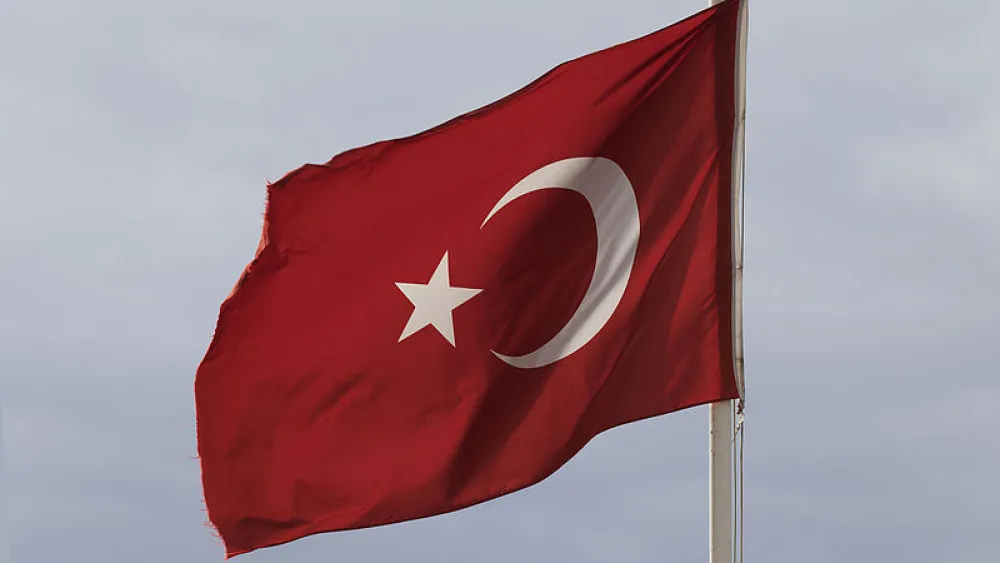

Turkey is navigating an increasingly precarious geopolitical landscape following the U.S.-Israeli military campaign against Iran. A NATO member, regional military power and Eurasian economic hub, Ankara has long demonstrated skill in leveraging regional crises to advance its national interests. However, since the launch of “Operation Roaring Lion” on Feb. 28, Turkey finds itself largely sidelined, attempting to maintain a fragile neutrality while managing mounting strategic costs. Turkish Foreign Minister Hakan Fidan underscored Ankara’s cautious approach, stating that although Turkey is militarily prepared, “our primary objective is not to get into this war.” Despite this position, the conflict is exacerbating Turkey’s vulnerabilities across multiple fronts, including economic stability, border security, relations with Washington and regional influence.
According to Dr. Gallia Lindenstrauss, a senior researcher at the Institute for National Security Studies, Ankara views the war as “the realization of some of its worst strategic scenarios.”
Domestic impact
Volatility in global energy markets triggered by the Iran war has intensified pressure on Turkey’s already fragile economy. Brent crude prices climbed above $100 per barrel, while European natural gas futures surged, deepening Ankara’s current account deficit due to its heavy reliance on imported energy.
Rising energy costs have added inflationary pressure, complicating Turkey’s monetary policy. With annual inflation reaching 31.5% in February, the central bank has been forced to maintain a benchmark interest rate of 37%. Capital Economics chief emerging markets economist William Jackson warned that “even if the conflict is short-lived, the [bank] will struggle to bring interest rates down as quickly as it had previously planned.”
At the same time, instability in Iran has heightened concerns along Turkey’s eastern border. The U.N. refugee agency estimates that as many as 3.2 million Iranians have been temporarily displaced, with approximately 1,300 crossing daily into Turkey via the Kapikoy border gate.
“Just as the wars in Iraq and Syria had negative consequences for Turkey in this respect, so too might this war,” Lindenstrauss wrote, noting concerns that Iranian instability could trigger renewed migration pressures.
Security concerns are compounded by increased activity among Iranian Kurdish opposition groups. Shortly before the war began, five exiled Kurdish factions formed a joint political and military coalition aimed at overthrowing the Islamic Republic. The alliance includes the Kurdistan Free Life Party (PJAK), which Ankara considers an extension of the Kurdistan Workers’ Party (PKK), a group that has waged a decades-long insurgency against the Turkish state.
Turkey’s Defense Ministry said it is “closely following PJAK’s activities,” warning that such groups threaten regional stability.
Diplomatic pressure
Turkey’s diplomatic balancing act has also grown more complicated. Although historically a rival of Iran, Ankara maintained pragmatic ties with Tehran that supported its regional ambitions. However, Iranian missile launches that crossed Turkish airspace and were intercepted by NATO defense systems have strained the relationship.
Turkish President Recep Tayyip Erdoğan warned that violations of Turkish airspace “cannot be excused for any reason whatsoever,” highlighting tensions between the two countries.
Relations with Washington have also come under strain. Reports that U.S. officials considered supporting Iranian Kurdish groups alarmed Turkish policymakers, even though U.S. President Donald Trump later clarified that he did not support Kurdish involvement inside Iran.
“The attempt to engage the Iranian Kurds enraged the Turks,” Lindenstrauss told JNS, suggesting that Ankara’s concerns influenced Washington’s subsequent messaging.
Turkey had strongly opposed military action against Iran, favoring diplomatic efforts to address Tehran’s nuclear program. Washington’s decision to proceed despite these concerns exposed differences between the allies.
Still, Lindenstrauss emphasized that the tensions do not constitute a fundamental rupture in ties. “Both sides recognize each other’s strategic importance,” she said, adding that the Trump administration has generally taken a favorable approach to Turkey.
To manage tensions with Washington, Ankara has directed much of its criticism toward Israel, promoting a narrative that Israel drew the United States into the conflict. This approach allows Turkey to publicly oppose the war while preserving its broader strategic relationship with Washington.
Military pressure
The weakening of Iran’s regional proxy network has also heightened Turkish concerns about shifting regional dynamics. Israeli operations targeting the so-called “Axis of Resistance” are viewed in Ankara as potentially altering the balance of power in ways unfavorable to Turkish interests. Some Turkish officials have warned that once Iran’s influence is reduced, Israel may increasingly focus on Turkey as a regional competitor. Devlet Bahçeli, a senior Turkish political figure, recently suggested that “after Iran, it will be Turkey’s turn.”
Relations between Jerusalem and Ankara have deteriorated significantly since Oct. 7, 2023, with Turkey emerging as one of the strongest international supporters of Hamas and an outspoken critic of Israel.
Some Israeli policymakers increasingly view Turkey as a strategic rival. Former Israeli Prime Minister Naftali Bennett stated in February 2026 that “Turkey is the new Iran,” urging a shift toward a more proactive strategic doctrine. Former Israeli Defense Minister Yoav Gallant has also identified Syria as a likely arena of future friction between the two countries.
Turkish leaders reject such assessments, arguing that Israeli policies are expansionist. Fidan has accused Israeli leadership of pursuing territorial ambitions, warning that Israel will continue identifying new adversaries to justify its regional policies.
Lindenstrauss noted that Turkey fears the possibility that a weakened Iranian regime could ultimately be replaced by a government aligned with the United States and Israel, further strengthening Jerusalem’s regional position. “As a result of all these challenges, Turkey is accelerating its military buildup, while discussions there are growing about the need for nuclear weapons as a means of deterrence,” she said.
Despite the deterioration in relations, Lindenstrauss argued that the weakening or destruction of the Shi’ite crescent could also lead to pragmatic re-engagement between Jerusalem and Ankara.
“If the ‘Axis of Resistance’ is substantially degraded, it may also open options for more constructive regional engagement; therefore, it is not a foregone conclusion that Turkey and Israel are headed for escalation because of this war,” she observed.


