The film “1506: The Lisbon Genocide” premieres worldwide on April 19, the anniversary of the massacre 518 years ago. It will be available for free in multiple languages and online platforms.
Produced by the Oporto Jewish community, it chronicles the massacre of Lisbon’s Jews, who endured a frightful slaughter at the hands of their non-Jewish neighbors. As many as 3,000 men, women and children lost their lives in the course of three days.
Large bonfires were lit along the banks of the Tagus River to which hundreds of mutilated bodies were transported.
Jewish children were thrown into the bonfires alive. Even babies were flung into the flames as butchered bodies filled the city. Heads were borne aloft on the tips of lances.
There were so many victims the pogromists wanted to burn that there wasn’t enough firewood to fuel the city’s pyres.
David Garrett, a defense lawyer and board member of the Oporto Jewish Community, told JNS that genocide is the correct term to describe the Lisbon slaughter, “both etymologically and legally.”
He said that “genocide can be international, but it also can be national or local. Genocide can kill millions of people, hundreds or even dozens.”
The film’s producers have drawn comparisons between the 1506 rampage and the Oct. 7 atrocities by Hamas terrorists.
“To know the 1506 massacre in Lisbon is to know the 7 October 2023 massacre in Israel and the historic genocides of Jews all over Europe. The only change has been in the weapons,” Gabriel Senderowicz, president of the Jewish Community of Oporto and a member of the board of the European Jewish Association, said at the release of the movie’s first trailer in December.
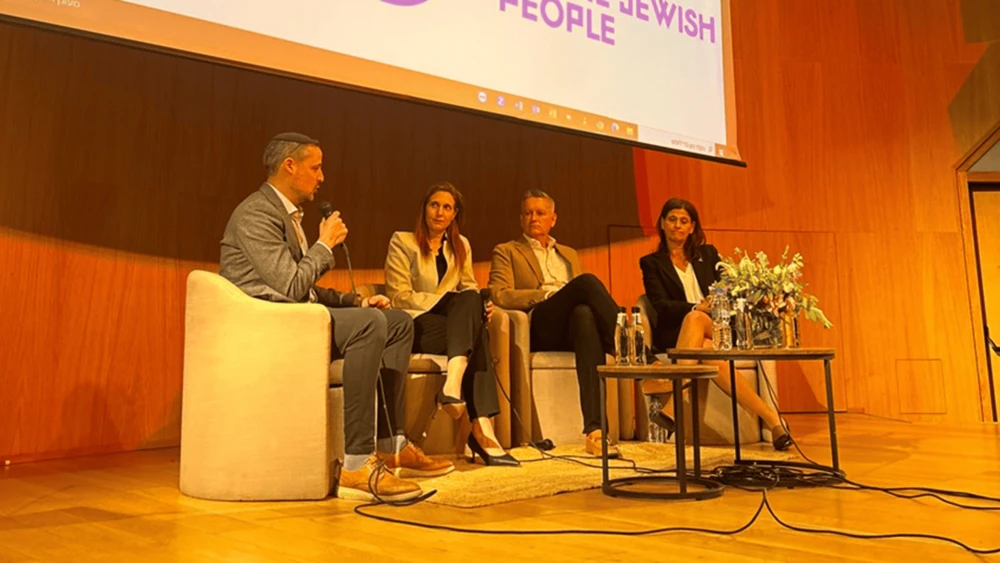
The Tel Aviv Diaspora Museum presented a preview of the film on Wednesday.
The screening was followed by a debate moderated by JNS Jerusalem bureau chief Alex Traiman.
Ashley Perry, president of “Reconectar,” an organization that seeks to reconnect with the over 200 million descendants of Spanish and Portuguese Jewish communities, spoke about how both pogroms affected his family.
The Lisbon Massacre caused his ancestors to leave the Iberian Peninsula and the Oct. 7 massacre cost him a nephew, Roey Weiser.
Several of the speakers addressed the rise of antisemitism following the Oct. 7 terrorist attacks.
Raheli Baratz, head of the World Zionist Organization’s Department for Combating Antisemitism and Enhancing Resilience, said: “Exactly like the plague in the movie shown, there are lots of new conspiracies running on social media ... after October 7, we are getting more than 100 such complaints every day, when in the past, we used to receive 40 of them in a week. These numbers are extremely high. We need to put a serious effort into social media to denounce these messages and win this war.”
‘We all remember the false reports’
Michal Cotler-Wunsh, Israel’s special envoy for combating antisemitism, said, “The alarming tsunami of antisemitism in response to the Oct. 7 massacre by genocidal terrorists is the result of decades of systematic demonization, delegitimization and double standards that not only denies the individual Jew an equal place in society but denies Israel, Jew among the nations, an equal place in the family of nations.”
She added that “as this unleashed hatred rages around the world, it is critical to recognize that antisemitism is a security threat to all the places and spaces in which it festers and spreads.”
JNS’s Traiman noted the role that mainstream media has played in spreading false reports.
“We all remember the false reports that Israel bombed a hospital,” he said. “Of course, it was quickly proven that Israel did not bomb the hospital. But if you go to Google even now, you’ll find hundreds of headlines reporting on this false incident as if it was true.”