Archaeology
News and features about archaeological finds linking stories from the Torah and Prophets, or other historical events to the State of Israel

In 1987, he joined “Moment” magazine as editor and publisher—a position he would fill for the next 15 years.

The well-preserved coin, bearing the head of the Roman Emperor Antonius Pius, dates from 158–159 C.E. and was minted in the city of Geva, according to the Israel Antiquities Authority.

The discovery marks the first time purple-dyed Iron Age textiles have been uncovered in the Southern Levant.

“The hardest thing is to hear that one of the kids whose tag you’re holding in your hand arrived ... on a train full of children ... sent to die alone,” says Yoram Haimi of the Israel Antiquities Authority.

It consists of restrictions on importing “certain archaeological and ethnological material from Morocco.”

In Roman times, a mosaic team manager earned 150 dinars a day, while a ship’s carpenter earned only 60. But the work was backbreaking.
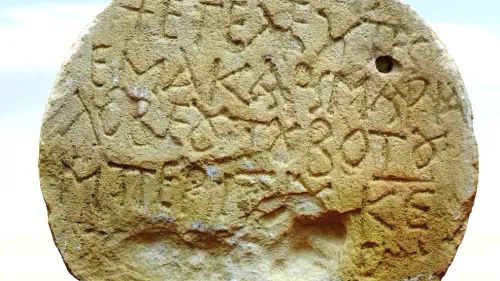
The inscription, which dates from the late sixth-early seventh centuries C.E., reads: “Blessed Maria, who lived an immaculate life.”

The round dolomite stone, originally discovered in the 1960s, was re-examined and led researchers to conclude that it was used to grind materials to allow hominids to maximize the resources at their disposal.

Old City digs beat Norway’s Spiral Tunnel in the International Tunneling and Underground Space Association awards.
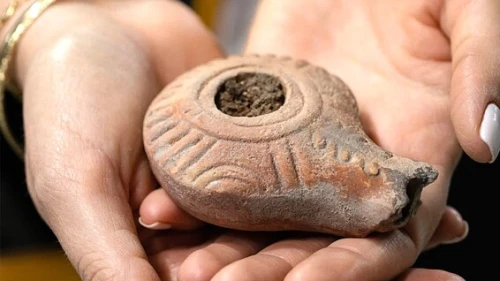
“It’s not every day that we get to find a candle preserved in its entirety. We are all very excited,” says Ari Levy, director of excavations for the Israel Antiquities Authority.

The aim is to create a nationwide network for sharing best practices for those with special needs and disabilities at galleries and heritage sites.
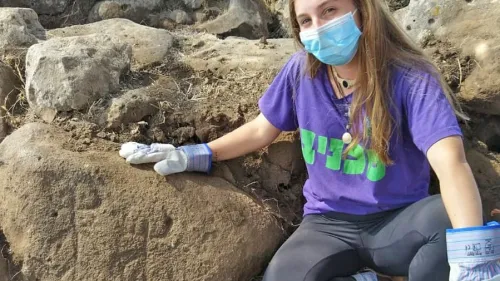
Archaeologists believe the complex, discovered during construction work in Moshav Haspin, was built by the Aramean Kingdom of Geshur.