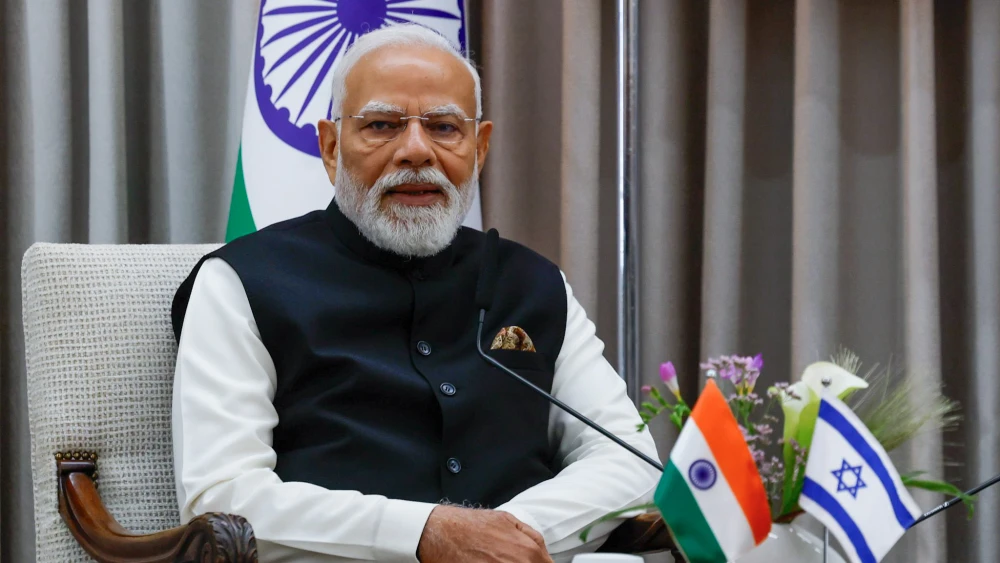

There are moments in the life of nations when history seems to slow down, inviting two civilizations to recognize a shared trajectory. India and Israel stand at such a moment. Their relationship, once shaped by distance and hesitation, has matured into a partnership animated by strategic clarity, cultural confidence and a sense of civilizational purpose.
What began as a pragmatic alignment has become something deeper: recognition that two ancient cultures, revived as modern democracies, now possess the capacity and perhaps the responsibility to shape the emerging world order.
Under the tenure of Israeli Ambassador to India Reuven Azar, now in his second year, this partnership has acquired a new intellectual architecture. His six‑pillar framework offers a clear, compelling structure for understanding the depth and direction of the India-Israel relationship. As he put it, “We always felt that the Indo‑Israeli relationship is special. Beyond harnessing it to advance common goals, which we did intensively during the last year, I felt the need to conceptualize it, or simply state what we all already know but in a way that will help us understand it better and focus the actions we take in a more purposeful manner.”
Rather than narrowing the conversation, his framework expands it: inviting scholars, practitioners and strategists to explore its implications and build upon its foundations. This essay is one such effort: an attempt to deepen the strategic and civilizational possibilities embedded within the six pillars he has put forward.
The first pillar, “Civilizational Resilience and National Revival,” is the emotional and historical core of the relationship. India and Israel are not young nations improvising their way through modernity. They are ancient civilizations that endured conquest, dispersion, colonialism and existential threat, yet refused to disappear. Their modern states were not accidents of geopolitics but acts of civilizational will.
This shared experience creates a bond deeper than treaties or trade agreements. It is the recognition that both peoples rebuilt their sovereignty not as a break from the past, but as a continuation of it. The challenge now is whether these two civilizations can translate their parallel revivals into a shared civilizational project—one that shapes the architecture of the 21st century rather than merely adapting to it.
The second pillar, the “Fight Against Terrorism,” is where the moral and strategic dimensions converge. India and Israel are democracies that have faced terrorism not as an abstraction but as a lived reality. Their cooperation is born not of convenience but of necessity.
Taken together, the six pillars form more than a framework.
Yet the next phase demands more than shared intelligence or defense procurement. The world is entering an era where terrorism is augmented by drones, cyber warfare, autonomous systems and information manipulation. The question is no longer whether India and Israel can defend themselves. It is whether they can jointly define the doctrines, technologies and ethical frameworks that democratic societies will need to confront these new threats. In this domain, the partnership is not reactive; it is potentially generative.
The third pillar, “Freedom of Entrepreneurship,” speaks to the cultural DNA of both nations. India is becoming the world’s most dynamic entrepreneurial ecosystem, powered by a billion‑person market and a digital public infrastructure unmatched anywhere. Israel remains the world’s most concentrated innovation hub, a society where risk‑taking is not a deviation but a norm.
When these two cultures of initiative meet, something unusual happens: Scale encounters velocity. India’s vastness and Israel’s intensity create a hybrid energy that neither could generate alone. This energy is already visible in the emerging innovation corridors linking Tel Aviv, Bengaluru, Hyderabad and Gujarat; corridors that blend Israeli deep‑tech with India’s capacity for mass‑scale deployment.
The challenge is to channel this energy into joint ventures, shared IP frameworks and co‑development platforms that allow Indian ambition and Israeli ingenuity to reinforce each other. Entrepreneurship, in this sense, becomes not merely an economic activity but a strategic instrument.
The fourth pillar, “Innovation and Competition,” extends this logic into the global arena. Innovation is not a luxury for either nation; it is a survival strategy. Israel innovates because it must. India innovates because it can. Together, they can build competitive advantage in fields that will define the next century: water security, food systems, renewable energy, semiconductors, cybersecurity, space and medical technology.
But the real challenge is not to innovate in parallel. It is to compete together—to enter global markets as partners, not rivals, and to create joint products and platforms that can serve Africa, the Gulf, Southeast Asia and Latin America. This is where the Indo‑Abrahamic corridor becomes more than a diplomatic concept. It becomes a strategic geography in which India and Israel act as co‑architects of a new economic and technological order.
The fifth pillar, “Tolerance and Spiritual Heritage,” is often misunderstood as soft power. It is not. It is civilizational power. India and Israel are two of the world’s oldest spiritual cultures, societies in which faith is not a private preference but a civilizational inheritance. India is one of the few places where Jewish communities lived for centuries without persecution, a historical fact that carries profound emotional weight in Israel.
But the significance of this pillar lies not in nostalgia. It lies in the possibility of offering the world a model of how ancient traditions can coexist with modern innovation, how spiritual depth can reinforce democratic pluralism and how cultural confidence can serve as a stabilizing force in an age of identity conflict. This pillar is not ornamental; it is foundational.
The sixth pillar, “Sustained but Inclusive Development,” is both the most ambitious and the most essential. India’s development needs—water security, agricultural transformation, renewable energy, digital health and climate resilience—are immense, and Israel brings world‑leading capabilities in each of these domains. But the objective is neither charity nor simple technology transfer. It is co‑development: building agricultural corridors, water‑recycling systems, renewable‑energy platforms, and digital‑health solutions that can serve both nations and, ultimately, the wider world.
Think beyond the bilateral
At the heart of this effort is a shared cultural instinct toward inclusion, ensuring that underprivileged communities and people with disabilities are not observers of progress but participants in it. This commitment to economic empowerment is embedded in how both societies innovate and act. If India and Israel solve these challenges together and lift those historically excluded, they will export not just technology but a model of inclusive development.
What makes this moment especially consequential is that both nations are undergoing internal transformations that complement each other. India is consolidating its position as a global economic engine, reshaping supply chains and asserting a more confident civilizational identity on the world stage.
Despite facing profound security challenges, Israel continues to demonstrate an unparalleled capacity for innovation, adaptation and strategic clarity. These trajectories are not parallel lines; they are converging arcs. The more India rises, the more space it creates for Israel to expand its strategic relevance across the Indo‑Pacific. The more Israel innovates, the more tools it offers India to accelerate its development and secure its technological sovereignty.
This convergence is reinforced by the growing connective tissue between the two societies; from diaspora networks and academic exchanges to the expanding presence of Israeli technology in Indian agriculture, water systems and digital infrastructure. These are not isolated initiatives; they are the early architecture of a deeper alignment. If nurtured with intention, they can evolve into a partnership that is not merely bilateral but systemic.
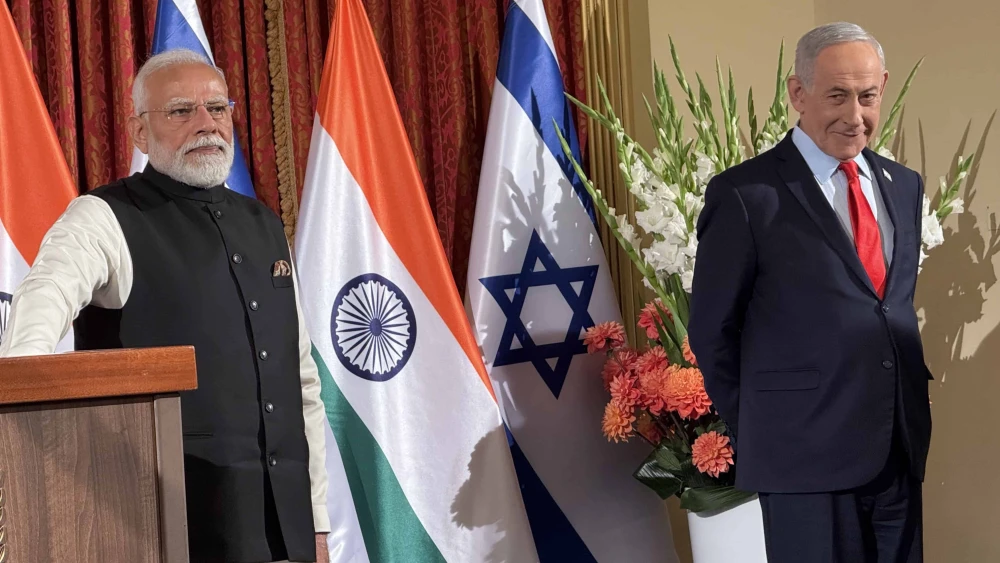
Taken together, the six pillars form more than a framework. They form a narrative—one that challenges both nations to think beyond the bilateral, beyond the transactional, beyond the immediate. They invite India and Israel to imagine themselves as co‑architects of a new strategic geography stretching from the Mediterranean to the Indo‑Pacific, a geography defined not by empires but by innovation, resilience and civilizational confidence.
By 2035, if these pillars are pursued with ambition and discipline, the India-Israel partnership could become one of the most consequential relationships in the world: a joint innovation corridor linking Tel Aviv, Bengaluru, Hyderabad and Gujarat; a shared security architecture spanning the Gulf and the Indo‑Pacific; a co‑developed digital ecosystem used by hundreds of millions; a manufacturing and technology partnership embedded in India’s new global economic architecture; and a civilizational alliance rooted in resilience, spirituality and democratic values.
This is not a prediction. It is a possibility—one that depends on whether both nations choose to rise to the level of their own histories.
Ambassador Azar’s six‑pillar plan offers the intellectual scaffolding for such a future. It is now up to India and Israel to build upon it, not cautiously but boldly, not incrementally but imaginatively. The partnership is ready. The moment is here. The question is whether both civilizations will seize it.