Auschwitz

“There is no administration, no president, no secretary of state that have committed themselves to this extent to fight anti-Semitism, to protect the Jewish people and to support the State of Israel,” said Special Envoy to Monitor and Combat Anti-Semitism Elan Carr.

The delegation, which includes envoys from Africa, Asia, the Pacific, Latin America and Eastern Europe, did the nearly two-mile walk from the former Nazi concentration camp of Auschwitz to Birkenau on as a tribute to all victims of the Holocaust and a call for an end to anti-Semitism.
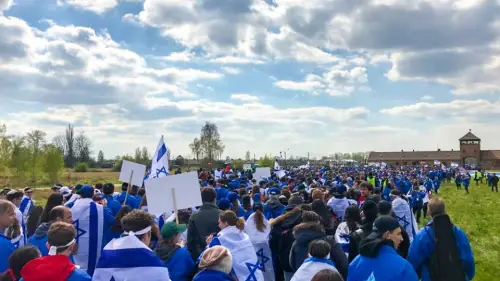
Hosted by JNS Jerusalem Bureau Chief Alex Traiman, more than 10,000 Jewish and non-Jewish youth from 40 countries and dozens of Holocaust survivors and dignitaries from around the globe will participate in the 31st annual International March of the Living from Auschwitz to Birkenau.

“We know the tragic history of Israel, we thought that is not God wants. We came here to bless the Jewish people to show our true love for Israel,” said a member of the Korean delegation.

He was known for reciting the Shema prayer in public at ceremonies honoring Holocaust victims—a practice he vowed to take upon himself after screaming it while SS guards rounded him and others up. He vowed to recite the prayer with living Jews if God would spare his life.

The Jewish Cultural Quarter of Amsterdam, which consists of the National Holocaust Museum, dismissed criticism that four pictures were censored, saying they were left out because they do not portray Dutch Jews, who are the focus of the exhibition.
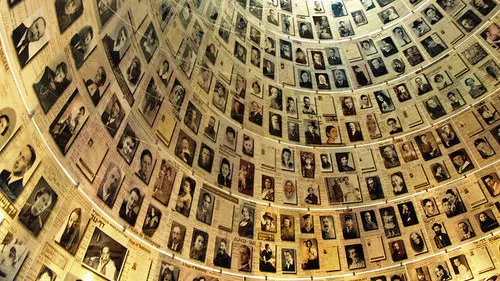
And 45 percent of Americans could not name any of the 40 ghettos or concentration camps erected by the Nazis, with a whopping 66 percent of millennials unable to state the significance of “Auschwitz.”

The memorabilia in the exhibit, titled “Auschwitz. Not long ago. Not far away,” includes a gas mask used by the SS, a helmet and a dagger used by Heinrich Himmler, who oversaw the concentration and death camps, in addition to a desk belonging to Auschwitz commander Rudolf Höss.
An estimated 1.1 million people were killed at Auschwitz, including as many as 960,000 Jews.
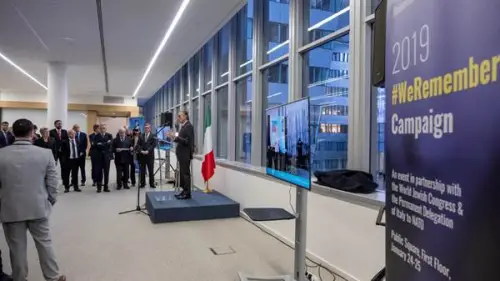
Using social media as part of the campaign, which includes a live stream on the grounds of Auschwitz-Birkenau, where almost 1 million Jews were killed between 1940 and 1945.

The estimated average of 15,000 deaths daily during the “extreme phase of hyper-intense killing” is nearly three times greater than previous approximations.

The annual event brings together hundreds of civil society officials and government representatives worldwide for talks about advancing human rights and other freedoms.