Newsletter
Newsletter Support JNS

Bennett announces $160.8 million Negev assistance package

The funds will go to education, employment, reducing wage gaps, healthcare, transportation and more, says Israeli Prime Minister Naftali Bennett.

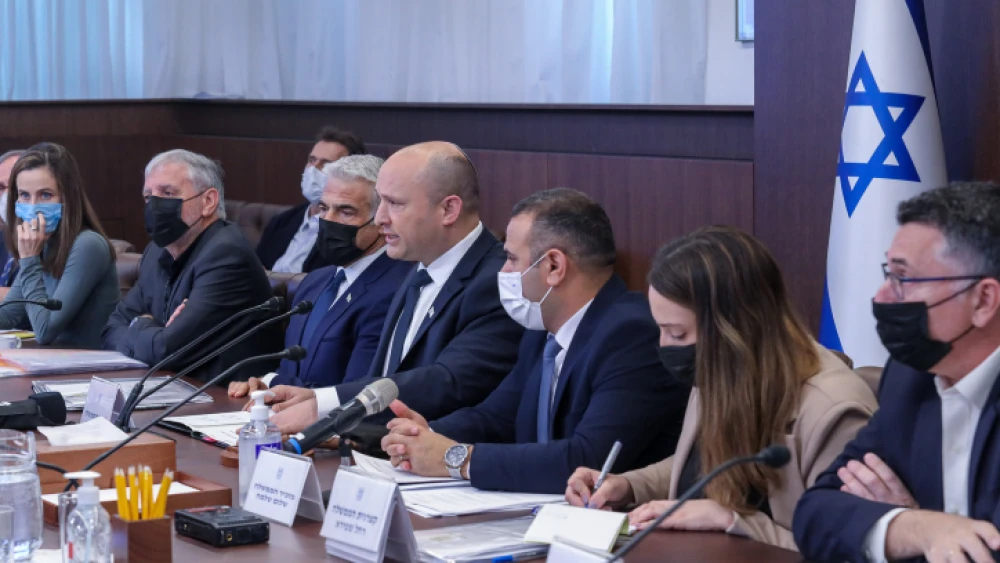
Israeli Prime Minister Naftali Bennett (without mask) during a cabinet meeting at the Prime Minister's Office in Jerusalem, Nov. 14, 2021. Photo by Marc Israel Sellem/POOL.
Israeli Prime Minister Naftali Bennett (without mask) during a cabinet meeting at the Prime Minister’s Office in Jerusalem, Nov. 14, 2021. Photo by Marc Israel Sellem/POOL.

Israeli Prime Minister Naftali Bennett announced on Sunday the submission of a “significant” assistance package for Beersheva and other Negev communities.

“We will invest almost NIS 500 million [$160.8 million] in education, employment, reducing wage gaps, planning a public hospital, strengthening technology and innovation, developing transportation and creating rapid transportation from the center of the country to the south, infrastructures—and the list is still long,” said Bennett during the weekly cabinet meeting on Sunday.

“We have spoken about investing in the Negev and here it is happening on the ground. As Ben-Gurion said, ‘The people of Israel will be tested in the Negev,’” he added.

After his loss, Green blasted AIPAC for labeling him “anti-Israel.”
The Israeli foreign minister stated that the role will strengthen coordination among Jewish community leaders worldwide and expand ongoing engagement with Israel’s Foreign Ministry.
Jonathan Loadholt, 37, is the second man sentenced in an IRGC-linked plot to assassinate Masih Alinejad, an outspoken critic of the Iranian regime.
The bloc accused the organizations and activists of supporting violence and the displacement of Palestinians in the territory.
The Maryland State Retirement and Pension System told JNS that it “has not adopted any policies to discourage or prohibit investments in Israel bonds.”
“I just can’t think of a better example of how Israel is not an apartheid state when you look at the people who are actually making our products,” Rachel Simons, whose products are now banned at the Park Slope Coop, told JNS.