


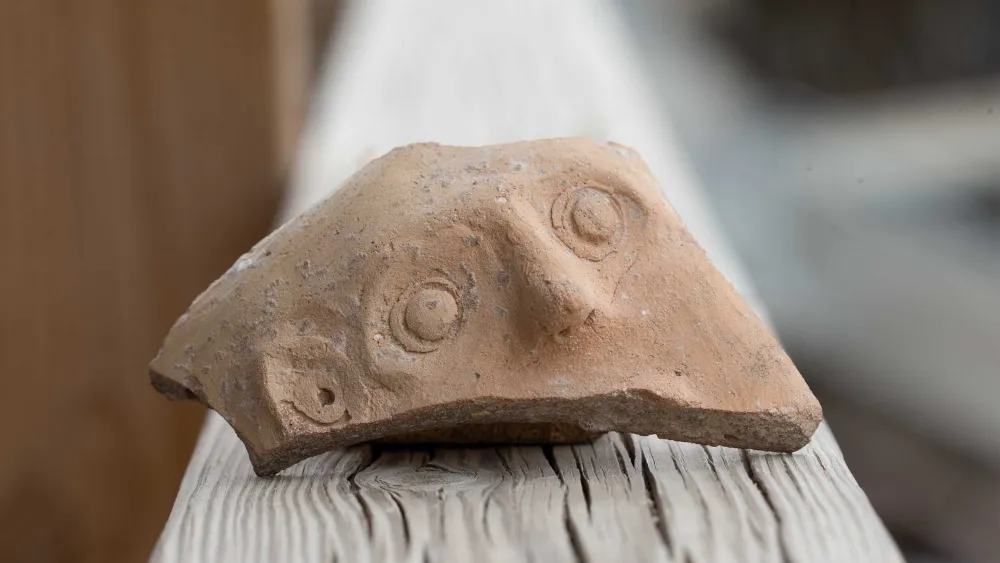
A fragment of a clay jar decorated with a human face dating back to the Persian era (fourth yo fifth century C.E.) has been discovered in Jerusalem’s City of David National Park’s Givati parking lot excavation.
“Pottery from this period was exposed in the past in the City of David, but this is the first time that such a vessel has been found in archaeological excavations in Jerusalem or anywhere in the Judean highlands,” said Tel Aviv University’s Yuval Gadot and Israel Antiquities Authority’s Yiftah Shalev.
The human face on the jar consists of two wide open eyes, a nose, one ear and a small section of the corner of the mouth survived.
These jars are called “Bes-Vessels,” according to archaeologists, and they were very common during the Persian period. In Egyptian mythology, “Bes” is the protector deity of households, especially mothers, women in childbirth, and children.
Over time, he became regarded as the defender of everything good, they explain. He also became associated with music and dancing. His figure adorned the walls of houses and various vessels (pottery and various everyday objects, such as mirrors), or worn as an amulet around the neck. “Bes” usually appears as a kind of bearded dwarf with a large face, protruding eyes and tongue sticking out when he is wearing a feather hat. The grotesque figure is apparently intended to evoke joy and laughter, and drive away the evil spirits.
The figure as a protector was apparently adopted by the Phoenicians, and many such amulets and “Bes” vessels have been found in numerous Persian Period settlements along the coast. Such vessels and amulets were also found in Persia itself, in Shushan, Persepolis and other cities, reaching there by Egyptian craftsmen who operated there as part of the international trade economy of the period.


