Newsletter
Newsletter Support JNS

Sea of Galilee water level hits 16-year high point

Israel’s largest freshwater source is only 7.3 inches short of maximum capacity, with more rain forecast for later this week.

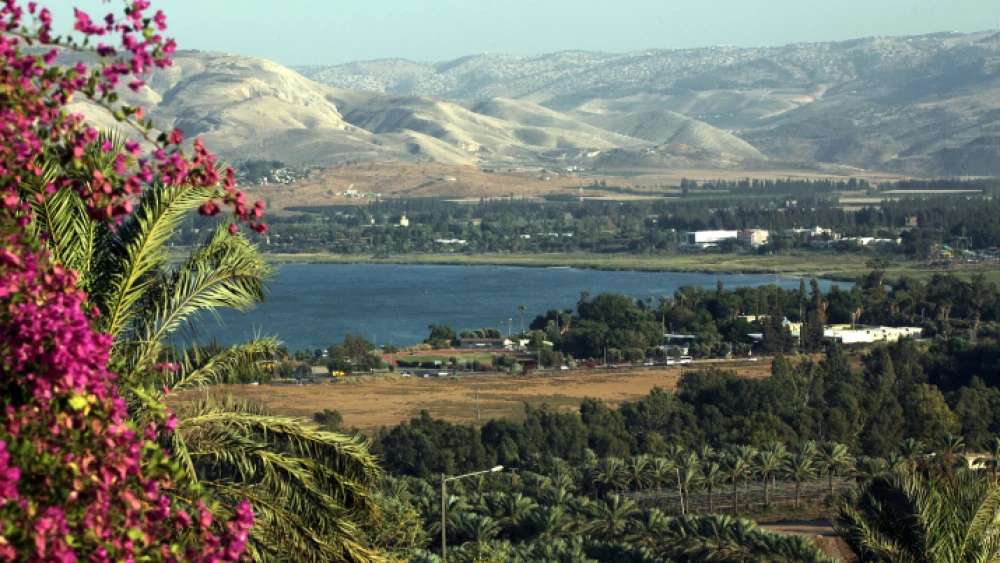
A view of the Sea of Galilee, known in Hebrew as the Kinneret, on Nov. 8, 2010. Photo by Yossi Zamir/Flash90.

For the first time in 16 years, the water level in the Sea of Galilee has risen above the level of -209 meters (-686 feet). On Tuesday, the water level was measured at -208.985 meters below sea level, an increase of 1.5 cm (0.6 inches) since Monday.

According to the Israel Water Authority (IWA), the water level has been rising at a rate of 2.5 cm (0.98 inches) a day. At present, it is only 18.5 cm (7.3 inches) short of the Upper Red Line, the level at which a dam must be opened to allow water to flow out to prevent flooding.

The Sea of Galilee, Israel’s largest freshwater source, has benefited from an unusually rainy winter.

Three weeks ago, the IWA reported that the water level was higher than it had been in 17 years, standing 49 cm (19 inches) short of the Upper Red Line. This means that from March 23 to April 14, the lake rose by a foot.

More rain is forecast for later this week, and the lake is also expected to benefit from spring runoff.

This article first appeared in Israel Hayom.

President Mohammed bin Zayed personally drove Israeli PM from the aircraft to the palace, Ziv Agmon reveals.
In a break with longstanding practice, the New York City mayor does not plan to join the parade this year.
The legislation, which aims to shield educational institutions from disruptive protests, passed the council in March without a veto-proof majority.
“We have to stop the defense,” the Florida congressman said. “You’re not going to mess with us.”
“The whole world has seen Iran was building up a conventional capability where they would have so many missiles and so many drones that they could overwhelm anybody’s defenses,” the U.S. secretary of state said.
“We degraded Iran’s ability to project power outside its borders and threaten the region and threaten our interests,” Adm. Brad Cooper stated.

