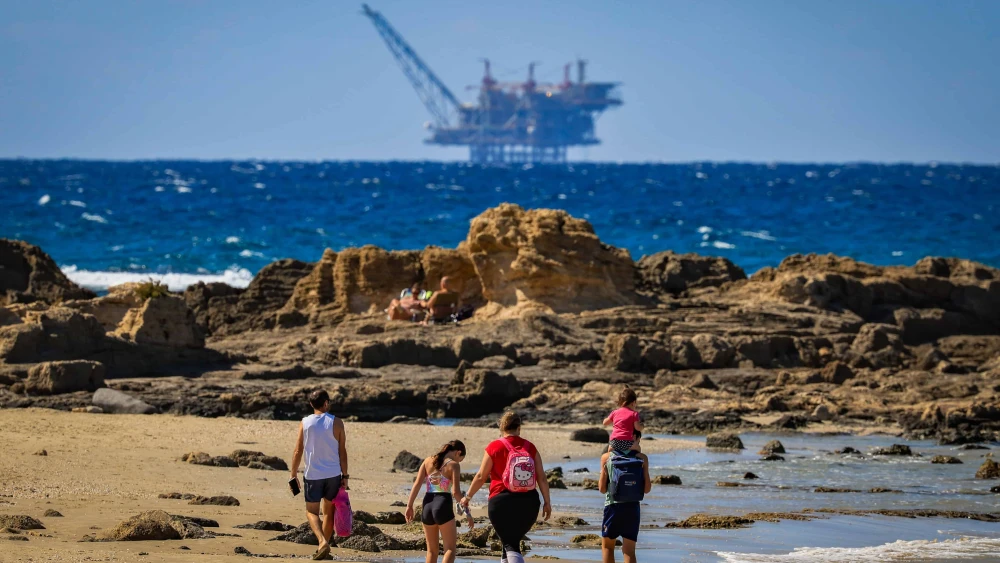
Israel’s biggest gas field, Leviathan, has exceeded its annual production capacity forecast from 14 billion cubic meters to 15.8 BCM, financial outlet Globes reported on Wednesday.
The first-quarter results were reported by Leviathan partner Ratio Energy, following the connection of a third pipeline to the gas field.
Before the laying of the third pipeline, the site’s production capacity reached 12 BCM per year, the report read.
However, bottlenecks in the transport of gas are still causing delays in maximizing the gas field’s full potential.
The Ashdod-Ashkelon pipeline is slated for completion in June, which will increase the capacity to export gas to Egypt.
The new Nitzana pipeline, set for completion in 2028 after two years of delays, is expected to release the entire bottleneck, according to Globes.
After these projects are complete, Leviathan’s partners—NewMed Energy (45%), Chevron (40%) and Ratio Energy (15%)—will make their increased production available for both domestic and external markets.
Israeli law requires the gas reserves to first meet the needs of the Jewish state’s economy, before exporting the remaining quantities.
Israel last year approved Leviathan’s deal worth about $35 billion with Egypt to export gas through 2024. It remains the country’s largest-ever natural gas export agreement.