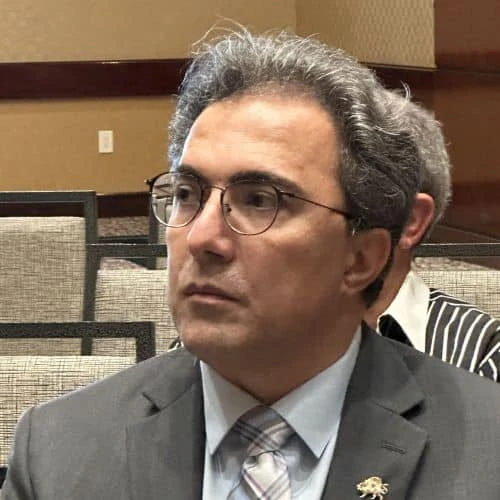
Filmmaker Elena Neuman first met former Israel Defense Forces sharpshooter Eitan Armon at the Hillel at Columbia University during a screening of a documentary. Armon, who works in finance in New York City, went to the same suburban Washington Jewish day school, though not at the same time, as Neuman’s kids and befriended Neuman’s daughter in college.
“He made this instant impression upon me,” Neuman told JNS. “I noticed everything about him, except the fact that he couldn’t see.”
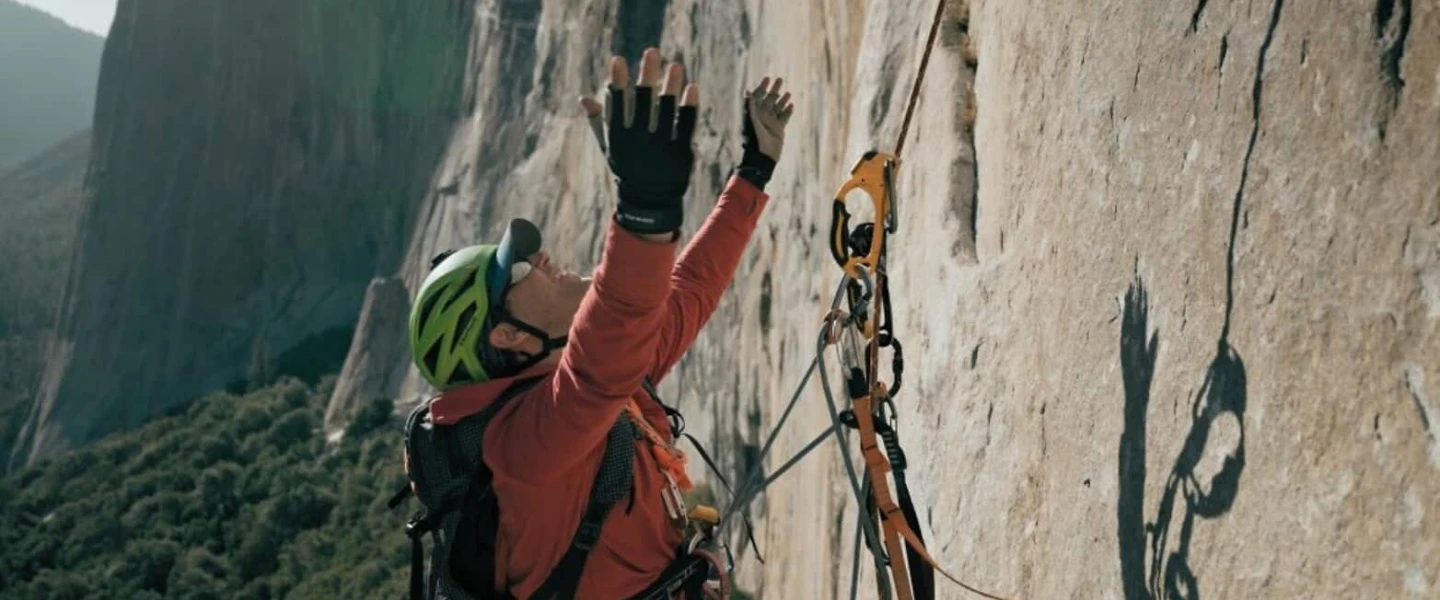
That’s an apt observation, given that Armon, the subject of Neuman’s film “Looking UP,” took on the challenge of scaling El Capitan, the 3,000-vertical-foot rock formation in California’s Yosemite National Park, with no rock-climbing experience, and with only 5% vision due to a rare disease.
“Having a limitation isn’t inherently a bad thing,” Armon told JNS. “Everyone has different versions. And when you are honest about what’s difficult and challenging, and you ask for help, you can do more.”
Armon, 28, a native of Kemp Hill, Md., in the suburbs of Washington, D.C., excelled in an IDF paratrooper unit; however, progressive struggles seeing at night led to the revelation that he was suffering from retinitis pigmentosa, known as RP.
The disease causes the cells in the retina to break down, resulting in blindness.
Around 100,000 people in the United States deal with RP, but the version Eitan was diagnosed with is extraordinarily rare, affecting fewer than 100 people around the world.
With no peripheral vision and only about 5% central vision remaining, Armon describes the sensation as looking through a straw.
After that chance encounter at Columbia, Armon reached out to Neuman for advice about crafting a public service announcement promoting an expanding medical trial in which he was taking part.
Some five months later, at the height of the COVID pandemic, Armon reached out again to gauge Neuman’s interest in taking on production of the video, which led to some basic shooting for two days in New York City.
But the project hit a brick wall when Armon’s doctors in Baltimore backed out the night before scheduled interviews, at the demand of inquisitive, suspicious hospital lawyers, looking to protect proprietary information about the medicines involved in the trials.
Armon and Neuman needed to figure out what to do with the footage they’d already shot.
“If I wasn’t impressed before, I was even more impressed by him then, because there’s this positive aura about him,” Neuman said of Armon’s reaction. “He’s just up for anything, and doesn’t let his visual problem get in his way.”
A feature film
Neuman told Armon that perhaps there was a bigger, more inspirational story to tell, beyond a public service announcement. As they were discussing the possibilities, Neuman’s husband, Jay, a passionate rock climber, came home.
Knowing of Jay’s adventures, including that he had climbed the Nose of El Capitan a few years earlier, Armon, an avid outdoor adventurer himself, started peppering Jay with questions and found out he was nine months away from another climb.
“I saw it happening,” Neuman told JNS of a sense of knowing what was coming next. “Jay looked at Eitan, then he looked at me, and he said, ‘Why don’t you join me?’ And Eitan being Eitan said, ‘Hell, yes. What’s involved?’”

That’s how a simple promotional video turned into a feature film, documenting Armon’s training and eventual scaling of El Capitan.
“I’m really fortunate that I got to just focus on getting in shape and learning,” Armon told JNS, crediting his climbing partners for taking care of everything else needed.
“They’ll take care of their part, I’ll take care of my part, and together, we can climb this, both literally and figuratively,” Armon said of the process. “It was just really like a microcosm of everything else that the film talks about: Focus on what you can control, and be honest about what you can’t.”
Neuman said one of the more difficult aspects of making the film, aside from the critical safety precautions, was reminding viewers that Armon really can’t see.
If Armon is standing face-to-face with someone, he is essentially only able to see an area as big as their nose at first, and needs to conduct a scan of their face, putting together a more complete image from there.
When it comes to piecing together the image of the gigantic mountain he’s climbing, Armon utilizes an iPhone feature to make the screen appear smaller, so that he can more centrally focus the image in front of him, narrowing it into his limited field of vision.
In fact, Neuman told JNS, “that’s how he was able to see the cuts of the film,” though up on the big screen in theaters, it’s much more difficult.
“Looking UP” recently ran at the Marlene Mayerson Jewish Community Center on Manhattan’s Upper West Side and has been shown all over the world, including in Moscow, Helsinki, Tel Aviv and St. Louis, while taking home the award for best documentary at the Lonely Seal Film Festival in in Arlington, Mass., and documentary directing accolades at the Soho International Festival in New York City. More screenings are coming up early next year in Denver and Indianapolis.
Richard Propus, a prominent disabled film critic who is known as the “Independent Critic,” gave “Looking UP” a glowing review, noting the film doesn’t carry with it the typical tropes captured in films about disabled people.
“It’s resonating with audiences, because it’s not preachy,” Neuman told JNS. “Eitan doesn’t ask for anyone’s sympathy, and he doesn’t even ask to be seen as somebody with a visual disability. He just wants to climb.”
She said the film is more about taking on one’s limitations, which everyone has. “I think the film speaks to everybody,” Neuman said. “I say to audiences at the end of screenings, ‘What’s your mountain? Go climb it, whatever it is.’”
Armon told JNS he has received messages from people who have just been diagnosed with RP, and who “talked about how meaningful it was to see the film and get a good reminder that just because they have this diagnosis, it doesn’t mean that they can’t live an engaging, meaningful, fun, challenging life.”
The project has also helped to raise medical research money, as promising stem cell research that could perhaps treat RP takes place at the University of Iowa.
Not one to rest on his laurels, Armon has since taken to backcountry skiing. And, this month, he’s taking on a challenge of a different kind, marrying his girlfriend, Tamar.
“That will be the next big chapter, and I’m sure it’ll have its own ups and downs and challenges, but I’m certainly trying to imbue those things that we talked about into our day-to-day,” Armon said. “That means fun, being around good people, and challenging ourselves, even if it’s not a literal mountain, but a figurative one.”