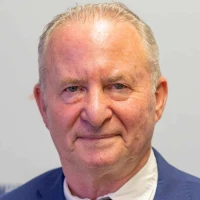
Israel must move beyond relying on Diaspora Jewish support and take a more active role in defending and strengthening Jewish communities worldwide as they face unprecedented antisemitism, according to Eyal Ostrinsky, the new chairman of Keren Kayemeth LeIsrael–Jewish National Fund (KKL-JNF).
“The relationship between Jews around the world and Israel shouldn’t just be based on donations and support of Jews around the world to Israel,” Ostrinsky said in an interview at the JNS Media Hub on July 12. “Israel is the state of the Jewish people. It is the homeland of the Jewish people, and right now we need to stand beside Jewish communities around the world and help them deal with their challenges.”
Ostrinsky, who became chairman of KKL-JNF in January at age 41 and turned 42 in June, is the youngest person to lead the 125-year-old Zionist organization. A resident of Mevaseret Zion, near Jerusalem, he previously served as director of Israel-Diaspora relations at the World Zionist Organization and as chief of staff to the acting chairman of the Zionist Executive. Earlier, he served as a senior adviser and chief of staff to former Labor Party chairman Amir Peretz and as a senior adviser to former KKL-JNF chairman Danny Atar.
Founded in 1901 at the Fifth Zionist Congress, KKL-JNF has played a central role in purchasing land for Jewish settlement, planting forests, developing parks and water infrastructure, and promoting Zionist education. Ostrinsky said the organization’s 125th anniversary provides an opportunity to reconnect with those historic missions while adapting to the new challenges facing the Jewish people after the Hamas massacre in southern Israel on Oct. 7, 2023.
Supporting Jewish communities worldwide
“The rising antisemitism is presenting challenges in front of global Jewry that haven’t been there before,” Ostrinsky said. “Presently, the imminent and clear physical threats and sometimes danger to human life in Jewish communities abroad gives us a challenge that we haven’t faced before.”

To address those threats, KKL-JNF has doubled its annual operating budget for combating antisemitism and developing Jewish leadership on university campuses from 3 million shekels ($900,000) to 6 million shekels ($1.8 million), he said.
The organization also plans to invest an additional 10 million to 20 million shekels ($3 million-$6 million) in Jewish organizations combating antisemitism and is pursuing a partnership with the Jewish Agency to establish a global center for Jewish security, community resilience and emergency preparedness.
“We’re going to invest heavily in Jewish security, community resilience, emergency preparedness—issues where we haven’t been as much as needed in the past,” he said.
Ostrinsky argued that KKL-JNF’s expanded Diaspora role is a reflection of the organization’s history rather than a departure from it.
“The lands that KKL right now uses and its incomes, those lands were bought by global Jewry,” he said. “Right now we need to give back.”
“Israel is the state of the Jewish people,” he said. “Right now we need to stand beside Jewish communities around the world and help them deal with their challenges.”
Ostrinsky noted that KKL-JNF’s iconic Blue Boxes, once found in Jewish homes, schools and synagogues around the world to collect coins for purchasing land in Israel, remain an enduring symbol of that relationship. Today, he said, they serve less as fundraising tools than as reminders of a shared Zionist heritage. KKL-JNF hopes to renew that connection by encouraging Jews around the world to plant trees and participate in projects that deepen their bond with Israel.

KKL-JNF’s Zionist mission
While expanding its work overseas, KKL-JNF is also returning to what Ostrinsky described as its original Zionist purpose.
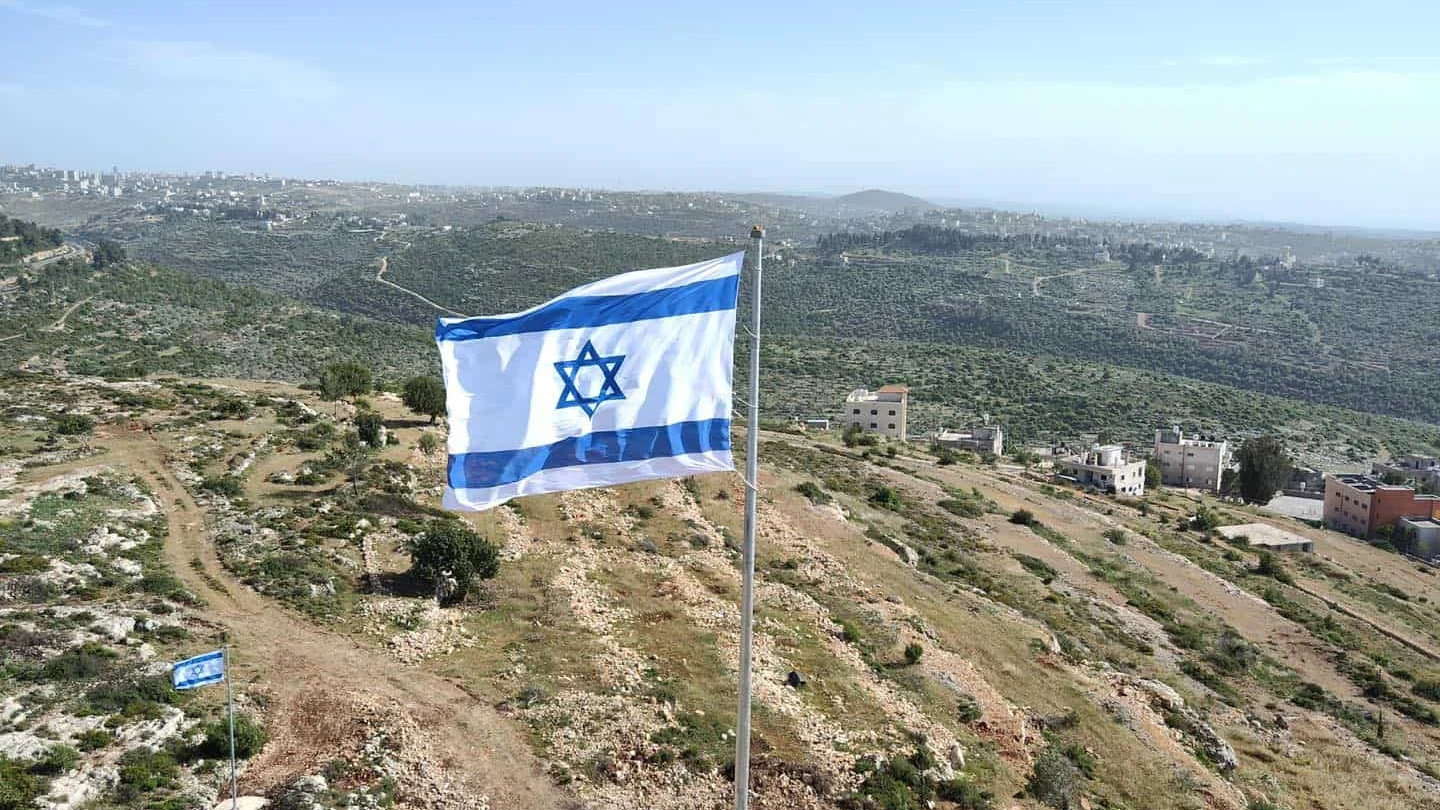
“KKL’s first goal wasn’t to be an environmental organization, but a settlement organization,” he said. “We need to promote settlement in the Galilee, the Negev, the Arava region, the Gaza Envelope, the northern border regions and the Golan. This is our main objective and main goal.”
He said the organization is investing heavily in rebuilding communities devastated by the Hamas massacre and in restoring northern communities that endured months of attacks from Hezbollah.
According to Ostrinsky, KKL-JNF has committed 75 million shekels ($22 million) to redevelop Kibbutz Nir Oz, 30 million shekels ($9 million) to Kibbutz Manara near the Lebanese border and 115 million shekels ($34 million) for communities along Israel’s northern frontier. It also helped provide temporary housing for residents of Kibbutz Kfar Aza and is supporting their return home.
“This year alone, we’ve invested over one billion shekels ($331 million) in efforts along the northern border,” he said. “We are doing what we must for those communities that were hurt the most.”
Beyond rehabilitation projects, Ostrinsky said KKL-JNF is expanding forestation, planting more trees, improving water infrastructure to support agriculture, addressing climate change and creating more accessible recreational spaces.
One example is the recently renovated Kennedy Memorial site outside Jerusalem, where KKL-JNF has added a café as part of a broader strategy to encourage more Israelis to enjoy the country’s forests.
“People come not just for the forest, but for the coffee, and it joins with the forest to make a whole attraction,” he said.
He said similar “forest centers” are being developed elsewhere in the country, combining cafés, visitor facilities and hiking trails to attract more families to Israel’s forests while strengthening appreciation for the country’s natural landscapes.
Judea and Samaria controversy
Ostrinsky also addressed criticism of KKL-JNF’s policy regarding the funding of farms in Judea and Samaria.
He rejected claims that the organization had abandoned support for farms beyond the Green Line, saying the distinction is between educational and agricultural projects.
“Educational farms, yes,” he said. “Agricultural farms where sometimes the atmosphere is not … educational; let’s say it’s violent—we will not support.”
He said the KKL-JNF’s Board of Directors had reaffirmed in April that its support would be limited to educational farms, reflecting the organization’s original policy.
Although he was chosen as the consensus candidate of the liberal bloc in the World Zionist Organization, Ostrinsky emphasized that he does not represent a political party.
“I represent the entire liberal bloc as an agreed-upon candidate,” he said.
He noted that KKL-JNF’s 37-member board comprises representatives from across the Zionist spectrum, from Religious Zionism to Meretz, as well as Haredi, Reform and Conservative representatives.
“It’s a very diverse board and therefore a very complicated board,” he said. “I try not to do things that are out of the consensus and try to focus on consensus areas.”

Modernizing a historic institution
Beyond policy changes, Ostrinsky said he has launched what he describes as a “public rehabilitation plan” for KKL-JNF, designed to restore public confidence in one of Israel’s oldest national institutions.
The effort includes reducing operating costs, limiting unnecessary overseas travel, cutting discretionary spending, streamlining decision-making and sharpening the organization’s focus on its core missions.
“I want to bring new conceptions of what we do and how we do it and how fast we do it,” he said. “As a young person, I have the advantage of not being a captive of old conceptions.”
He said he also wants KKL-JNF to become more responsive and less bureaucratic.
“I even put an emphasis on being faster than what we used to be when it comes to taking decisions,” he said.
While acknowledging KKL-JNF’s accomplishments over the past 125 years, Ostrinsky said his goal is not to revolutionize the organization, but to make it more effective and relevant.
“KKL has done an amazing job over the past years,” he said. “What I’m trying to do is refocus our efforts on our core missions, be more effective, more present and more relevant.”
Looking ahead, he said he wants KKL-JNF to be known not only as Israel’s leading environmental organization, but also as a central force in Zionist education and national development.
“I want KKL to be perceived as the largest environmental organization, but also the largest settlement organization in the north and the south outside of the government of Israel and next to the government of Israel, and the largest organization when it comes to supporting Jewish education and Zionist education worldwide,” he said.
Although KKL-JNF has evolved dramatically since its founding in 1901, Ostrinsky said its purpose remains fundamentally the same: strengthening the Jewish people and the State of Israel.
“I want Jews around the world to know that KKL is the most relevant and present organization for them wherever they need us to be,” he concluded.
Watch the full interview.