When it comes to the Israeli-Palestinian conflict, everything is political—even health care.
A new report by the Center for Medical Integrity (CMI) finds that the way the World Health Organization (WHO) monitors attacks on health care facilities is problematic and unfairly biased against Israel. The report argues that the term “attacks on health care” is used incorrectly to blame Israel for a broad range of actions.
“At the center of the critique is a deceptively simple question: What exactly counts as an ‘attack on health care’?” Dr. William Stern, a member of CMI’s advisory board, told JNS. “Under international humanitarian law, attacks on hospitals or medical personnel carry profound legal implications. Yet the WHO system uses the same terminology to describe a far broader category of events, including disruptions caused by general fighting, infrastructure collapse and collateral damage.”
The report argues that the WHO lacks both the mandate and the investigative capacity to determine legal responsibility for incidents in conflict zones. According to CMI, the system was designed to track disruptions affecting medical care and improve emergency response.
The report contends that once the phrase “attacks on health care” is used, readers are left with the impression that Israel deliberately targets health-care facilities and is therefore responsible for war crimes.
In Gaza, there is little dispute that Hamas used Al-Shifa Hospital, as well as other hospitals and clinics, as cover for its operatives. Israel uncovered a large Hamas bunker beneath the hospital, making it a legitimate military target under many interpretations of international law.
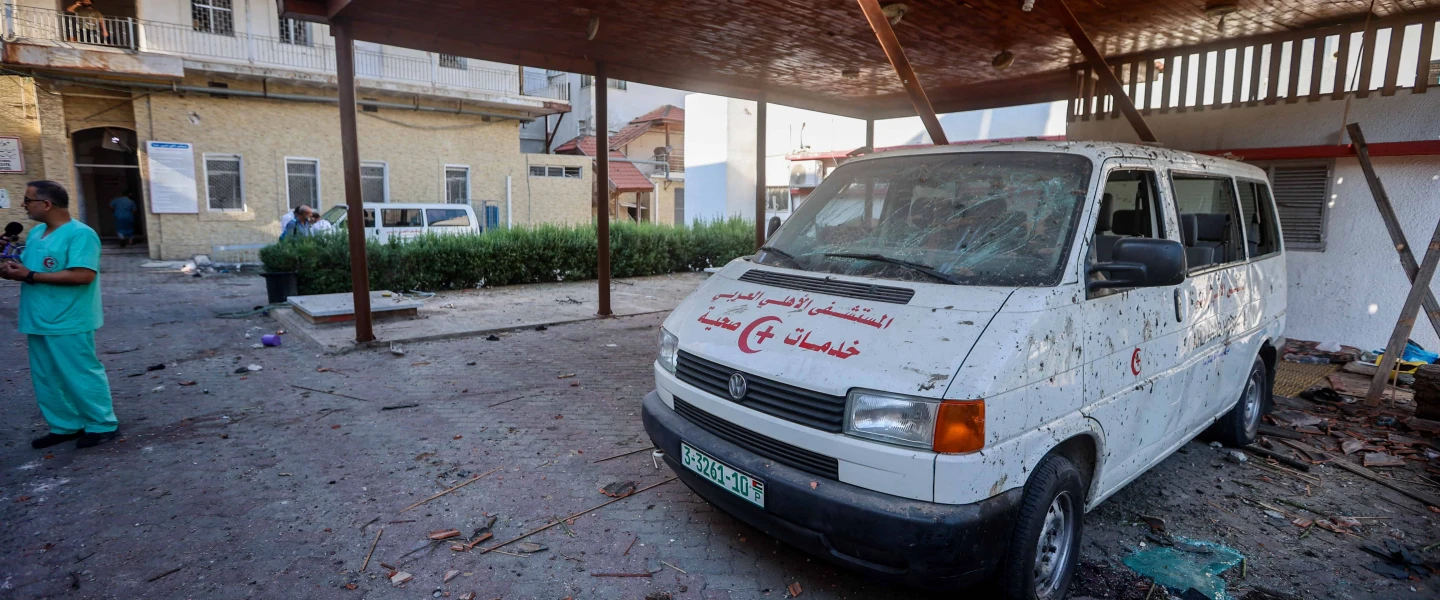
The report also argues that initial claims can become entrenched even when later proven inaccurate. As an example, it cites the Oct. 17, 2023, explosion at Gaza City’s Al-Ahli Hospital. The Hamas-run Health Ministry initially claimed that an Israeli missile strike killed 471 Palestinians, most of them civilians. Subsequent investigations concluded that the explosion was caused by a misfired Palestinian Islamic Jihad rocket and that the casualty figures were significantly lower. According to CMI, the original allegation was never corrected in WHO reporting.
In a statement to JNS, the WHO defended its policies while acknowledging that the use of health-care facilities for military purposes violates international law.
“The protection of healthcare also includes the prohibition against combatants using health facilities for military purposes,” the WHO said. “International humanitarian law is also clear that even if healthcare facilities are being used for military purposes, there are stringent conditions which apply to taking action against them, including a duty to warn and to wait after warning and even then, disproportionate attacks are strictly prohibited.”
The CMI report proposes seven reforms aimed at making reporting more balanced. Among them is replacing the term “attacks on health care” with more neutral language, such as “conflict-related disruptions to health care.”
The report also calls for stronger verification standards, expanded transparency and the creation of a formal correction mechanism when information is later shown to be inaccurate.
In addition, CMI urges the WHO to clarify that it functions as a humanitarian and public-health coordination body, not a legal investigative authority.
The issue extends well beyond Israel.
“Accusations involving attacks on health care carry enormous moral and political weight,” Stern said. “If the underlying systems used to generate those claims are themselves contested, that has implications not only for Israel but for the credibility of global humanitarian institutions more broadly.”
He said improving the reporting system would benefit everyone.
“Ultimately, the report presents a sobering warning: When humanitarian systems lose public trust, everyone loses—especially civilians trapped in conflict zones who depend on credible, impartial institutions to protect them.”