


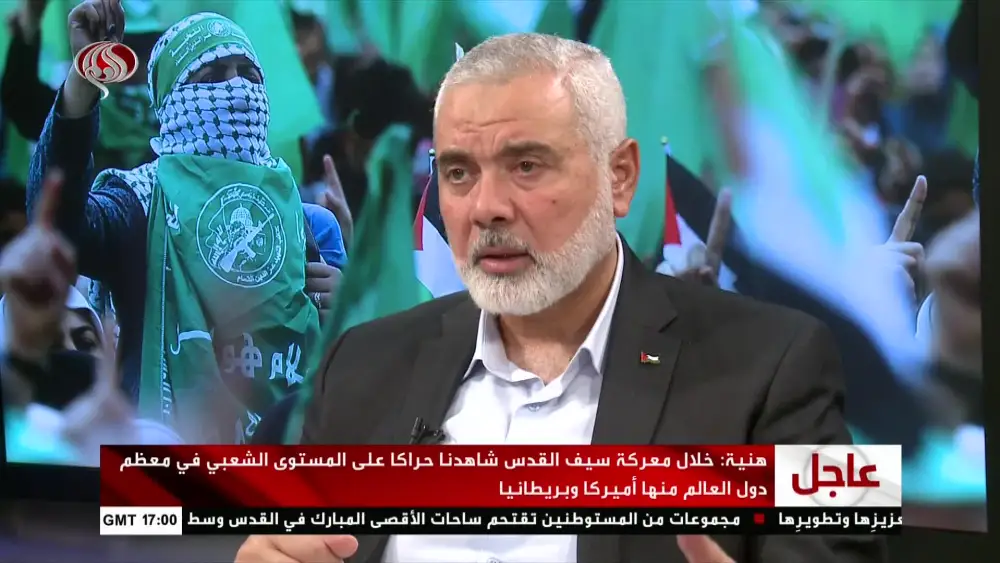
Hamas leader Ismail Haniyeh said the terror organization based in the Gaza Strip maintains “a strategic relationship” with Iran, Hezbollah and “many [others] in the region,” and therefore, any “foolish act” by Israel could lead to a regional war.
According to the report by the Middle East Media Research Institute (MEMRI), Haniyeh said this during an Aug. 10 interview with Al-Alam TV (Iran).
“It is no secret that Iran played a very important role” in building the force seen during the 11-day conflict with Israel in May, said Haniyeh.
He also noted that “Jerusalem will not remain hostage to Zionist practices, policies and projects, and the Palestinians will not be left alone to defend Jerusalem.”
“We no longer hesitate to say that any foolish act carried out by the occupation against the Al-Aqsa mosque or Jerusalem, or an act that crosses the line concerning the Al-Aqsa mosque and Jerusalem, might lead to regional war ... ,” he said.
As he explained, “When the Americans leave the region, when the Israelis can no longer win their military battles, when the path of normalization fails and when the resistance wins battles inside or outside Palestine, that means that a strategic environment could be formed around the Palestinian cause that is better than before.”



