Newsletter
Newsletter Support JNS

At least 40 hurt in Iranian ballistic missile attack on Israel

Emergency services are investigating seven potential impact sites in the Tel Aviv metropolitan area for damage as Iran continues to fire missiles at Israel.

Iran Missiles
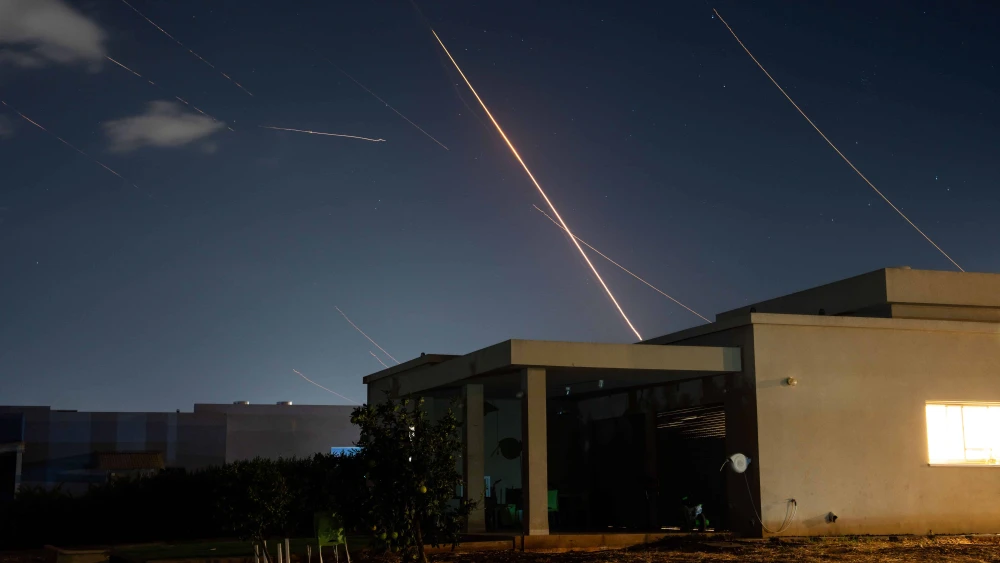
The Israel Defense Forces down ballistic missiles fired from Iran at Israel, Oct. 1, 2024. Photo by Ayal Margolin/Flash90.

At least 40 people were hurt in Iran’s ballistic missile attack on Israel on Friday according to Magen David Adom, Israel’s emergency medical service.

Iran fired around 100 ballistic missiles at Israel during the attack.

Magen David Adom told JNS that of the 40, two are in severe-to-critical condition.

Some of the victims have been taken to local hospitals.

Unconfirmed video footage of the attacks shows both interceptions and apparent impacts in and around Tel Aviv.

Magen David Adom wrote that it was investigating seven potential impact sites in the area for damage.

Lt. Col. Nadav Shoshani, the IDF’s international spokesman, stated that all of Israel was forced to shelter during from the attack.

“While we target and neutralize precisely global threats, Iran aims indiscriminately at the whole country and a whole people,” Shoshani said. “Another wave of attack is heading toward our people.”

“It looks as if the Genocide Caucus in Congress will continue to grow,” Dan Schnur, a political science lecturer, told JNS.
Ahead of the JNS Summit, the Bosnian Serb leader explains her strong support for the Jewish state and warns of Iranian influence in the Balkans.
A coalition of Jewish groups called the law “an important step forward, giving law enforcement and prosecutors additional tools to protect targeted communities and hold offenders accountable.”
The participation of campus-affiliated groups like CUNY for Palestine “openly encouraging and providing support for terrorism and extremist ideologies,” Jayne Zirkle of EndJewHatred told JNS, “represents a serious challenge that universities can no longer ignore.”
After 35 years working across the continent, entrepreneur Haim Taib tells JNS he sees it as the next frontier for Abraham Accords cooperation.
The Islamic Republic is seeking to recover economically and militarily through the memorandum of understanding with the U.S., while avoiding any relinquishment of long-term strategic assets.