Newsletter
Newsletter Support JNS

ISIS claims responsibility for Sinai attack that killed 11 Egyptian soldiers

The Egyptian military said five other soldiers were injured in the attack, one of the deadliest in Sinai in recent years.

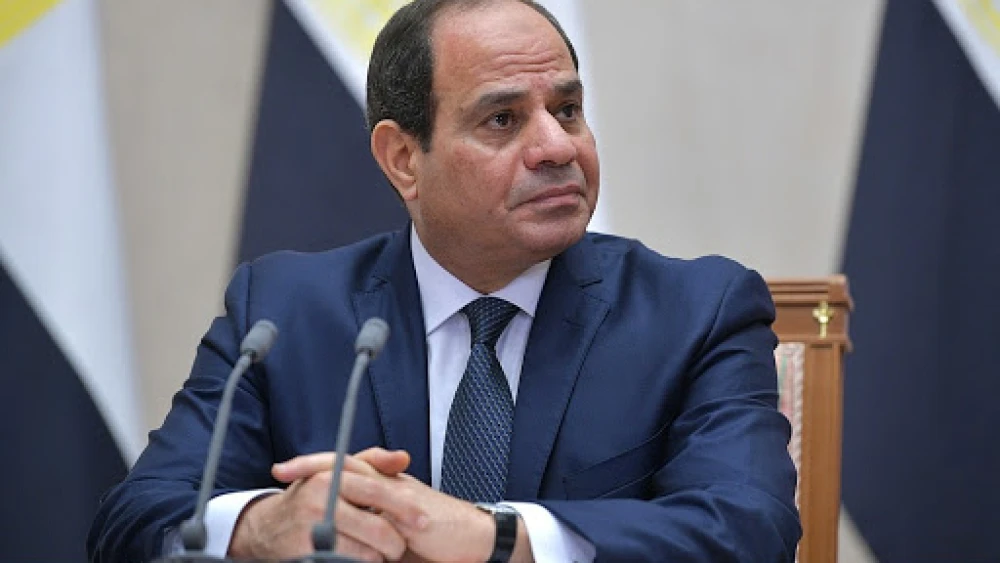
Egyptian President Abdel Fattah el-Sisi
Egyptian President Abdel Fattah el-Sisi. Source: Kremlin.ru.

Islamic State in the Sinai Peninsula has claimed responsibility for a deadly attack the previous day that killed 11 members of the Egyptian security forces, the United Arab Emirates-based The National reported on Monday.

According to the report, the jihadist organization released a statement on its Amaq news agency and on Telegram.

The Egyptian military said five other soldiers had been injured in the attack, one of the deadliest in Sinai in recent years.

Terrorists opened fire on soldiers at a checkpoint protecting a water-pumping center in Qantara, in the Sinai province of Ismailia, before fleeing the scene, the report said.

Thousands reportedly attended separate funerals for the casualties in Egypt on Sunday.

Egyptian President Abdel Fattah el-Sissi held a meeting of the Supreme Council of the Armed Forces on the day after the attack, discussing the incident and its consequences with senior military figures.

On April 27, an Israeli security research center said attacks by ISIS have spiked in its areas of activities around the world, including in the Sinai Peninsula, where the Egyptian armed forces have spent years battling the terror organization.

Ambassador Yechiel Leiter said that accusations against Israel are distorted, arguing terms like “genocide” and “ethnic cleansing” have lost meaning.
Gideon Sa’ar said that Israel and the United States pushed back an immediate Iranian nuclear threat and called Hezbollah a violator of Lebanon’s sovereignty, urging disarmament.
“We are strengthening a path already built on trust, dialogue and sharing,” said Somaliland President Abdirahman Mohamed Abdullahi.
Officials, watchdogs and victims’ advocates say the Palestinian Authority continues paying stipends to convicted terrorists and their families, and criticize loopholes in international donor funding and oversight mechanisms.
The U.S. vice president said that the memorandum of understanding mandates uranium stockpile destruction and verification, with no benefits if Tehran fails to comply.
Hussam Abu Safiya, a Hamas terrorist who ran the Kamal Adwan Hospital in the Strip, has been in custody since late 2024.