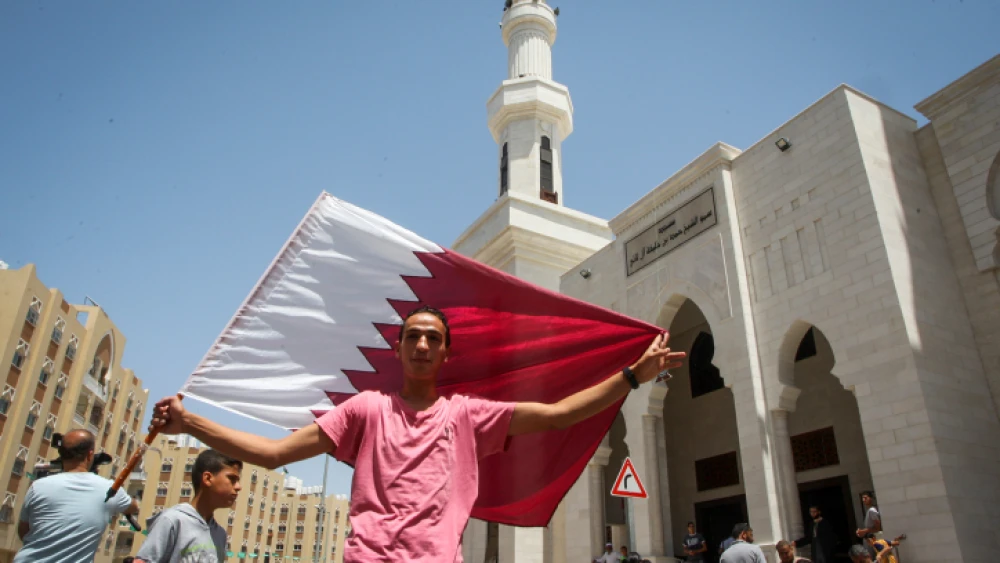
As the ceasefire between Israel and terrorist organizations in Gaza takes effect, Qatar has announced that it would transfer $480 million to the Palestinian Authority and Hamas in Gaza.
Approximately $300 million will go towards the P.A. health and education budget, and the rest will go to funding U.N. programs and electricity services in the West Bank and Gaza.
Both P.A. leader Mahmoud Abbas and Hamas leader Ismail Haniyeh thanked Emir of Qatar Sheikh Tamim bin Hamad Al Thani.
“This honorable decision is a continuation of the unwavering Qatari stance that supports the Palestinian people politically and financially, in addition to defending Palestinian rights on international platforms,” wrote Haniyeh.
According to the terms of the truce, which took effect in the middle of the night on Sunday, Qatar will immediately transfer $30 million to Gaza.
Qatar has often funded Gazan infrastructure. The new infusion of funds will allow Gazans to continue to use electricity for 12 hours a day.
Israel will allow the transfer, despite the P.A.’s ongoing payment of generous salaries to convicted terrorists and their families. Israel has responded to these payments by subtracting equivalent sums from the tax revenues it collects for the P.A.
The P.A., in turn, responded by rejecting all tax revenues, which account for a majority of the P.A. budget.