
A friend stopped by the other day and asked me a question I’ve heard many times in my 25 years as an Israel educator. “If Zionism’s goal was the establishment of a Jewish state,” he said, “shouldn’t it have ended in 1948, when Israel was established?”
I welcomed the opportunity to respond.
The right of the Jewish people to govern their historic homeland is exercised every single day. With the establishment of the modern-day State of Israel, there is a place of refuge for Jews from the Soviet Union, Ethiopia, Iraq and other Arab lands—and from so many other places. So, why the continued need for Zionism?
The framing of this question misses the heart of what the movement was created to achieve. Zionism was about guaranteeing that a Jewish state would endure—strong, secure and true to its purpose. The danger for Israel in its continuous victories over its enemies is complacency. Israelis need to avoid the quiet assumption that survival is now automatic.
Zionism’s objective was never a one-time achievement. It has always been about growth.
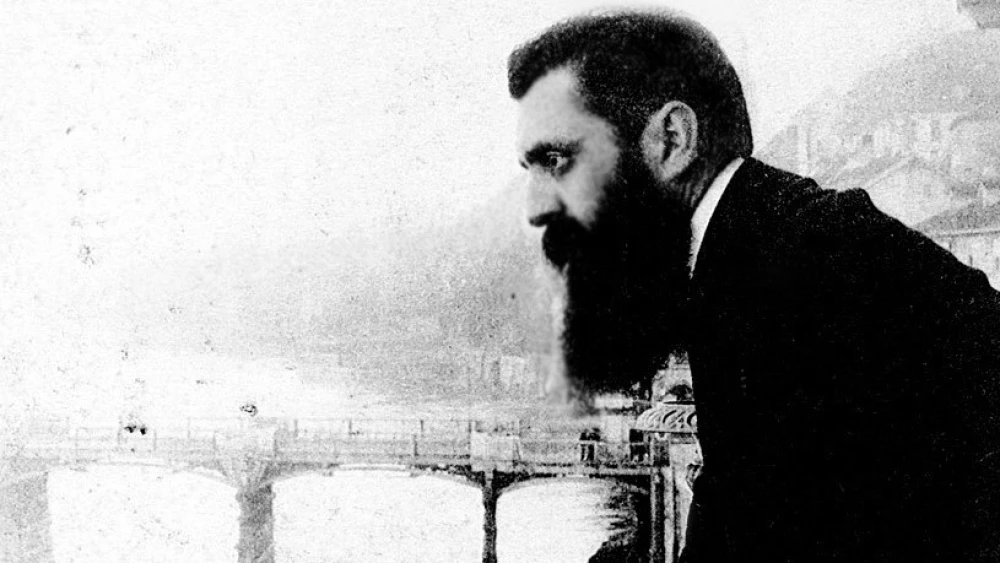
Israelis would be making a grievous error if it treated Zionism like a finite project with a clear finish line. Theodor Herzl, the movement’s great political architect, did not envision Jewish statehood as an end in itself. In The Jewish State, he wrote of Jews finally living “as free men on our own soil,” a refuge that would normalize the Jewish condition and enrich humanity. But normalization demanded constant effort.
David Ben-Gurion, one of Israel’s founding fathers and its first prime minister, understood this instinctively. He insisted that Israel could not content itself with being a mere shelter for the persecuted; it had to become something far greater. Israel had to be a vibrant, moral and resilient society.
The early pioneers grasped what later generations sometimes forget. Statehood was the beginning of the real test. Without sustained vigilance, even the hardest-won victory can slip away.
If Zionism is the perpetual commitment to ensure a Jewish state exists and thrives, then its tasks today are concrete and urgent. Militarily, Israel must keep sharpening its edge. It must develop more precise weapons and technologies that can one day spare young soldiers from the front lines. The nation has proven that it can defend itself, but precision and innovation remain the difference between survival and tragedy.
In the realm of ideas, the battlefield has shifted to social media. Israel is outnumbered, yet it can fight smarter. Creative storytelling, fresh formats and honest voices are the tools that let Israel explain itself to the world without apology.
Spiritually, the challenge is deeper. Israel needs to weave more Torah and mitzvahs into the mainstream of Israeli life—not through coercion but through inspiration that draws hearts closer. A Jewish state without a living connection to its Jewish soul is only half a victory.
Unity may be the most pressing task of all. The fractures in Israeli society magnified the horror of the Hamas-led terrorist attacks in southern Israel on Oct. 7, 2023. Division weakened us. Complacency left gaps. Israel must build bridges between secular and religious, left and right, old-timers and newcomers in stronger ways than before.
Economically, the picture is mixed but full of promise. Israel’s financial health has shown remarkable resilience through years of war, yet too many citizens still live below the poverty line. A successful nation cannot accept that gap. Closing it is not charity; it is Zionism in practice, ensuring that the state serves all people.
Each of these fronts—military, cultural, spiritual, social and economic—demands the same Zionist discipline that built the state in the first place: imagination, persistence and a refusal to settle.
Critics sometimes argue that Zionism, having achieved statehood, has either fulfilled its purpose or mutated into something unrecognizable. Both claims miss the mark. The first treats the state as a static trophy, rather than a living reality that must be defended and renewed every day. The second ignores the historical record. From Herzl’s call for a secure homeland to Ben-Gurion’s vision of a model society, the movement’s thinkers always saw the state as a means to Jewish continuity, not an end that retired the cause.
Anti-Zionist voices who declare the movement “over” often do so to delegitimize Israel’s right to defend itself or to dismiss the Jewish people’s right to self-determination in their ancestral home. The Jewish state continues to face threats, and the Jewish people still need the secure, sovereign space Zionism set out to create. That need did not vanish in 1948. If anything, the passage of time and the return of old hatreds have only made the mission more pressing.
Zionism was never meant to end with independence; it was meant to begin there, to turn a desperate dream into a permanent reality that grows stronger with every generation.
The Jewish state exists. Now Israelis must make sure it endures, flourishes and remains worthy of the name. That is Zionism: today, tomorrow, and for as long as the Jewish people need a home.