U.S. and Iranian officials did not reach an agreement after 21 hours of talks in Islamabad, U.S. Vice President JD Vance said on Sunday morning in Pakistan.
“We’ve had a number of substantive discussions with the Iranians. That’s the good news,” the vice president told reporters. “The bad news is that we have not reached an agreement, and I think that’s bad news for Iran much more than it’s bad news for the United States of America.”
Washington made “very clear what our red lines are, what things we’re willing to accommodate them on and what things we’re not willing to accommodate them on,” Vance told reporters.
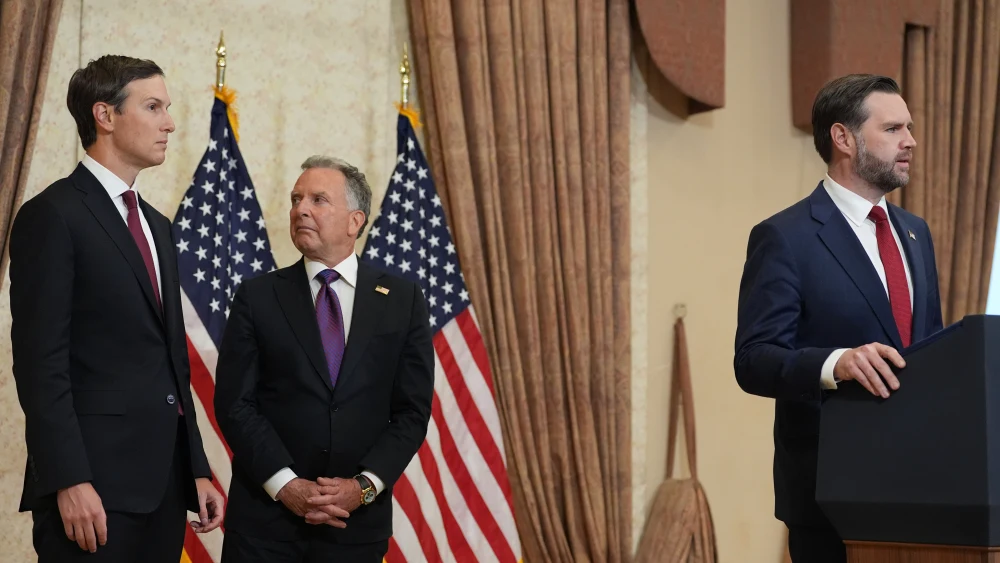
Tehran opted “not to accept our terms,” the vice president said, speaking alongside Steve Witkoff, U.S. special envoy for peace missions, and Jared Kushner, who advises his father-in-law, U.S. President Donald Trump.
“The simple fact is that we need to see an affirmative commitment that they will not seek a nuclear weapon and they will not seek the tools that would enable them to quickly achieve a nuclear weapon,” Vance said. “That is the core goal of the president of the United States, and that’s what we’ve tried to achieve through these negotiations.”
Iran declined to offer a “fundamental commitment” that it won’t seek a nuclear program “for the long term,” the U.S. vice president said. He added that the Trump administration hopes that the Iranian regime will make that commitment.
Vance was at the table for negotiations with the Iranians for the first time during the meetings in Pakistan.
He described the American position as “quite flexible” and “quite accommodating.” Trump told the negotiators to go to Pakistan “in good faith and make your best effort to get a deal,” he said.
“We did that, and unfortunately, we weren’t able to make any headway,” Vance told reporters.
The U.S. negotiators consulted Trump “a half dozen times, a dozen times over the past 21 hours” about the discussions, according to Vance.
He told reporters that part of the conversation was about the Iranian regime’s demand that its overseas assets, which are frozen due to U.S. sanctions, be unlocked.
“We leave here with a very simple proposal, a method of understanding, that is our final and best offer,” Vance said. “We’ll see if the Iranians accept it.”
The discussions were the highest-level known direct talks between American and Iranian officials since 2013, when then-President Barack Obama called Hassan Rouhani, then newly elected as Iranian president, to talk about the regime’s nuclear program. (Rouhani was Iranian president until 2021.)
The talks on Saturday, which Pakistan facilitated, came days into a fragile ceasefire in the conflict between a U.S.-Israeli coalition and Iran.
The Islamic Republic has also attacked several Gulf neighbors and largely closed the Strait of Hormuz, a critical waterway through which approximately 20% of global oil passes, causing skyrocketing fuel prices.
Vance led the U.S. delegation in Islamabad. Mohammad Bagher Ghalibaf, speaker of the Iranian parliament, led the Iranian side.
Asked whether the failure of the talks to reach an agreement would lead back to war, the U.S. vice president did not answer.
Ghalibaf blamed Washington for failing to gain Tehran’s trust in an X post on Sunday. He claimed Iran’s team had presented “forward-looking” initiatives during the negotiations.
“Before the negotiations, I emphasized that we have the necessary good faith and will, but due to the experiences of the two previous wars, we have no trust in the opposing side,” Ghalibaf wrote. “My colleagues on the Iranian delegation Minaab168 raised forward-looking initiatives, but the opposing side ultimately failed to gain the trust of the Iranian delegation in this round of negotiations.”