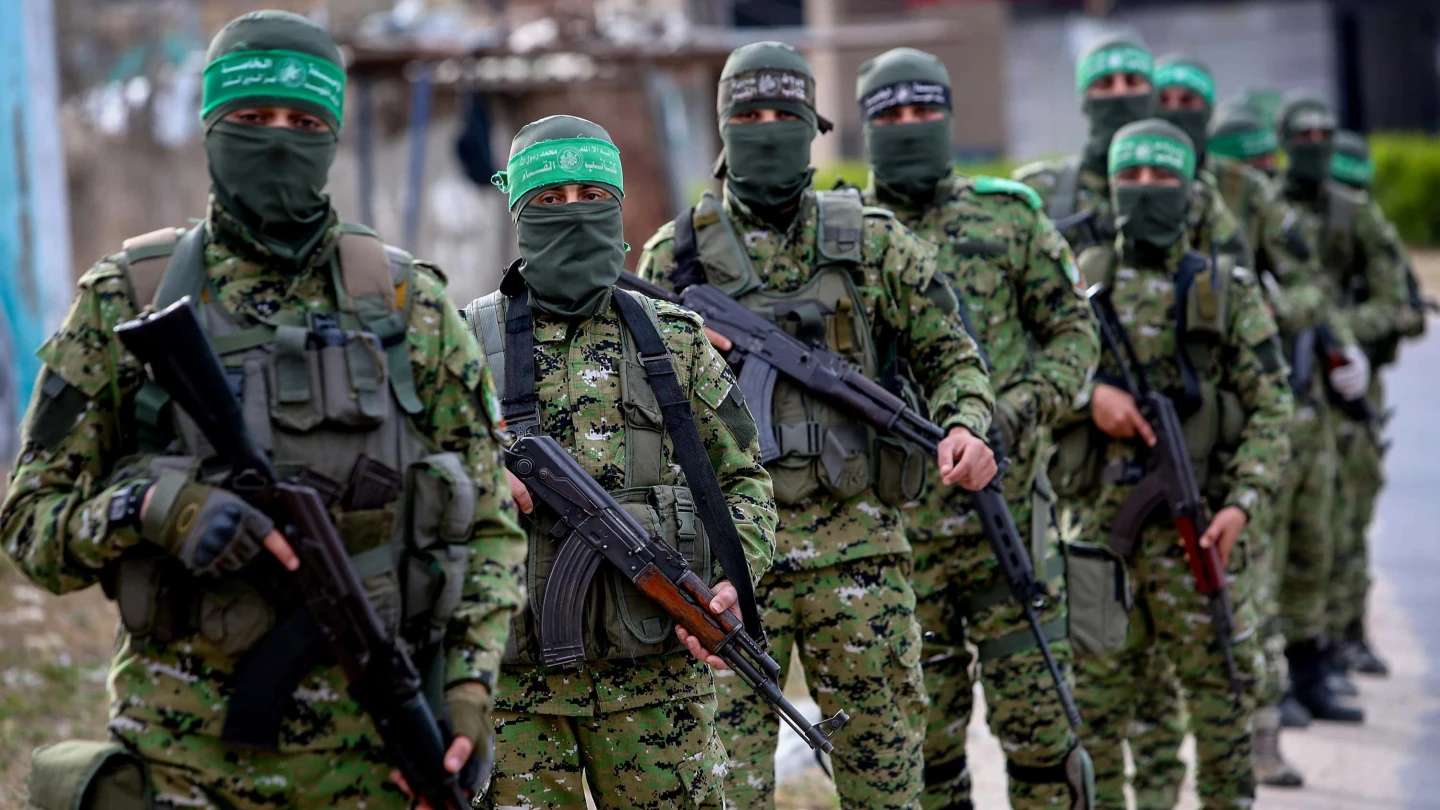
Imagine you are a fighter in an elite unit of the Israel Defense Forces. In two days, a critical mission in Lebanon awaits. Before the operation, you are taken for a final drill at one of the military’s training grounds to sharpen your combat edge and make sure every shot you fire hits the enemy’s kill zone.
You enter the training compound according to procedure. Everything is advancing smoothly. Then, in the very last room, a split second before the finish line, a corporal leaps from a hiding spot and shouts at you: “Bang, bang!” That’s it—you’ve been neutralized.
Congratulations. You have just had a close encounter with one of the IDF’s enemy simulators—a soldier who outsmarted you and caught you in a moment of inattention. From that incident, you are meant to emerge stronger and equipped with lessons that will sharpen your performance in real combat, against a real enemy.
“We were waiting for a force inside a large building, and the fighters simply didn’t check one of the rooms. I shouted ‘Bang, bang’ first,” recalled Cpl. S., a soldier in the IDF’s Red Unit, which simulates enemy forces.
The Red Unit was established six years ago and consists of 80 female fighters. Over the course of three and a half months, they undergo specialized training, and their primary mission is to get inside the mind of a Hamas terrorist or a Hezbollah fighter, understand how the enemy operates and what drives him, and then simulate him as realistically as possible in drills against IDF troops.
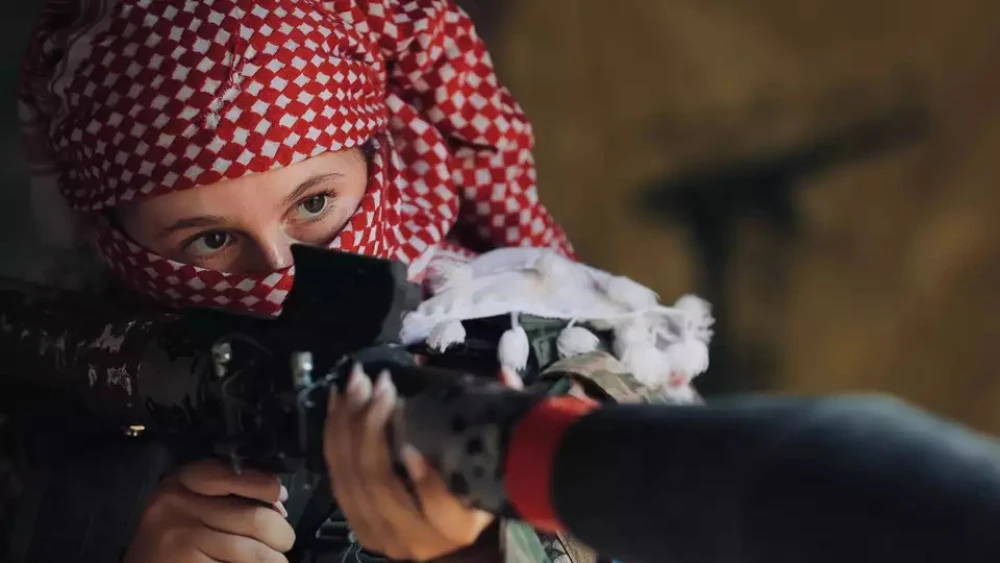
“When I enlisted, I didn’t know the Red Unit existed,” 2nd Lt. S., a company commander in the unit, said. “My assignment sheet said ‘Enemy-forces simulator.’ It sounded cool to get to know the enemy, to understand how he operates. I was excited, and in training, a whole new world was opened up to me.
“You start with the foundations of the enemy’s culture, you study the balance of power in Lebanon and Gaza, and gradually you work your way into their military, their hierarchy. How their command structure works, and what the parallel is to IDF units. How they operate as fighters, what training they go through, their standard operating procedures, and their combat techniques. You get into the smallest details, so that you really absorb what it means to be a Hezbollah or Hamas terrorist.”
The unit’s name is no accident. In the IDF, “blue” represents Israeli forces and “red” represents the enemy. To embody their roles properly, the unit’s soldiers walk around their base in southern Israel wearing red insignia, and in drills they sometimes carry Kalashnikov rifles, just like Hamas operatives.
The sound of real gunfire
Until the Red Unit was established, infantry companies in the IDF used to detach a platoon from their own ranks to simulate enemy forces, a practice that disrupted training by reducing their available strength. The Red Unit soldiers are trained to make life difficult for IDF troops, to surprise and neutralize.
The Red Unit consists of two companies. One focuses on enemy simulation in the north, with a concentration on Hezbollah; the other focuses on Hamas in the south. Every six months, the companies rotate.
IDF units entering operational activity or preparing for a raid against the enemy invite the Red Unit to challenge their fighters.
2nd Lt. A., a platoon commander, described the experience: “In the ‘Little Gaza’ training complex, you really feel like you’re in Gaza, and there’s darkness all around. I hear fighters talking, and my goal is to intercept them and win, so I hide in a corner or behind a bush and don’t move to avoid making noise. Then, in the middle of an engagement, there’s shouting, and you really go all out. They fire blank rounds and throw smoke grenades, and the adrenaline flows. It really feels like war.”
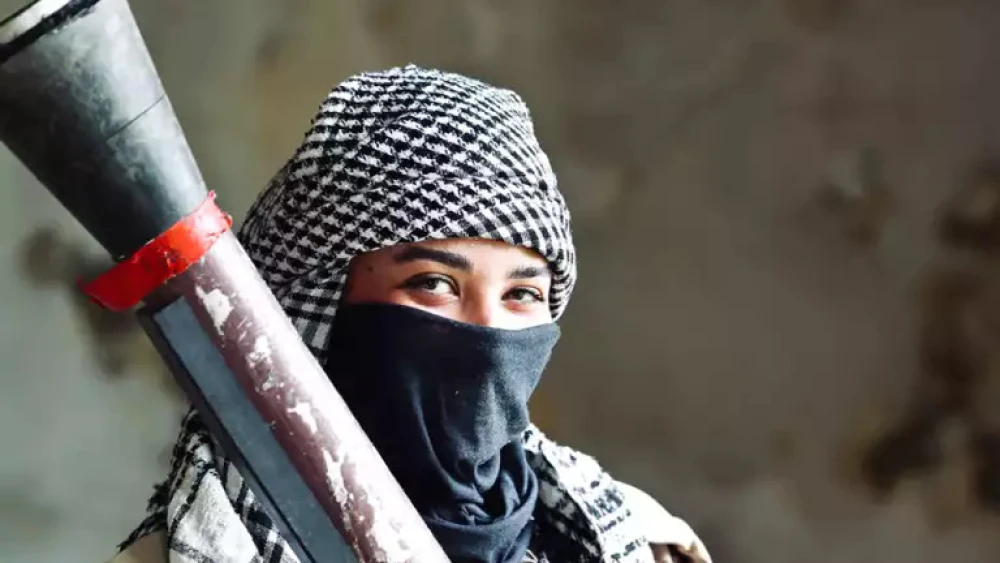
It is not uncommon for the “bad guys” to win after an ambush they laid for IDF fighters works as intended, and it has already happened that the battalion commander on the other side—a decorated, experienced fighter—showed up at the end of a drill to commend the simulators.
Second Lt. S., the most senior of the three commanders, enlisted in August 2022. She is convinced that the Hamas onslaught on Oct. 7, 2023, was a turning point for the Red Unit.
“It was very hard then to be an enemy simulator, because until then we had treated it as kind of fun, and suddenly simulating Hezbollah and Hamas became psychologically complicated, because you know that in the drill the goal is to ‘kill’ IDF soldiers, right after so many had been killed in reality. At the same time, we knew that this was our purpose and that we needed to be better than ever, because this was the moment we had trained for. It was hard, but it was very powerful for the soldiers,” she said.
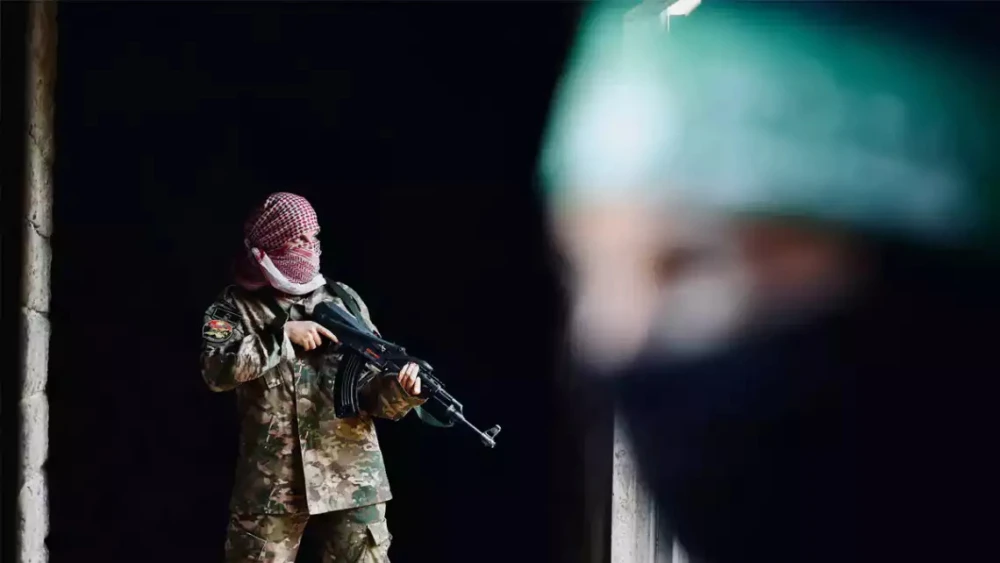
2nd Lt. S. and 2nd Lt. A. recalled that after the war broke out, they took part in a major drill held in one of the communities, in which they simulated terrorists taking over houses in a residential area. “It was a drill with a special unit,” said 2nd Lt. S.
“I was a ‘terrorist’ under a house in which there were hostages, and the fighters had to ‘kill’ us. It was complicated to shout ‘Bang, bang, bang’ while wearing camouflage uniforms in a civilian environment, because people were watching from balconies, and it could have frightened them. Only on second thought did I feel that we were there for them, training fighters to protect them.”
Since the Oct. 7 surprise attack, the unit has repeatedly surprised soldiers at bases, testing the alertness of guards to ensure vigilance does not slip again.
In its early days, the Red Unit focused primarily on Hezbollah, which was then considered the biggest threat in the region, but after Oct. 7, the Hamas threat from the south was no longer underestimated.
The Red Unit’s fighters are required to improvise, be creative, and hold up under pressure. They must be physically capable because they sometimes need to cover long distances on foot and stay sharp during extended drills. They train extensively at firing ranges so that in training engagements, they serve as the most credible possible adversary. But they also know that right now they are not at a level of combat readiness that would allow them to be sent to the front, and that was never the intention when they enlisted.
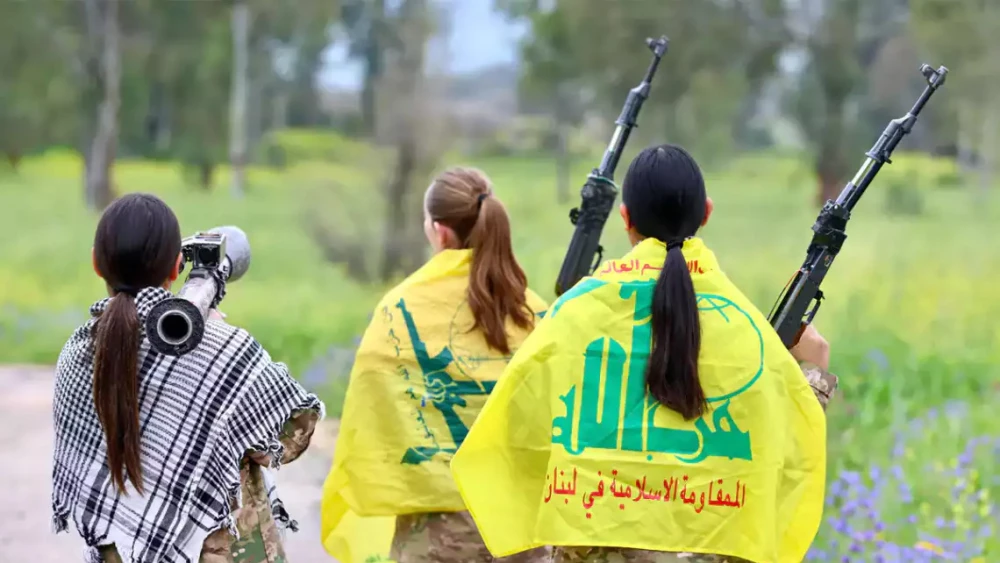
2nd Lt. A.: “Women should be integrated into combat. I agree that professionally, the standard and the requirements should not be lowered, and it really depends on character and will, because not everyone is built for it. But if it came to it, of course, I would fight. I’m very driven, and it moves me to see women fighters. I admire them.”
2nd Lt. S. is convinced that since the start of the war, they have seen an improvement in the IDF’s capabilities.
The Red Unit may be young, but it has unit pride and the beginning of a tradition. Men, perhaps unsurprisingly, are not missed in their service landscape.
“Not at all,” 2nd Lt. S. wanted to make clear. “This is an extraordinary unit of female empowerment, and it also demonstrates the strength of women. If something physical needs to be done, like carrying heavy equipment, they don’t need any man to help them.”
Originally published by Israel Hayom.