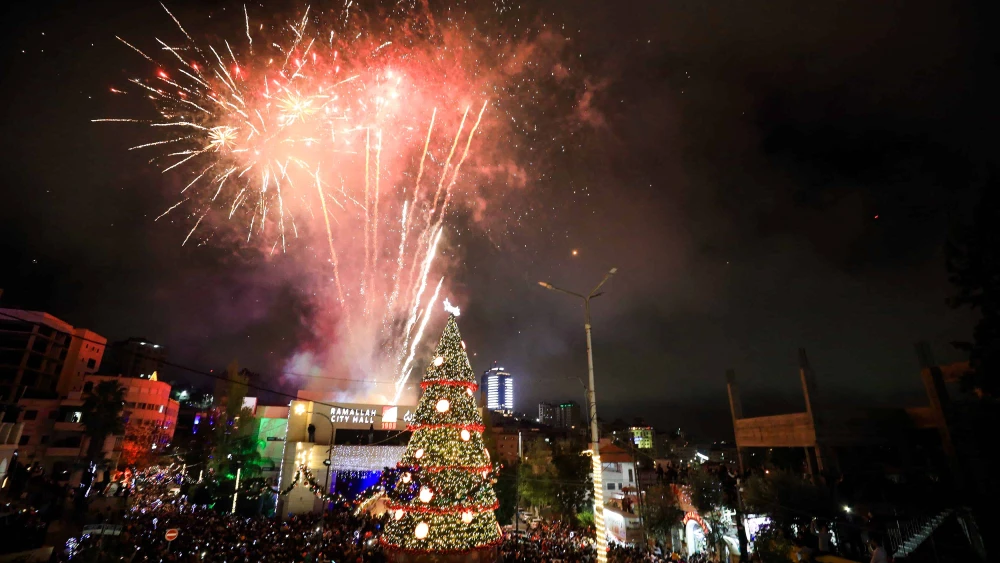
Palestinian localities in Judea and Samaria will not celebrate New Year’s next week, Palestinian Authority Prime Minister Mohammad Shtayyeh announced on Wednesday, days after the P.A.-controlled city of Bethlehem moved to cancel its traditional Christmas festivities.
Instead of marking New Year’s Eve, Palestinians will observe a “Day of Rage” in protest of Israel’s military operation against Hamas terrorists in the Gaza Strip, Shtayyeh stated ahead of the P.A.'s weekly Cabinet meeting, according to the official Wafa news agency.
Palestinians often mark “Days of Rage” by initiating clashes with Israeli security personnel throughout Judea and Samaria.
Last month, the Bethlehem city government announced its decision to remove all Christmas decorations from public places in honor of terrorists killed in Gaza.
The decorations were removed “in honor of the martyrs and in solidarity with our people in Gaza,” the municipality said.
The traditional Christmas mass and prayers still took place this week, but without Christmas trees or festive lights.
In a speech ahead of the Christian holiday, P.A. chief Mahmoud Abbas claimed Bethlehem is “experiencing a sadness it has not seen until this day” amid the war against Hamas.
“The occupation forces oppress and kill the children of Palestine and snatch the innocent smiles from the faces of the living,” stated Abbas, according to Wafa.
“As we welcome Christmas, we remember the message of our Lord Christ, peace be upon him, the message of love, tolerance and peace,” Abbas said as he paid tribute to the “martyrs of Palestine.”