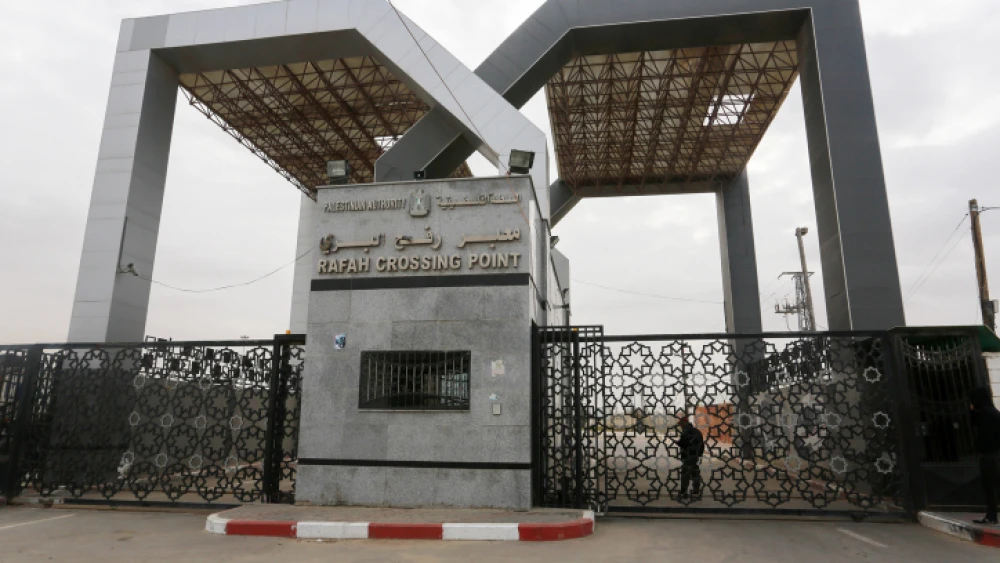
Egypt has rejected an Israeli proposal to work together with Israel to reopen the Rafah Crossing into the Gaza Strip and manage its operation jointly, two security sources in Cairo told Reuters on Thursday.
The Egyptian government demands the crossing be managed only by Palestinians, the sources said, adding that Jerusalem had offered a mechanism for how to manage the crossing after its forces withdraw.
Officials from the Israel Security Agency presented the plan during a visit to Cairo on Wednesday, amid rising tension between the two countries following Israel’s military advance last week into Rafah, believed to be the final Hamas terrorist stronghold in the enclave.
The Israel Defense Forces took control of the Gaza side of the Rafah Crossing with Egypt on the morning of May 7.
A day earlier, Israel’s War Cabinet decided unanimously to “continue the operation in Rafah to exert military pressure on Hamas in order to promote the release of our hostages and the other goals of the war.”
Jerusalem wants to allow humanitarian aid through Rafah but is unable to do so without Egyptian cooperation. Cairo’s refusal to coordinate with Israel is preventing aid trucks from passing through the border, even as Egyptian President Abdel al-Fatah al-Sisi blames the Jewish state.
The Ramallah-based Palestinian Authority has reportedly also rebuffed an Israeli offer to help manage the border crossing, local media reported earlier this week, citing U.S. government officials.
On Tuesday, Israeli Foreign Minister Israel Katz placed the onus for averting a humanitarian crisis squarely on Egypt’s shoulders.
Katz said he had spoken with his British and German counterparts “about the need to persuade Egypt to reopen the Rafah Crossing to allow the continued delivery of international humanitarian aid to Gaza.”
While the world places the responsibility for Gaza’s humanitarian situation on Israel, the top diplomat added, “the key to preventing a humanitarian crisis in Gaza is now in the hands of our Egyptian friends.”
Katz emphasized that Hamas cannot be allowed to control the crossing. “This is a security necessity on which we will not compromise,” he said.
The Rafah operation, which Israel estimates will last around two months, is being carried out in phases as opposed to a full-scale invasion. The phased nature of the operation allows for it to be paused should a hostage release deal be reached between Israel and Hamas.
Egypt has reportedly threatened to suspend its 45-year-old peace treaty with Israel if the IDF further expands its offensive against Hamas, and has lodged formal protests with the U.S. and European governments.