Newsletter
Newsletter Support JNS

Hundreds of thousands lack access to bomb shelters in northern Israel

According to an Israel Builders Association report, nearly a million people lack access to a secure location in the north • Lieberman: Cancellation of 2018 fortification plan was “madness.”

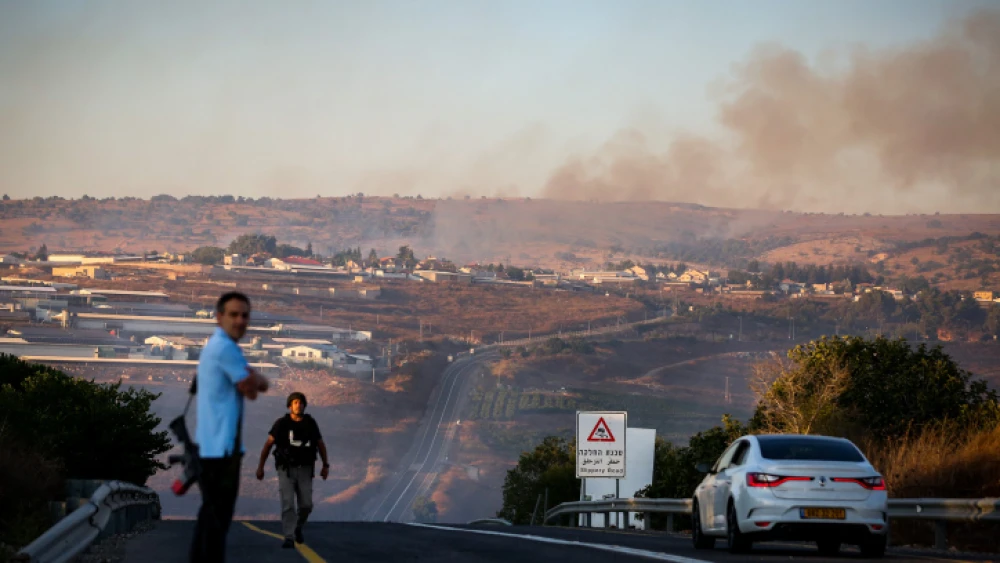
Smoke rises from a fire caused from a rocket fired from Lebanon near Moshav Avivim on the border with Lebanon, in northern Israel, Sept. 1, 2019. Photo by David Cohen/Flash90.

Hundreds of thousands of Israelis in northern Israel do not have access to a bomb shelter or secure location, Israel’s Ynet news site reported on Wednesday.

According to the report, the Israel Builders Association released a study based on data from the Central Bureau of Statistics that found that as many as a million Israelis in the northern part of the country lack a bomb shelter or secure location near their homes in case of an attack.

The report comes amid heightened tensions between Israel and Hezbollah in Lebanon, which launched a rocket attack against an Israel Defense Forces’ vehicle on Sunday.

The government approved an NIS 5 billion ($1.4 billion) security plan a year ago, authored by then-defense minister Avigdor Lieberman, but the plan was eventually canceled. Local leaders are calling on the government to implement the fortification program, according to the report.

On Monday, Lieberman criticized the cancellation of the plan, saying it was “madness” and equivalent to “abandoning the civilians.”

“It is in line with the U.N.’s attitude and obsession with Israel,” said the president of the World Jewish Congress-Israel.
Israel’s Home Front Command has implemented an advanced preliminary alert system for Lebanese rocket threats.
The completion of two new pipelines will enable Leviathan to maximize its production capacity for both domestic needs and exports.
The war with Iran strained the Gulf state’s relationship with Hamas, but the evidence points less to a real break than to a Qatari balancing act.
Developing technologies that can make a truck vanish from radar. The race to find a solution to the new drone threat.
“Only one president was willing to lay it out on the line and ensure after 47 years that Iran is not capable of having a nuclear weapon,” said the U.S. secretary of defense.