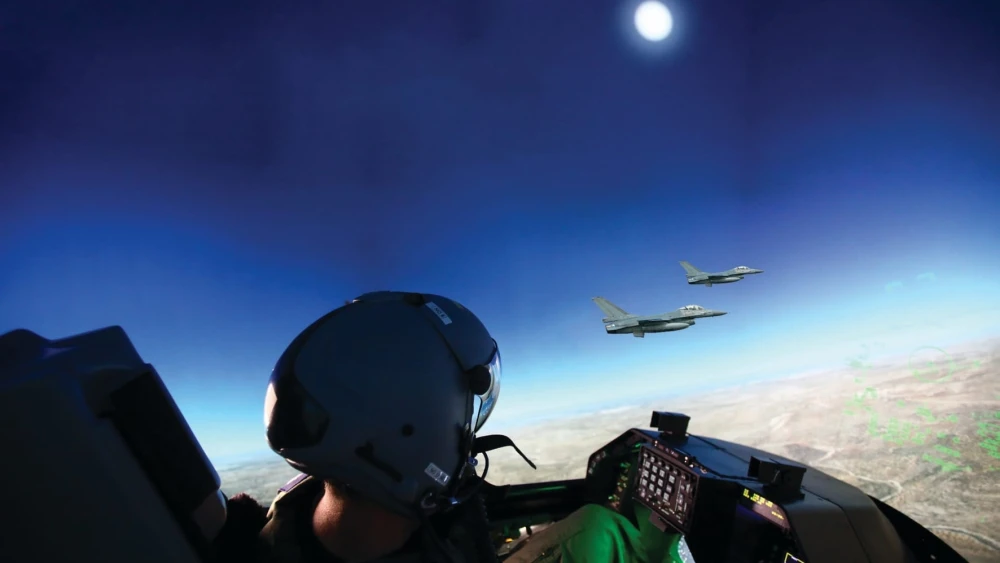
The Israeli Air Force killed senior terrorist Muhammad Shoaib in an strike near Al-Numairiyah in Southern Lebanon on Friday, the Israel Defense Forces said.
According to the IDF, Shoaib was a “significant figure” in a weapons smuggling route from Iran to northern Israel and Judea and Samaria. He also maintained operational ties with arms dealers in Syria and Lebanon as part of that network.
The IDF linked Shoaib’s activities to Qasem Salah al-Husseini, a member of Unit 840—a branch of Iran’s Islamic Revolutionary Guard Corps’ Quds Force—who was killed in an Israeli strike on July 3 in Kafr Sil, south of Beirut. Al-Husseini was implicated in planning and executing attacks against Israeli civilians and military forces across multiple sectors.
On Saturday, the IAF also killed a terrorist in Hezbollah’s anti-tank unit in the Khiam area in southeastern Lebanon.
On Wednesday, the IDF reported the targeted killing of Hussein Ali Muzhir, the head of firepower for the Zahrani sector in Hezbollah’s Badr Unit, in a strike near Al-Babliyah in Southern Lebanon’s Sidon District.
Two days earlier, the IDF killed Ali Abd al-Hassan Haidar, a senior commander in Hezbollah’s elite Radwan Force, in an airstrike in the Deir Kifa area of Southern Lebanon’s Tyre District. According to the military, Haidar was involved in the Lebanese terrorist group’s “Conquer the Galilee” plan—an Iranian-backed plot to infiltrate northern Israel, seize territory and take hostages.
The IDF announced on Tuesday that it had targeted Hamas operative Mehran Mustafa Ba’jur in a strike near Tripoli, northern Lebanon. Ba’jur was described as a key figure in orchestrating attacks against Israeli forces and civilians, including rocket barrages on Nahariya and Kiryat Shmona during the war.
On Nov. 26, 2024, Jerusalem and Beirut signed a ceasefire deal aimed at ending more than a year of cross-border clashes between the IDF and Hezbollah. The terrorist group began attacking the Jewish state in support of Hamas in the aftermath of the Oct. 7, 2023, massacre.
Since the truce, Israel has conducted frequent operations to prevent Hezbollah from rebuilding its terrorist infrastructure in Southern Lebanon and so violating the terms of the truce.