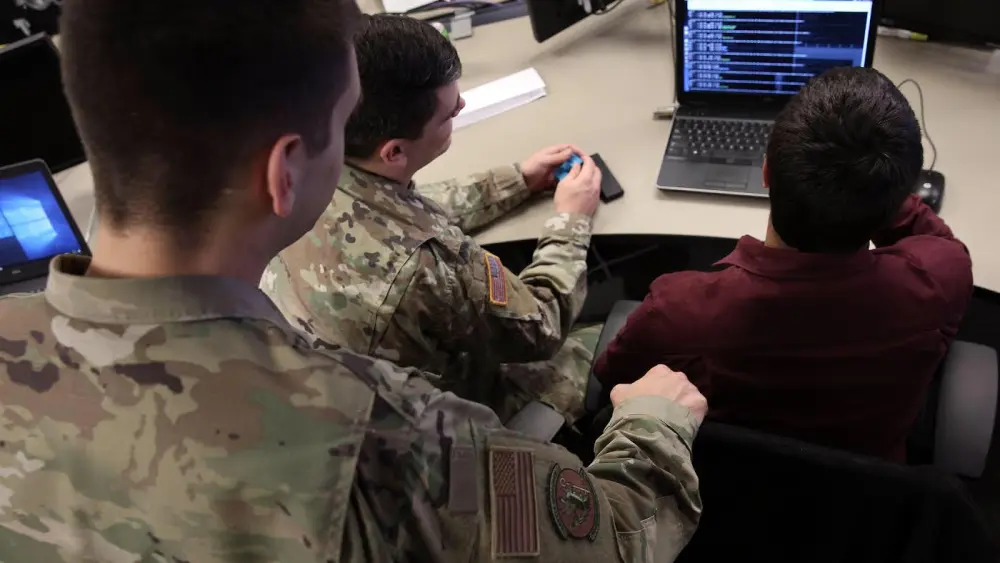
The Israel Defense Forces and the U.S. military are strengthening their coordination and partnership in the area of cyber defenses.
Lt. Col. O (full name withheld), an officer in the IDF’s J6 and Cyber Defense Directorate, told JNS in recent days that a joint and relatively large exercise held with the U.S. military’s Cyber Command was highly successful.
Tens of Israeli cyber defenders from the Joint Cyber Defense Division, along with cyber defenders from the Intelligence Directorate, Israeli Air Force, Israeli Navy and its ground forces, flew to the United States in November for the drill—the fourth of its kind.
All of the Israeli personnel taking part have been trained by the IDF’s Joint Cyber Defense Division, irrespective of where in the military they are currently serving, noted the officer.
“We set out to simulate a number of scenarios that are relevant to both militaries. This is similar to the intimate, strategic ties in place between the U.S. and Israel across a wide number of areas. In the area of cyber cooperation, the same thing is taking place,” said Lt. Col. O.
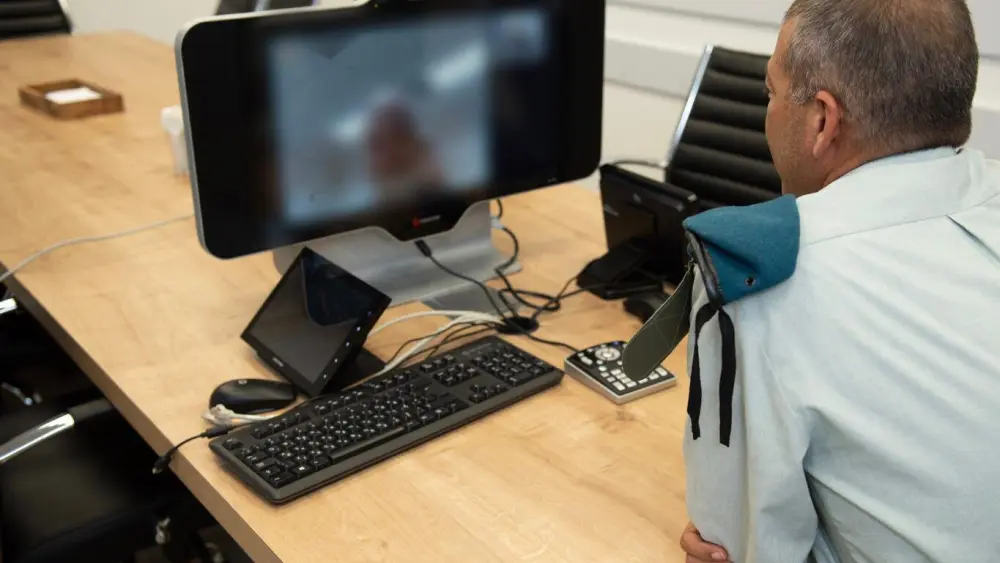
Prior to the exercise, dubbed “Cyber Dome,” the Israeli and American teams drew up an organized battle procedure, complete with defined and clear objectives. This enabled them to practice responses to a significant simulated cyber attack, in which adversaries try to cripple military operations.
Preparations for the exercise began more than six months before its start date and included a preliminary exercise in Israel. The recent exercise saw Israeli and American forces acting as a “joint organic defense team,” the IDF said at the time of the drill.
“The challenge in this kind of drill is to identify the scenario and objectives that serve the operational interests of both sides,” stated the officer. “The exercise enables both sides to learn and work together. It allowed each side to examine the concepts and working methods of the other.”
American-Israeli joint exercises include a range of military drilling, such as the major biannual air-defense series, known as Juniper Cobra. Such drills form the foundation of cooperation on areas of joint strategic interests, stressed the officer.
Asked to discuss the nature of the changing cyber threat posed by multiple adversaries, Lt. Col. O said that cyber attackers reflect the development of technology in the military world.
Just like civilians, he said, modern militaries understand that as soon as new capabilities are introduced, new risks also appear. “But no one can roll back modernization,” he said. “Therefore, we must make the required adaptations.”
He compared the evolution of the threat to the way households have gone from using cash only to relying full on digital banking services, despite the common awareness of ongoing cyber attacks on banks.
“People still put their money in banks and trust the system. In the defense reality, it is the same. We take calculated risks while living in a changing reality, based on the analysis of what we’d like to defend and what the adversaries’ capabilities are,” explained the officer.
‘The enemy will not attack directly’
In the world of cyber warfare, attackers have no geographic limitations and rarely launch attacks directly from their own location.
“One of the significant things in the cyber arena is that in 99.9 percent of cases, the enemy will not attack directly from one city center to another,” said Lt. Col. O.
In dealing with such threats, cyber defenders have multiple missions. One is to try and return the situation to what it was before the cyber attack was launched. Another is to identify and stop the cyber attack in its tracks before it can progress further.
Cooperation with other militaries can boost the ability of cyber defenders to achieve those goals.
The IDF is boosting cooperation with other militaries, as well in the realm of cyber defenses. In 2019, the Joint Cyber Defense Division opened its doors to foreign military delegations who were interested in visiting the division’s advanced cyber simulator.
Several countries took up the invitation and arrived in Israel for training, said the officer. “They see Israel as an outpost of cyber defense.”