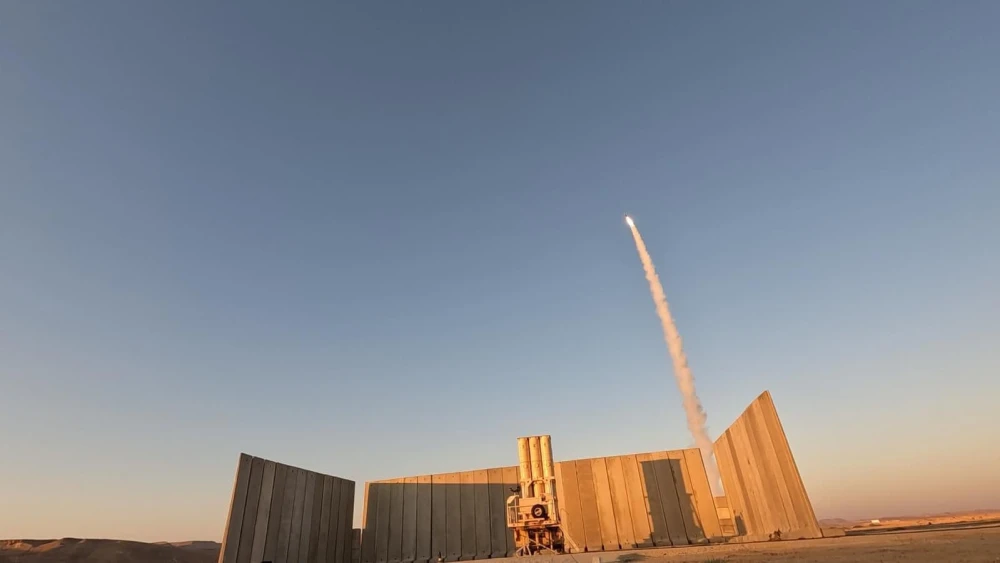
The Israeli Defense Ministry on Thursday announced a contract to significantly increase production of Arrow anti-ballistic missile interceptor systems, highlighting the system’s critical role during the recent war with Iran.
Developed jointly by Israel and the U.S. Missile Defense Agency, the Arrow system played a vital role in Israel’s multi-tiered missile defense during the 12-day war, “Operation Rising Lion,” which lasted from June 13 to June 24.
The system provides exo-atmospheric and endo-atmospheric interception capabilities, defending against a wide range of ballistic missile threats, including those targeting strategic locations at long range. Its performance was especially notable during the war, delivering many successful interceptions and significantly reducing casualties and economic losses.
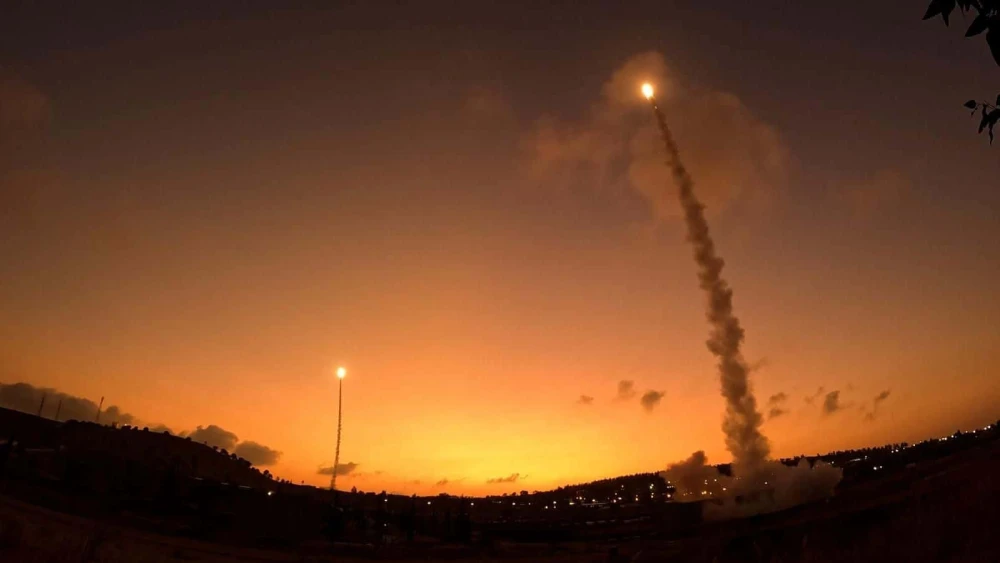
During the conflict, Iran fired more than 550 ballistic missiles at Israel. According to the Defense Ministry, 86% of these missiles were intercepted, saving many lives and preventing more than $15 billion in property damage.
Nevertheless, 28 civilians—including four children—and one soldier were killed. More than 3,000 people, including 346 children, were wounded. The hostilities also forced the evacuation of over 15,000 residents, among them 1,402 senior citizens and 522 people with disabilities. Additionally, the Israel Tax Authority received 41,651 damage claims related to the missile strikes.
In total, approximately 200 ballistic missile interceptors—including the Arrow system, as well as U.S. THAAD and Aegis interceptors—were launched during the conflict at a combined cost exceeding $1 billion. Each Arrow interceptor costs an estimated $2 million–3 million, while THAAD interceptors can reach $13 million each.
The Arrow system currently uses Arrow 2 interceptors for short- to medium-range threats and Arrow 3s for exo-atmospheric long-range interceptions. The future Arrow 4 is designed to counter advanced threats such as hypersonic missiles.
In addition to Iran, the Arrow system has also been used against attacks by Tehran’s terrorist proxy in Yemen, the Houthis.
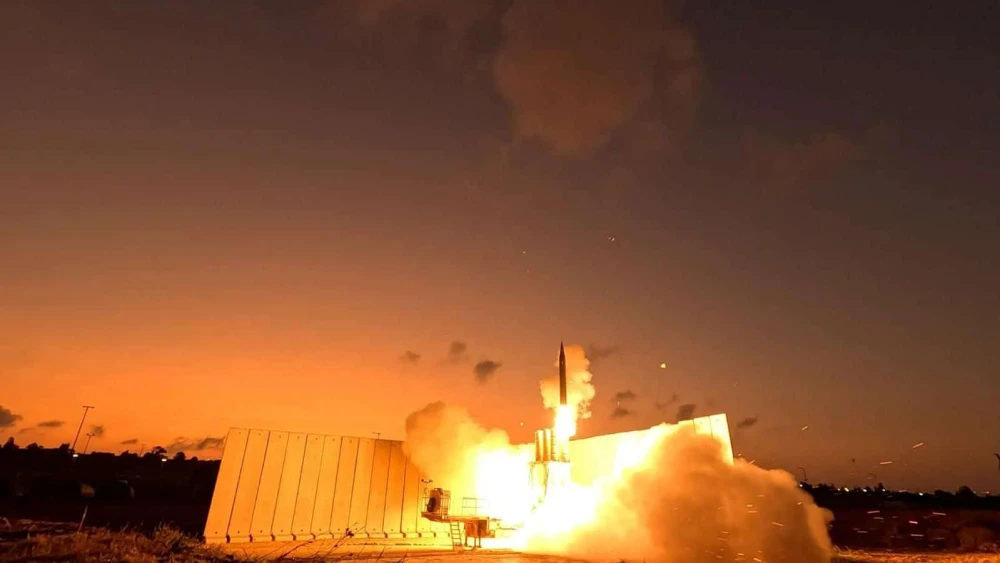
After the Arrow’s proven effectiveness, Maj. Gen. (res.) Amir Baram, director general of the Defense Ministry, signed a contract with Israel Aerospace Industries to substantially boost production of Arrow interceptors. The Israel Missile Defense Organization, led by Moshe Patel within the ministry’s Directorate of Defense Research and Development (DDR&D), coordinated the contract.
Israel Aerospace Industries will serve as the prime contractor, manufacturing the interceptors at its MLM facility with support from its American partner Stark Aerospace. Additional contributions will come from IAI’s ELTA Systems and TAMAM Division units, as well as Israeli defense firms including Elbit Systems, Tomer Ltd. and Rafael Advanced Defense Systems.
The U.S. Missile Defense Agency remains a key partner not only in the Arrow program but also in Israel’s broader missile defense initiatives, such as David’s Sling and Iron Dome.
Baram lauded the Arrow system’s exceptional performance, noting that the interceptions saved lives and sharply curtailed economic damage during the war. He emphasized that accelerating production is central to the ministry’s strategy for increasing operational readiness amid ongoing and future conflicts.
Brig. Gen. (res.) Daniel Gold, Head of DDR&D, stressed the ministry’s focus on “advanced mass production” techniques to supply the Israel Defense Forces with large quantities of defensive and offensive systems while maintaining quality and innovation.
IAI President and CEO Boaz Levy described the contract expansion as vital to Israel’s security. He highlighted that the company has been operating at full capacity since the start of the conflict and praised ongoing innovation efforts, including the development of the Arrow 4 interceptor.