Newsletter
Newsletter Support JNS

Israeli defense minister’s Twitter account hacked

Pro-Palestinian, pro-Turkish messages were posted to Defense Minister Naftali Bennett’s Twitter feed during the incident, which lasted “several minutes,” according to his office.

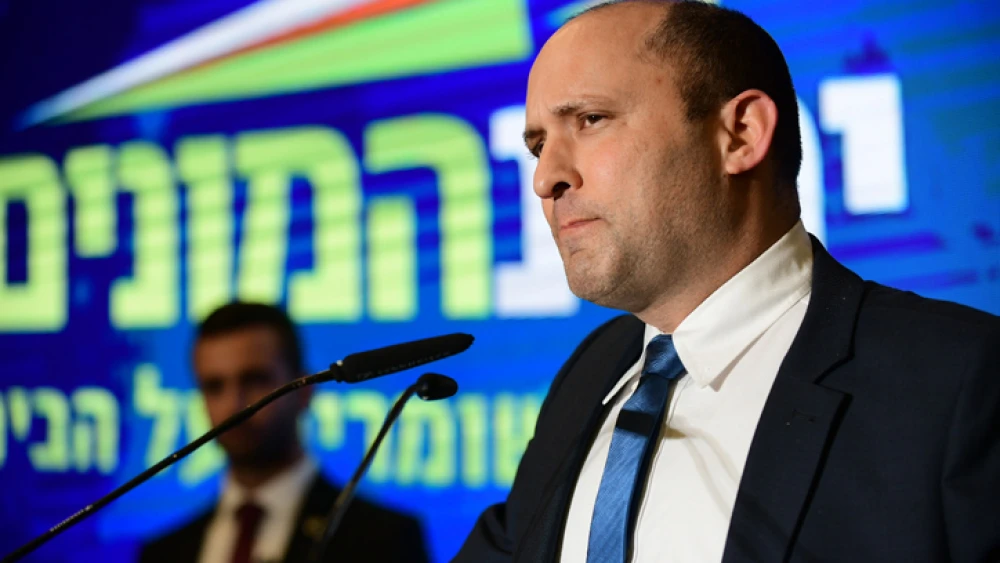
Former Israeli Defense Minister Naftali Bennett attends the launch of the Yamina Party campaign, on Feb. 12, 2020. Photo by Tomer Neuberg/Flash90.

Israeli Defense Minister Naftali Bennett’s Twitter account was hacked on Sunday morning, with numerous pro-Palestinian and Turkish messages being posted on his profile.

No suspects have been named in the case, but investigators believe the perpetrators were mostly likely from Turkey, as the majority of the posts were written in Turkish or contained pro-Turkish messages.

One of the tweets on Bennett’s account read “freedom for Palestine,” along with an image of a Palestinian flag. Another was the Turkish national anthem translated into English.

Bennett’s office said in a statement on Monday, “Last night at around 2 a.m., the Twitter account of Defense Minister Naftali Bennett was hacked for several minutes. The content was deleted immediately and the password to the account was changed. The matter has been transferred to the relevant cyber authorities in the defense establishment.”

Officials are currently trying to assess the security fallout from the incident. Intelligence agencies and information security experts were also checking whether Bennett’s cell phone had been hacked as well.

This article first appeared in Israel Hayom.

“These attacks come amid a broader rise in violent extremism across Canada and other Western democracies—a toxic brew of anti-Zionist rhetoric, local criminal elements, Iranian-backed proxies and ISIS-inspired terrorism,” CIJA stated.
“Iran and Israel are the only two countries on this planet that have a biblical relationship,” the exiled Iranian Crown Prince Reza Pahlavi said.
“We discussed the friendship and relations between Israel and Bahrain, as well as the importance of the U.S.-led Abraham Accords,” Isaac Herzog said.
The cause of the blaze near the grave of Rabbi Shneur Zalman of Liadi was not immediately clear.
The Japanese Red Army member, who helped kill 26 people, lived in Lebanon since his release in a 1985 prisoner exchange.
The suspect’s writing about the deadly Samaria shooting prompted an investigation and the seizure of ammunition, cash and fireworks.