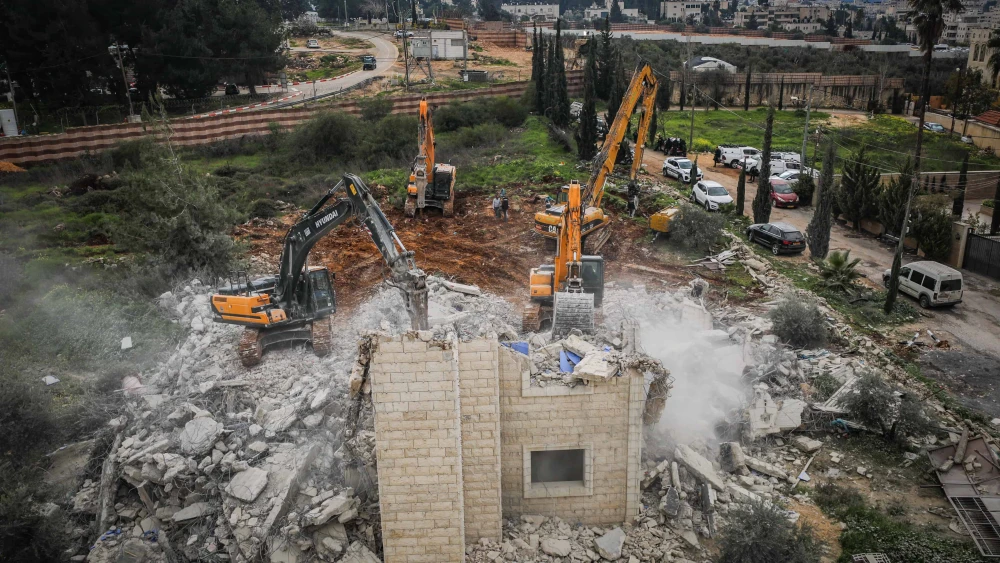
Israel’s Supreme Court, sitting as the High Court of Justice, on Wednesday sanctioned the demolition of a Jerusalem home belonging to a terrorist who shot and wounded two policemen on Oct. 12.
Khaled Abdel-Fattah, from the northern neighborhood of Beit Hanina, carried out his attack at a police station outside the Old City. One officer suffered severe wounds while another was moderately wounded.
The officers returned fire at the assailant, who attempted to flee the scene before being killed.
Wednesday’s ruling represented the first time that the High Court approved a home demolition for a terrorist who failed to kill anyone.
Abdel-Fattah’s relatives petitioned against the demolition order issued by the Israel Defense Forces. However, the court decided with a 2-3 majority against intervening in the matter.
The demolition of Palestinian terrorists’ homes has been a subject of controversy for years. Israel’s security establishment believes that the policy bolsters deterrence and prevents further terrorist activity.
In 2023, demolitions all but stopped, an Israel Hayom investigation carried out with Zionist NGO Im Tirtzu found. However, in the wake of Hamas’s Oct. 7 massacre, the military has picked up the pace, issuing demolition orders for a significant number of terrorists’ homes.