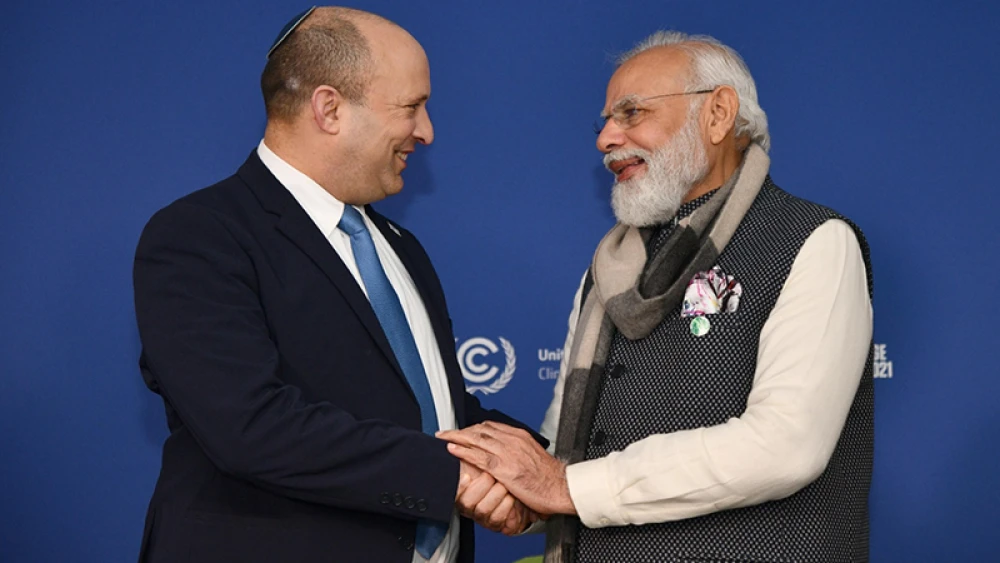
Israeli Prime Minister Naftali Bennett is scheduled to head to India on April 2 at the invitation of Indian Prime Minister Narendra Modi. The visit will mark the 30th anniversary of the establishment of relations between the two countries.
Israel and India “will continue leading the way for our countries’ relations,” Bennett said on Saturday evening. “Modi restarted relations between India and Israel, and this is of historic importance.
“The relations between our two unique cultures—the Indian culture and the Jewish culture—are deep, and they rely on deep appreciation and meaningful collaborations,” he continued. “There are many things we can learn from the Indians, and this is what we strive to do. Together, we will expand our cooperation to other areas, from innovation and technology, security and cyber, to agriculture and climate change.”
The Prime Minister’s Office said that the purpose of the visit is to “advance and strengthen” and “expand” the alliance between the countries. In addition to meeting with Modi, Bennett will hold talks with other government officials and visit with members of India’s Jewish community.
The leaders met last year at the U.N. Climate Change Conference (COP26) in Glasgow.