As the FIFA World Cup draws to a close and after Jewish athletes gathered in Israel for Maccabiah 2026, a new book is shining a spotlight on a forgotten chapter of sports history—one in which Jewish soccer players ranked among Europe’s greatest players before the Holocaust wiped out an entire generation.
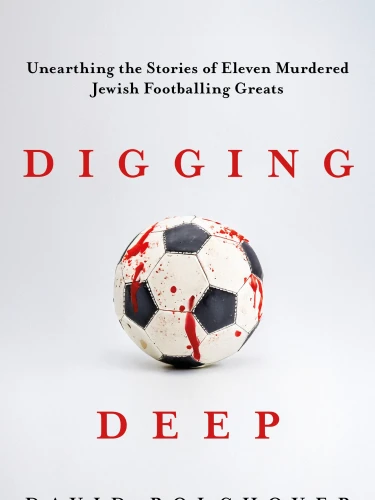
In Digging Deep: Unearthing the Stories of Eleven Murdered Jewish Footballing Greats, British Jewish author David Bolchover reconstructs the lives of 11 Jewish soccer stars who represented their countries at the highest level before they were murdered in the Shoah.
Rather than simply chronicling sporting achievements, Digging Deep explores what Bolchover describes as a lost civilization.
“Who was the greatest Jewish footballer ever?” Bolchover asks at the outset of the book—a question that, he argues, few football fans today could answer.
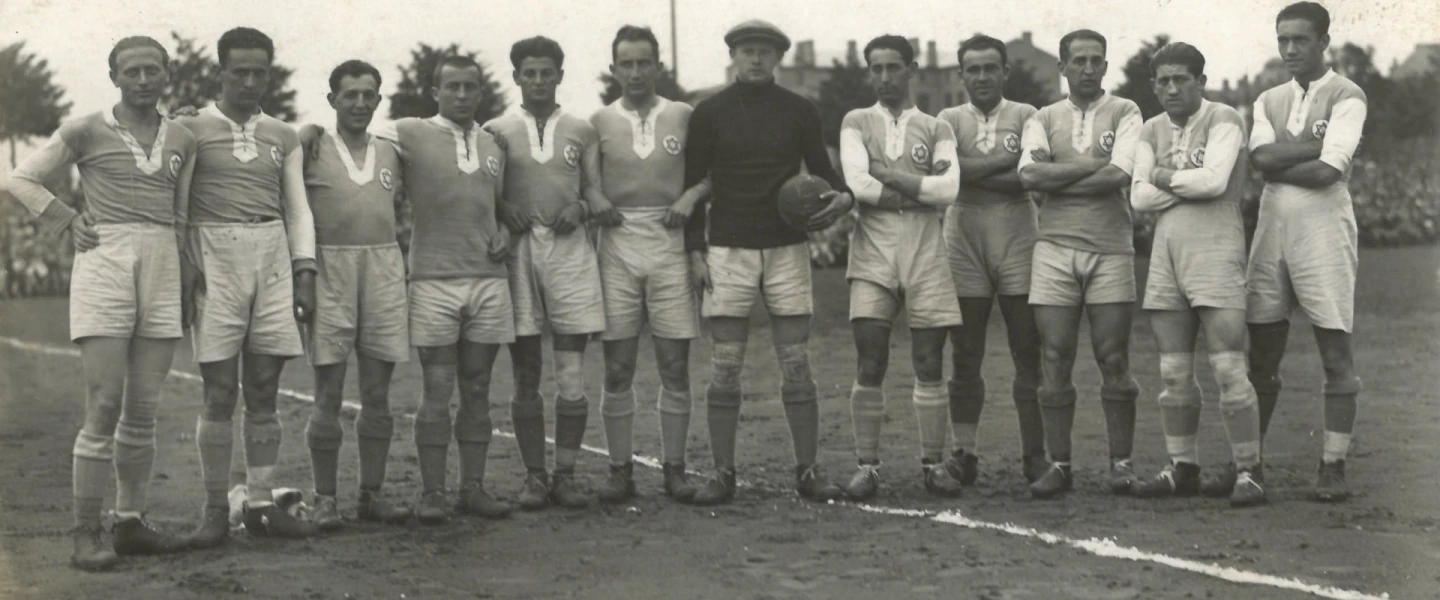
Yet before World War II, Jewish players, coaches, referees and administrators stood at the center of European football. They won championships, transformed tactics, officiated major international matches and filled stadiums across the continent.
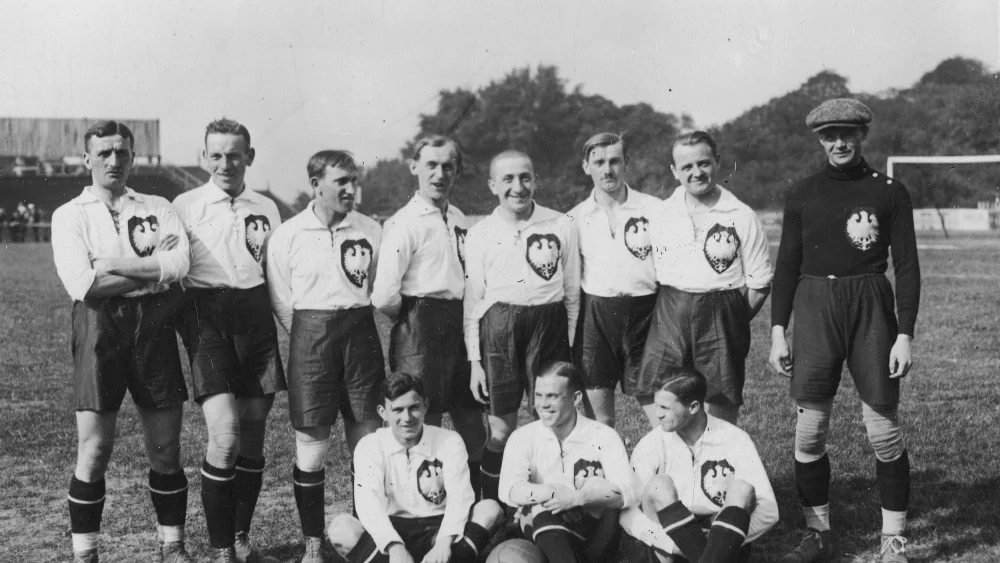
Bolchover’s “Starting XI” consists of five Hungarians, three Poles, two Austrians and one German—Jewish footballers who became national heroes in their own countries before antisemitism and the Holocaust brought their careers, and ultimately their lives, to a tragic end.
A forgotten legacy

“I wrote Digging Deep to break the silence, to restore memory,” Bolchover told JNS in an interview on July 13. “I have been a football fan since I can remember and I read about Jewish history avidly. But I knew nothing about the great Jewish footballers from before the Holocaust.”
He said the destruction of European Jewry devastated Jewish collective memory.
“In many places, pretty much everyone who could pass on the incredible stories about the great Jewish footballers were also murdered,” he said. “As a result, you get the lazy and ignorant stereotypes about Jews not being top footballers—our role, Jews often say, is to act as the founders, moneymen of football clubs, or as football agents, or as supporters.”
Bolchover said many Jews today even laugh at the notion that Jews once dominated the sport.
“They are laughing at our own destruction,” he said.
His fascination with the subject began while researching his previous book, The Greatest Comeback, about legendary Hungarian Jewish soccer coach Béla Guttmann.
“I discovered this whole new world of top Jewish players and coaches,” he said. “Jews dominated football in Central Europe in the same way that Black players dominate in the English Premier League now. Jews played a fundamental role in football’s development.”
Writing the book, he said, also became a way of telling the broader story of European Jewry. More than a sports history, Digging Deep restores to public memory a generation of Jewish athletes whose extraordinary achievements—and whose lives—were nearly erased from history.
“To write a biography, you need to understand the background of the individual concerned, where they came from and what they went through,” he said. “The book thus enabled me to convey a semblance of European Jewish history, all through the prism of the magnificent game of football.”
Eleven stars, eleven tragedies
Among the players featured is József Braun, whom Bolchover describes as “the greatest Jewish footballer who ever walked the earth.”
“Just 15 years after he last turned out for the Hungarian national team, Braun was conscripted into a Hungarian forced-labor battalion supporting the country’s Second Army on the Eastern Front, where guards beat and starved him to death.
“The last image we have of Braun,” Bolchover said, “is of those same guards crouching over his lifeless body, wrenching out his gold teeth.”
Another chapter follows German international Julius Hirsch, who scored four goals in only his second appearance for Germany, fought for his country in World War I and received the Iron Cross before being deported to Auschwitz, where he was murdered.
Bolchover said one of the stories that affected him most involved Polish internationals Leon Sperling and Zygmunt Steuermann, both of whom had opportunities to emigrate to pre-state Israel but declined.
“I felt I wanted to be transported back in a time machine and grab them both by the collar to tell them to accept,” he said.
Sperling was shot in the Lviv Ghetto in December 1941. Steuermann was murdered in a mass execution in Sambir, Ukraine, during Shavuot in June 1943.
Bolchover deliberately limited the book to 11 murdered international players, creating what he calls a symbolic football team.
“There is a huge emphasis in Holocaust memorialization on survivors and non-Jewish heroes who saved Jews,” he said. ““But these stories are the exception. I felt a strong urge this time to write about the rule—about mass murder, about massive local participation in the murder of Jews.”
Even selecting just 11 players proved painful.
“I swear that no sports coach has ever felt as bad as I did when I had to leave out players,” he said. “I felt that I was consigning them to continued oblivion.”
The book also recounts the remarkable story of Hakoah Vienna, the celebrated Jewish club whose Zionist ethos and attacking style captivated football fans across Europe. In 1923, Hakoah became the first foreign club to defeat an English side on its home ground, routing West Ham United 5-0 in London.
Antisemitism’s changing face
Bolchover sees uncomfortable parallels between the fate of Jewish football before World War II and today’s climate.
Quoting the late Rabbi Jonathan Sacks, he noted that antisemitism has repeatedly changed form.
“‘In the Middle Ages, Jews were hated for their religion. In the nineteenth and early twentieth century, they were hated for their race. Today, they are hated for their nation-state, Israel,’” he said.
Bolchover argues that football has become one arena where that evolution is visible.
“In football, Jewish footballers and coaches were gradually excluded during the 1930s. The many Jewish and Zionist clubs in Europe were eventually shut down by the authorities,” he said. “Now it is the turn of Israel to confront this impulse to purge the world’s most popular sport of Jews.”
“There is a growing campaign, supported by several leading organizations and prominent individuals in football, to ban Israeli clubs and the national team from international competition,” he added. “This campaign will intensify.”
Reflecting on the current World Cup competition, Bolchover noted that the only player with Jewish roots participating is U.S. reserve goalkeeper Matt Turner.
He also questioned how Israel would be received if it reached soccer’s biggest stage.
“During the World Cup, we always witness a festival of football,” he said. “But imagine for one moment if Israel had qualified. Would Israel’s own fun-loving fans have been embraced by the global footballing community in the same way? We know the answer.”
Restoring memory
Bolchover believes his book is relevant not only to Jews but to anyone interested in soccer or European history.
“If they are interested in football history, they will see how the footballing culture of Central Europe strongly influenced the development of football,” he said. “They will see that the Jews were pivotal in that transformation.”
He also hopes readers will recognize the warning contained in the lives of his 11 players.
“I think they will fall in love with my players just like I did,” he said. “They will see very clearly the relevance to today and the stories will make them sit up and think.”
“It was uncomfortable to research and write these stories, and it will be similarly uncomfortable to read about them,” he added. “But I don’t think people should avert their eyes from reality.”
Published by Britain’s Biteback Publishing in May, Digging Deep has already drawn praise from historians and sports writers, including The Times associate editor Daniel Finkelstein, who wrote: “David Bolchover has reshaped my view of Jews, of football and of murder. Don’t miss this book.”