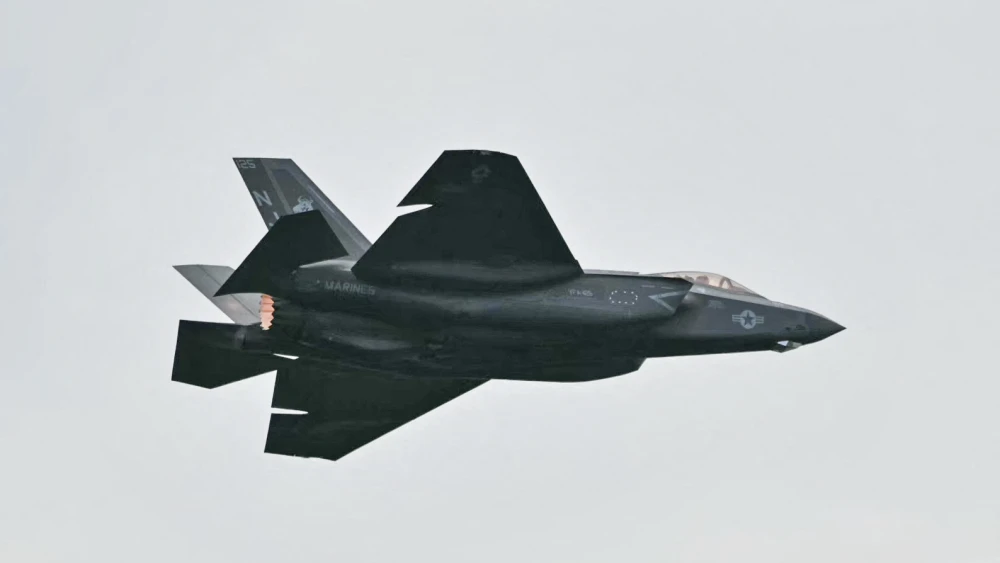

Over the past week, President Donald Trump has reopened a defense dispute Washington appeared to have settled seven years ago: whether Turkey, a NATO ally expelled from the F-35 program over its purchase of a Russian S-400 air-defense system, can regain access to the aircraft.
The reversal is significant as Turkey was not simply a prospective customer. Before its removal in 2019, Ankara was an F-35 program partner, planned to acquire 100 aircraft, and manufactured more than 900 components for the jet. The Pentagon moved to remove Turkey after Ankara took delivery of the S-400 system, arguing that operating it near the F-35 could expose sensitive information about the aircraft’s stealth capabilities. Turkey lost its planned aircraft and billions of dollars in projected industrial work.
Trump is now signaling that the rupture may no longer be permanent. At the NATO summit in Ankara on July 7, he said, “We’re going to be taking the sanctions off,” referring to CAATSA (Countering America’s Adversaries Through Sanctions Act) measures imposed over the S-400 purchase. Asked about selling F-35s to Turkey, Trump added: “It’s a decision we’re going to make.”
For Ankara, the issue has remained a major defense priority. “We have not given up on the F-35s. We are discussing our intention to return to the program with our interlocutors,” President Recep Tayyip Erdoğan said in 2025. Trump had already suggested during an Oval Office meeting with Erdoğan that year that Ankara could ultimately obtain the aircraft and that sanctions might be lifted.
The administration has since moved toward an active review. Vice President JD Vance said in June that Defense Secretary Pete Hegseth and his team were examining what would need to happen before a sale could proceed. “Pete and the entire team are reviewing this right now ... to comply with American law,” he said.
The review is unfolding alongside a broader defense thaw. Washington has separately notified Congress of plans to sell Turkey more than $700 million in General Electric fighter engines for the country’s indigenous Kaan fifth-generation combat-aircraft program. The fifth-generation F-35 still faces separate legal obstacles, but the direction of U.S. policy has clearly changed.
The Qualitative Military Edge
Any prospective Turkish F-35 sale would serve as another chapter in a running political debate surrounding the longstanding U.S commitment to preserving Israel’s Qualitative Military Edge (QME).
Congress codified that commitment in 2008. Under the law, proposed U.S. defense sales to Middle Eastern states other than Israel must include a determination that the transfer will not adversely affect Israel’s QME. The law defines that edge as Israel’s ability to defeat credible conventional threats through superior military means, including weapons, command and control, communications, intelligence, surveillance and reconnaissance capabilities. The standard does not require Israel to possess more aircraft or weapons than every regional state. Washington must assess whether Israel retains superior capabilities sufficient to prevail against credible state, coalition or non-state threats.
Of all of Israel’s weapons systems, none is considered more crucial for preserving that military edge than the F-35 fighter jet. “The F-35 is what gives Israel its qualitative military edge. This was demonstrated many times,” Brig. Gen. (res.) Yossi Kuperwasser, director of the Jerusalem Institute for Strategy and Security, previously told JNS. “Israel has no chance of having a higher quantity of weapons than its opponents, so the way of overcoming the shortcoming is to ensure that we have the quality on our side,” he added. Israel remains the only Middle Eastern state operating the F-35, and has unusual permissions to integrate national weapons and electronic-warfare modifications.
Israel’s 2026 procurement decisions underline the priority assigned to advanced air power.
In May, the government approved a fourth F-35 squadron alongside a second F-15IA squadron, the first step in a 350 billion shekel ($116 billion) decade-long force buildup. The Defense Ministry called the squadrons a “cornerstone” of long-term force development and said they would preserve Israel’s “strategic air superiority.” Prime Minister Benjamin Netanyahu said: “These aircraft strengthen Israel’s overwhelming air superiority.”
That U.S obligation to Israel’s QME has already shaped disputes over regional access to the F-35. After the Abraham Accords, the Trump administration advanced a proposed sale of 50 F-35s to the United Arab Emirates. Israel initially raised concerns, but its position shifted after U.S.-Israeli talks over compensatory measures and American QME assurances. In October 2020, Netanyahu and Defense Minister Benny Gantz said that “since the U.S. is upgrading Israel’s military capability and is maintaining Israel’s qualitative military edge, Israel will not oppose the sale of these systems to the UAE.”
The UAE deal later stalled amid disagreements over U.S. technical and operational conditions and Washington’s concerns about Abu Dhabi’s ties with China.
The same principle resurfaced when Saudi Arabia sought as many as 48 F-35s in late 2025. U.S. officials similarly said prospective Saudi aircraft would lack advanced features available to Israel.
Those precedents are central to the Turkish debate. Israel has accepted the possibility of F-35s reaching regional partner states when Washington provided assurances and preserved a capability gap. However, the non-hostile political orientations of the UAE and Saudi Arabia toward Israel must be considered as another contributing factor to placating Jerusalem. The dispute over Turkey is therefore not simply centered on the technological head start that Israel must retain, but also on the strategic direction of the government receiving the planes.
The Turkish threat
Israel’s objections to Turkish F-35s extend beyond the aircraft itself. They are rooted in a widening strategic dispute with Ankara, encompassing Hamas, Syria and increasingly threatening Turkish rhetoric toward Israel.
The sharpest divide is over Hamas. Turkey does not designate the organization as a terrorist group and has hosted its members. After the Oct. 7, 2023, attack, which killed about 1,200 people in Israel, Erdoğan publicly declared that Hamas was “not a terrorist organization” but “a liberation group.” Erdoğan subsequently maintained direct political contact with Hamas leaders, meeting then-Hamas political chief Ismail Haniyeh in Istanbul in April 2024. These ties place Ankara in direct opposition to Israel’s stated objective of dismantling Hamas as a military and governing force.
Syria has meanwhile brought the two countries into operational proximity. Following Bashar Assad’s fall at the hands of the Turkish-backed Ahmed al-Sharaa, Turkish military teams examined facilities at Tiyas Air Base, Palmyra and Hama as Ankara explored a deeper military presence in Syria. Israel later struck sites Turkey had assessed.
By April 2025, Israeli and Turkish officials were holding technical talks in Azerbaijan to prevent unintended clashes or misunderstandings over military operations in Syria. An Israeli political source said the establishment of Turkish bases around Palmyra would constitute a “red line.” The need for a formal deconfliction channel underscored how Syria had shifted the rivalry from diplomatic hostility toward direct military friction.
Erdoğan’s rhetoric has also contributed to rising tension. In November 2023, he called Israel a terror state and accused it of committing war crimes. The following month, he said Netanyahu was no different from Adolf Hitler and compared Israel’s campaign in Gaza to Nazi persecution of the Jews.
In July 2024, Erdoğan went further, suggesting Turkey could enter Israel as it had intervened in Libya and supported Azerbaijan in Nagorno-Karabakh, although he did not specify what form such action might take. Israel responded by calling on NATO to condemn Ankara.
Later that year, Erdoğan alleged that Israel ultimately sought Turkish territory—an unsupported claim rejected by Turkey’s own opposition.
That language has continued into 2026. Erdoğan said Israeli operations in Syria and Lebanon had risen “to a level that threatens our country too.” Weeks later, he described Israel’s government as “war-addicted” and accused it of seeking to ignite another regional conflict.
For Israeli policymakers, the F-35 debate therefore concerns the possible strengthening of a major regional military whose government supports Hamas, competes with Israel in Syria, and has repeatedly portrayed Israel as a direct threat to Turkey.
Blocking the sale
Prime Minister Netanyahu has moved quickly to make Turkish access to the F-35 a direct issue in Israel’s relations with the Trump administration. He personally raised Erdoğan’s rhetoric and Turkey’s military modernization with Trump before the NATO summit and urged Washington to refrain from supplying Ankara with F-35s or other systems that would strengthen its air force. Axios reported that Netanyahu appealed directly to Trump in a phone call.
Netanyahu has simultaneously taken the campaign into American media. In a CNN interview, he said he had made his opposition clear to Trump and warned: “It would destroy the power balance in the Middle East because Turkey has aggressive aspirations.”
In other U.S media appearances, Netanyahu linked Israeli air superiority to regional stability and broadened his argument beyond the S-400 dispute, pointing to Erdoğan’s policies toward Hamas, Greece and Cyprus. He described Turkey as “governed by a man who calls openly for the annihilation of Israel.”
The pressure has extended into senior defense discussions. Defense Secretary Pete Hegseth had been scheduled to discuss the possible Turkish F-35 sale with Netanyahu and Defense Minister Israel Katz during a visit to Israel, although the meeting was later canceled.
Reuters reported that the prospective sale was expected to face strong Israeli resistance.
Netanyahu continued pressing the issue after the summit. In a Thursday conversation with Trump, his office said he again raised Israeli security concerns regarding Turkey and the severity of statements by Erdoğan and Turkish officials against Israel.
Furthermore, Turkey’s acquisition of F-35s still faces significant legal hurdles in the U.S.
The principal obstacle remains the Russian S-400 system that triggered Ankara’s removal from the program and U.S. sanctions. The barrier is statutory, not merely a matter of presidential policy. Section 1245 of the FY2020 National Defense Authorization Act prohibits the Pentagon from transferring F-35 aircraft, support equipment, technical data or material needed to establish Turkish F-35 capability. A waiver would require the secretaries of state and defense to certify to Congress that Turkey no longer possesses the S-400 and associated equipment, has credibly committed not to reacquire it, and has not obtained comparable Russian systems.
U.S. Ambassador to Ankara Tom Barrack stated in December: “U.S. law will not permit Turkey to operate or possess the S-400 system if it wants to return to the F-35 program.” Days later, Turkey’s Defense Ministry said there had been “no change” regarding the S-400s. Reuters reported that Turkish officials have repeatedly rejected reversing their decision to possess the system.
Congress presents a second obstacle. A bipartisan group of lawmakers has urged Trump to maintain the prohibition, arguing that the S-400 continues to endanger the F-35 program.
Rep. Chris Pappas (D-N.H.) has been blunter: “We cannot reward Erdoğan’s government while it continues to violate U.S. law and threaten our reliable, democratic allies.” His conclusion was categorical: “Absolutely no F-35s to Turkey.”
In this sense, Trump has reopened the door. But until Ankara resolves the S-400 dispute and overcomes congressional resistance, a Turkish F-35 remains a political possibility rather than a completed defense deal.