The Israeli Ethiopian community totaled 177,600 people in 2024, according to data shared on Sunday by Israel’s Central Bureau of Statistics.
Of those, 93,400 (~53%) were born in Ethiopia, and 84,200 (~47%) are native-born.
The CBS moreover noted that 64.6% of the Ethiopian community lives in the Central (37.2%) and Southern districts (27.4%), with Netanya being the city with the largest population, some 13,300 people.
Ethiopian women gave birth to 4,010 babies in 2024. An Ethiopian woman is expected to give birth to 2.54 children on average, according to the government body.
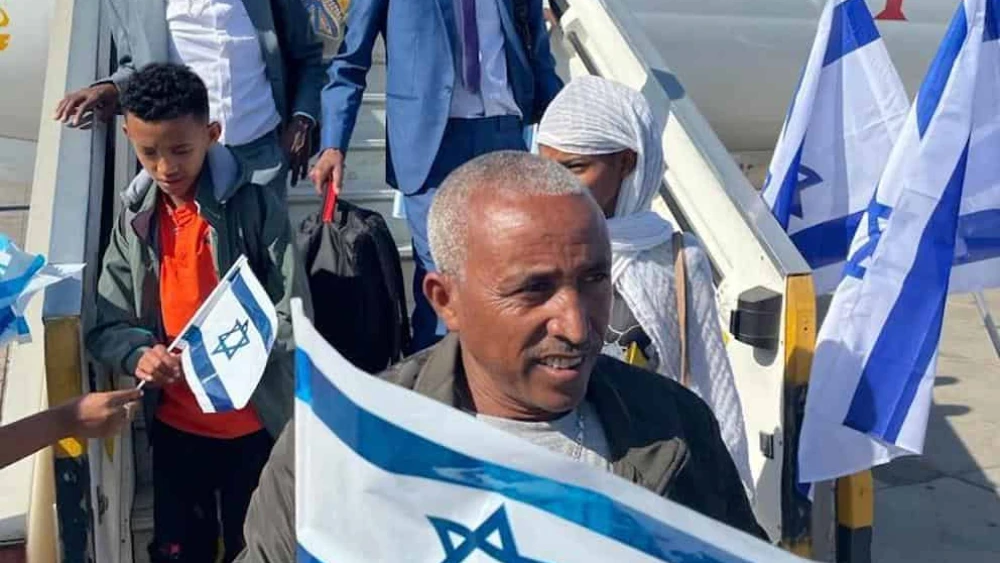
Over the course of 2024, 285 people immigrated to Israel from Ethiopia.
In education, 93.7% of Ethiopian students in 12th grade took the matriculation exams that year, compared with 95.1% among all students in the Hebrew education system.
The rate of matriculation eligibility that meets university admission requirements of Ethiopian students has been on an upward trend in recent years, according to the Bureau.
The percentage of those continuing on to bachelor’s degree studies among Ethiopians was significantly higher than the percentage among all students in Hebrew education, with 57.7% compared to 39.1% respectively.
The rate of criminal offenses handed to Ethiopians out of the entire Jewish population stood at 7.6% for 2023.
Ethiopians make up about 2.3% of the total Jewish population in Israel.
The data were released ahead of Sigd, the holiday celebrated by Jewish Ethiopians 50 days after Yom Kippur, taking place this year on Nov. 19-20.
It means “prostration” in the Ge’ez language, and has been observed by Ethiopian Jews, the Beta Israel, for centuries as a day to renew their covenant with God and express their longing for Zion.
Traditionally in Ethiopia, community members would ascend a high mountain to pray, symbolizing the giving of the Torah at Mount Sinai. Now in Israel, the community continues this tradition with a focus on unity and cultural pride.
In Israel, worshippers converge on Jerusalem’s Armon Hanatziv Promenade—which overlooks the Temple Mount from the south—and the Western Wall for prayers and festivities.