Among the topics covered at the Conference of Presidents of Major American Jewish Organizations’ 51st Annual Leadership Mission, taking place in Jerusalem this week, were the future of Judea and Samaria and the impact the Oct. 7, 2023, massacre will have on Arab-Israel relations.
According to Noa Shusterman, a researcher and the coordinator of the INSS Israel-Palestinian Research Program, who took part in a panel of observers on Tuesday, parties have begun campaigning for the upcoming Israeli elections slated for this October, but there has been no discussion about the Palestinian issue.
Even though an international coalition is being put together to govern the Gaza Strip under Trump’s 20-point plan, that includes talk of a Palestinian state, that this was not spoken about in Israeli discourse means “we’re heading toward a clash,” she said.
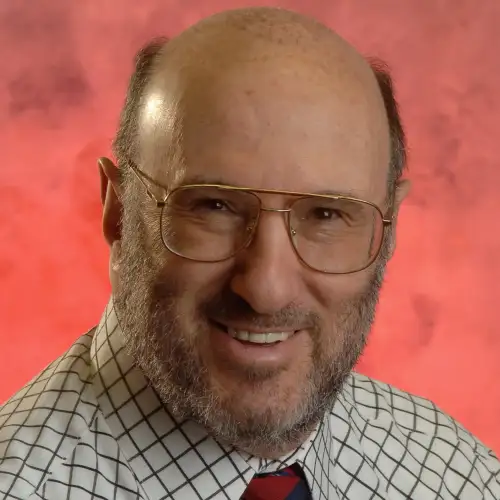
Mohammad Darawshe, director of Strategy at the Center for Shared Society at Givat Haviva (the national education center of the Kibbutz Federation) and an Arab Israeli, said he doesn’t see willingness on either the Israeli or Palestinian Arab side to move the ball forward. He laid the blame on Oct. 7, which has led to mistrust, fear and a loss of hope.
He warned that if the frustration felt on the Arab side is allowed to continue “the next Oct. 7 is around the corner.”
Another panel participant, IDF Lt. Col. (res.) Avi Shalev, who formerly served as head of the Palestinian affairs branch and adviser to the Coordinator of Government Activities in the Territories (COGAT) Defense Ministry unit, said Oct. 7 was an “earthquake” that changed everything and will lead to a crisis in Judea and Samaria, pointing to elements that have started to take the law into their own hands.
Israel Ganz, head of the Binyamin Regional Council and the chairman of the Yesha Council, said that more than 70% of Israelis don’t want a Palestinian state because it means another terror-run region, such as in Gaza. Israel vacated Gaza in 2005 and received a massacre in return, he said.
“People understand and will not try this experience again, [this time] overlooking Tel Aviv, overlooking Modi’in, overlooking Ben-Gurion Airport,” he said. “For your knowledge, the fence of the Gaza Strip trip is 20 kilometers [~12 miles]. The fence of Judea and Samaria is about 300 kilometers [~186 miles],” he said. “We’re talking about more people, more communities.”
Regarding the social and political trends in Palestinian Arab society, Shusterman blamed Israel for withholding Palestinian Authority funds, saying it was leading to destabilization.
“In essence, many of the elements that were supposed to be stabilizing factors, such as the transfer of clearance funds, are just not happening,” she said, referring to taxes that Israel collects on behalf of the P.A. but withholds due to the latter’s support for terrorism.
Darawshe, who said he visits Judea and Samaria once a week, said those he speaks with feel they’re under “triple control.” First, there are the Israelis, then the P.A., which hasn’t held a democratic election in 20 years, and then there is international control. Palestinian Arabs feel that their fate is being decided in Washington, D.C., and Qatar.
“There’s also a feeling of despair. ... I’m talking about the elite in the Palestinian community that I meet,” he said. “I think the Palestinians are going into a very difficult stage of lack of hope, lack of horizon, not just about political peace and things like that, but even about personal future.”
Shalev agreed that most Arabs in Judea and Samaria feel trapped and fearful, living under a declining economy and aging, ineffective leadership. Local politics are reverting to clan-based structures, focused on personal and family interests, he said. Shalev warned that when P.A. head Mahmoud Abbas disappears from the scene, a new generation “unknown to us” and “with completely different ideas” will emerge, likely bringing significant and unpredictable changes.
Ganz said a number of sheikhs from various towns came to visit him in the past year. Their message is that they see that the Palestinian Authority can’t bring them a better future, and after Oct. 7, they see that its support for terrorism will only bring destruction down on them as it did on the Gazans.
These people want a better future, a working economy and good education for their children, he said, and they want to fight terror. He predicted a change for the better would come as these people gain ground.
On the issue of “settler violence,” Shusterman suggested there was more of it than claimed and that the Israeli government isn’t doing anything to combat it. Darawshe accused Israel’s government of allowing the violence to happen. “The same authorities that are supposed to report it are actually the ones that are trying to camouflage it,” he said.
According to Shalev, there is a general breakdown of law and order, not just within the Jewish comminutes in Judea and Samaria, but also in Arab-Israeli society and in the Palestinian Authority. “It doesn’t matter wherever you look, it’s the same,” he said.
When Darawshe said the violence was spilling from Judea and Samaria into Israel, pointing to an incident between Israelis and Arabs in the town of Sakhnin in the Lower Galilee, Ganz pushed back, saying Darawshe’s characterization makes for a good propaganda campaign but is disconnected from the reality of the incident, which involved two groups of kids, Arab and Israeli. People from the Jewish comminutes in Judea and Samaria weren’t involved, he noted.
“When children fight each other, it’s not settler violence,” said Ganz.
William Daroff, CEO of the Conference of Presidents, told JNS: “As the region shifts and political tensions intensify both in the United States and in Israel, we cannot allow our sense of shared purpose to fray.
“Over the past two years of war and upheaval, the Jewish community discovered a unity forged in necessity. Our task now is to preserve that unity by choice,” he said. “We arrive not as observers, but as partners to listen, to learn, and to strengthen the bonds that secure our collective future.”
The Conference of Presidents’ mission continues through Friday.